Fortified Wine Market Size & Growth Forecast 2027–2036, By Segments (Product Type, Distribution Channels), Regional Demand Trends (North America, Asia Pacific, Europe), Key Country Insights (U.S., Japan, South Korea, Germany, France, Italy), and Competitive Landscape
Jump to content
Market Size and Growth Outlook
Fortified Wine Market size was worth USD 45.19 Billion in 2026 and is poised to grow at 10.71% CAGR between 2027 and 2036, exceeding USD 125 Billion by 2036. The industry revenue for 2027 is assessed at USD 49.38 Billion.
Get more details on this report
Request Free Sample ReportFortified Wine Market Intelligence Snapshot
Regional Market Dynamics
- Europe held 42.55% in 2026, supported by established wine culture, consumer familiarity, strong production and distribution networks, and demand for premium beverages.
- Asia Pacific is the fastest-growing region, supported by rising incomes, international beverage exposure, expanding hospitality and tourism, modern retail, and interest in premium drinking experiences.
Segment Momentum
- Port wine held the largest market share of 37.58% in 2026, supported by its established heritage, strong consumer recognition, premium positioning, and sustained demand across hospitality and specialty retail channels.
- Internet retailing is expanding rapidly because online platforms provide wider product selection, convenient purchasing, and improved access to premium and specialty fortified wines, supporting changing consumer buying behavior.
Market Expansion Drivers
- Increasing premium beverage consumption driving demand for fortified wine varieties
- Rising social event consumption patterns supporting specialty alcoholic beverage demand
- Growth in low-alcohol wellness beverages expanding fortified wine product innovation
Leading Market Participants
- Prominent players in the fortified wine market include E. & J. Gallo Winery (United States), Constellation Brands, Inc. (United States), Treasury Wine Estates Ltd (Australia), The Wine Group, Inc. (United States), Trinchero Family Estates (United States), Sogrape Vinhos, S.A. (Portugal), Grupo Sogevinus Fine Wines (Portugal), Taylor’s Port (Portugal), Symington Family Estates (Portugal), Bodega Norton S.A. (Argentina)
Global Market Forecast Snapshot
Market Outlook
- 2026 Market Size: USD 45.19 Billion
- 2027 Estimated Market Size: USD 49.38 Billion
- Projected Market Size: USD 125 Billion by 2036
- Growth Forecast: 10.71% CAGR (2027-2036)
Regional and Segment Outlook
- Leading Regional Market: Europe
- High-Growth Regional Hub: Asia Pacific
- Core Revenue Segment: Port Wine (Product Type) | Pub, Bars & Restaurants (Distribution Channels)
- Emerging Opportunity Segment: Vermouth (Product Type) | Internet Retailing (Distribution Channels)
Market Growth Drivers and Industry Trends
Increasing premium beverage consumption driving demand for fortified wine varieties
Changing consumer preferences toward premium alcoholic beverages are creating favorable opportunities for the fortified wine market, as buyers increasingly seek products that offer distinctive flavors, heritage, and elevated drinking experiences. Fortified wines are gaining attention among consumers who value artisanal production methods, regional authenticity, and diverse taste profiles that differentiate them from conventional wine categories. The expansion of premium retail channels, specialty beverage stores, and curated hospitality offerings has further increased product visibility, encouraging manufacturers to diversify their portfolios with aged, reserve, and craft-inspired fortified wine varieties that appeal to both experienced enthusiasts and emerging premium beverage consumers.
Rising social event consumption patterns supporting specialty alcoholic beverage demand
The growing popularity of social gatherings, celebrations, and hospitality experiences will drive the fortified wine market growth by increasing demand for specialty alcoholic beverages suited to a variety of consumption occasions. Restaurants, hotels, bars, and event venues are broadening their beverage selections to accommodate changing consumer preferences for unique and versatile drink options. Fortified wines are increasingly featured as aperitifs, dessert pairings, and cocktail ingredients, allowing producers to expand their presence across multiple consumption settings while catering to evolving dining and entertainment trends.
Growth in low-alcohol wellness beverages expanding fortified wine product innovation
The fortified wine market growth is supported by evolving consumer interest in balanced lifestyle choices that encourage innovation within lower-alcohol and wellness-oriented beverage segments. Manufacturers are responding by developing product variations that emphasize refined flavor profiles, controlled alcohol content, and premium ingredients while addressing changing consumption habits among health-conscious adults. This shift has encouraged experimentation with new formulations, packaging formats, and ingredient combinations that align with demand for moderation without compromising the sensory characteristics associated with fortified wine.
| Growth Driver | Impact on CAGR | Regulatory Influence | Geographic Relevance | Adoption Rate | Impact Timeline |
|---|---|---|---|---|---|
| Increasing premium beverage consumption driving demand for fortified wine varieties | 2% | Low | Europe, North America | Medium | Near Term |
| Rising social event consumption patterns supporting specialty alcoholic beverage demand | 1.7% | Low | Asia Pacific, Europe | Medium | Near Term |
| Growth in low-alcohol wellness beverages expanding fortified wine product innovation | 1.5% | Low | North America, Europe | Emerging | Mid Term |
Unlock insights tailored to your business with our bespoke market research solutions.
Click to get your customized report now.
Regional Demand Dynamics
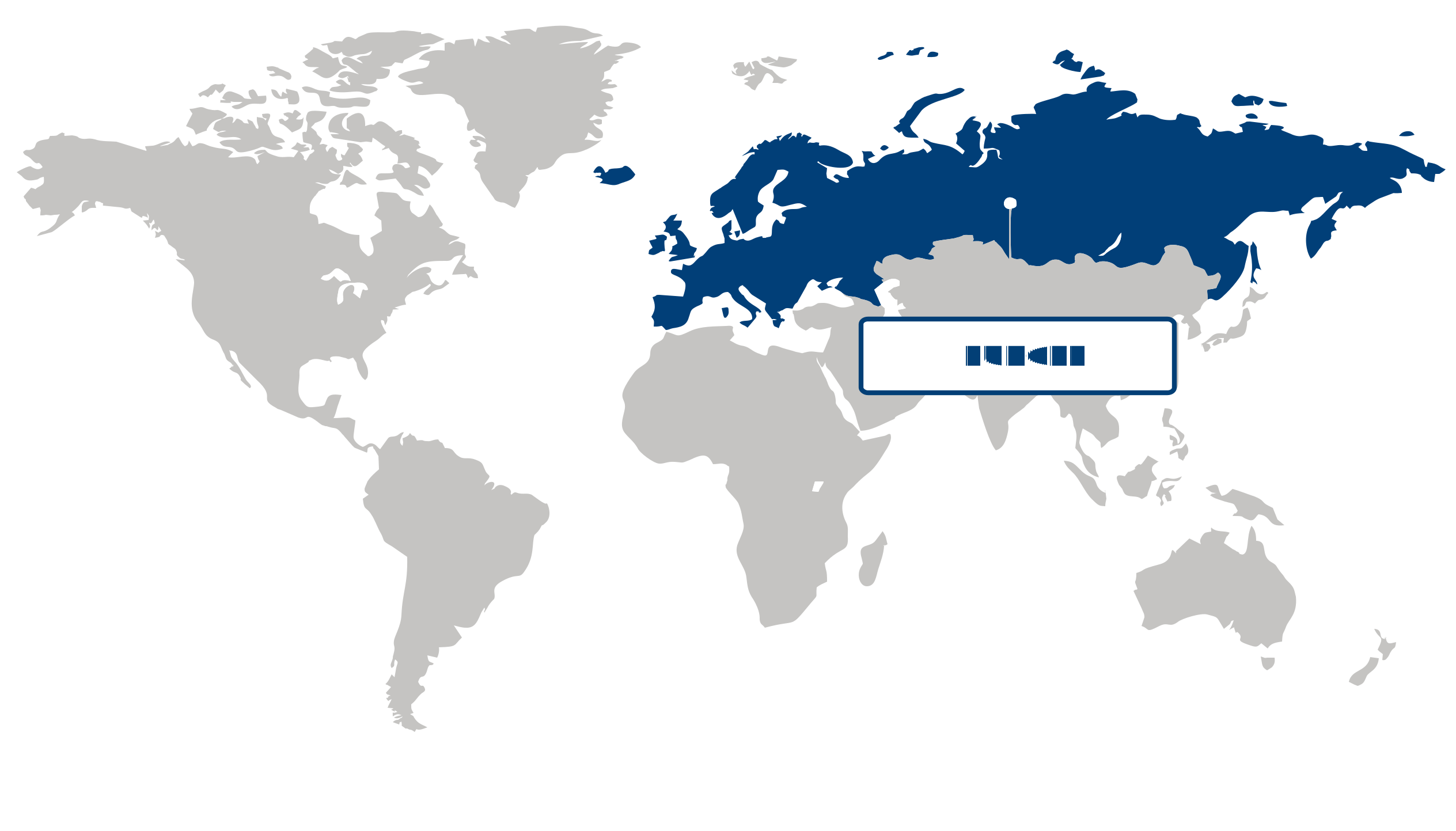
Europe (Largest Region)
Europe accounted for 42.55% of the fortified wine market in 2026, reflecting the region’s deep-rooted wine culture and established consumption of traditional fortified wine varieties. The market benefits from strong consumer familiarity with products such as port, sherry, and other regionally associated fortified wines, supported by established production and distribution networks. Tourism, hospitality, and foodservice activities also contribute to consumption, particularly where fortified wines are integrated into culinary and social traditions. Continued interest in premium and distinctive alcoholic beverages further supports the region’s strong market position.
Asia Pacific (Fastest-Growing Region)
Asia Pacific is projected to be the fastest-growing region in the fortified wine market as evolving consumer preferences and expanding beverage markets create new opportunities for premium wine products. Rising disposable incomes and increasing exposure to international beverage trends are encouraging consumers to explore differentiated wine varieties. Growth in hospitality, tourism, and modern retail channels is improving the availability and visibility of fortified wines across major urban markets. Furthermore, changing lifestyles and growing interest in premium drinking experiences are supporting broader acceptance of these products throughout the region.
| Parameter | North America | Asia Pacific | Europe | Latin America | MEA |
|---|---|---|---|---|---|
| Innovation HubiScaleNascentDeveloping Advanced | |||||
| Cost-Sensitive RegioniScaleLowMedium High | |||||
| Regulatory EnvironmentiScaleRestrictiveNeutral Supportive | |||||
| Demand DriversiScaleWeakModerate Strong | |||||
| Development StageiScaleEmergingDeveloping Developed | |||||
| Adoption RateiScaleLowMedium High | |||||
| New Entrants / StartupsiScaleSparseModerate Dense | |||||
| Macro IndicatorsiScaleWeakStable Strong |
Key Country Insights
United States 🇺🇸
Premium Consumption TrendsThe U.S. fortified wine market is supported by consumers exploring premium alcoholic beverages for both casual and specialty occasions. Producers and distributors in the U.S. increasingly emphasize product storytelling, distinctive flavor profiles, and diversified retail availability.
Germany 🇩🇪
Specialty Beverage DemandGermany maintains steady interest in fortified wines through specialty retail channels and diverse beverage selections. German suppliers focus on quality positioning and curated product portfolios that appeal to consumers seeking distinctive wine experiences.
Japan 🇯🇵
Refined Consumption PreferencesJapan supports fortified wine demand through premium hospitality and specialty beverage retail environments. Importers and distributors in Japan prioritize carefully selected products that align with refined consumer preferences and premium dining occasions.
South Korea 🇰🇷
Premium Retail PositioningSouth Korea expands fortified wine availability through premium retail outlets and evolving consumer interest in imported beverages. Market participants focus on education, curated selections, and pairing opportunities to strengthen product appeal.
France 🇫🇷
Heritage Product AppreciationFrance maintains demand for fortified wines through appreciation of traditional winemaking styles and premium beverage culture. Producers in France continue highlighting authenticity, regional identity, and craftsmanship to reinforce value within specialty wine segments.
Italy 🇮🇹
Traditional Wine PortfolioItaly positions fortified wines as part of a broader premium wine offering supported by established consumption traditions. Italian producers emphasize quality production methods and distinctive regional characteristics to sustain interest across domestic and export channels.
Fortified Wine Market Share (%), by Product Type, 2026
Go beyond the chart, access full insights & data tables
Request Free Sample ReportProduct Type Segment Analysis: Port Wine (Largest Segment) vs Vermouth (Fastest-Growing Segment)
The port wine segment led the fortified wine market with a share of 37.58% in 2026. Its established heritage, distinctive production methods, and strong consumer recognition have contributed to sustained demand across both traditional and premium beverage categories. Port wine continues to benefit from its popularity as a dessert wine and its presence in hospitality and specialty retail channels, while premiumization trends further support its leading market position.
The vermouth segment is expected to witness the fastest growth, supported by increasing consumer interest in cocktails, aperitifs, and premium mixed beverages. Rising innovation in flavored and artisanal vermouth products, along with evolving drinking preferences among younger consumers, has expanded its appeal across restaurants, bars, and home consumption. The growing cocktail culture and demand for premium beverage experiences are expected to sustain the segment's momentum.
Distribution Channels Segment Analysis: Pub, Bars & Restaurants (Largest Segment) vs Internet Retailing (Fastest-Growing Segment)
The pub, bars & restaurants segment accounted for the largest share of 42.77% in 2026, reflecting the important role of on-premise consumption in driving fortified wine sales. These venues provide consumers with opportunities to experience premium fortified wines through curated menus, food pairings, and social occasions, supporting consistent product visibility and demand. Expanding hospitality offerings and consumer preference for experiential dining continue to reinforce the segment's market leadership.
In the fortified wine market, the internet retailing segment is projected to record the fastest growth as digital commerce transforms beverage purchasing behavior. Online platforms offer greater product selection, improved convenience, and easier access to specialty and premium fortified wine varieties that may not be widely available through traditional retail channels. The continued expansion of e-commerce ecosystems and increasing consumer comfort with online purchasing are expected to drive sustained growth in this distribution channel.
| Segment | Sub-Segment | Largest Segment | Fastest Growing |
|---|---|---|---|
| Product Type | Port Wine, Sherry, Vermouth, Marsala, Madeira, Others | Port Wine | Vermouth |
| Distribution Channels | Pub, Bars & Restaurants, Internet Retailing, Liquor Stores, Supermarkets, Others | Pub, Bars & Restaurants | Internet Retailing |
Competitive Landscape and Market Positioning
Key companies in the fortified wine market:
- E. & J. Gallo Winery (United States)
- Constellation Brands, Inc. (United States)
- Treasury Wine Estates Ltd (Australia)
- The Wine Group, Inc. (United States)
- Trinchero Family Estates (United States)
- Sogrape Vinhos S.A. (Portugal)
- Grupo Sogevinus Fine Wines (Portugal)
- Taylor’s Port (Portugal)
- Symington Family Estates (Portugal)
- Bodega Norton S.A. (Argentina)
Competitive dynamics within the fortified wine market are evolving through a balance of heritage-driven product positioning and changing consumer preferences for premium beverage experiences. Producers are broadening their portfolios with distinctive flavor profiles, refined production techniques, and packaging formats that appeal to both traditional consumers and emerging audiences seeking artisanal alcoholic beverages. The market is also witnessing stronger emphasis on origin, craftsmanship, and product authenticity as differentiation becomes increasingly tied to perceived quality rather than volume alone. Distribution strategies are adapting alongside these shifts, encouraging suppliers to strengthen their presence across specialty retail, hospitality, and premium beverage channels while preserving brand identity through consistent production standards.
| Company | Market Share | Company Revenue | Revenue CAGR (%) | Product Portfolio | Geographic Presence | Innovation / R&D Focus | Strategic Developments |
|---|---|---|---|---|---|---|---|
| E. & J. Gallo Winery (United States) | |||||||
| Constellation Brands Inc. (United States) | |||||||
| Treasury Wine Estates Ltd (Australia) | |||||||
| The Wine Group Inc. (United States) | |||||||
| Trinchero Family Estates (United States) | |||||||
| Sogrape Vinhos S.A. (Portugal) | |||||||
| Grupo Sogevinus Fine Wines (Portugal) | |||||||
| Taylor’s Port (Portugal) | |||||||
| Symington Family Estates (Portugal) | |||||||
| Bodega Norton S.A. (Argentina) |
Industry Development / News
| Company Name | Date | Key Development |
|---|---|---|
| Treasury Wine Estates | Jul-26 | Treasury Wine Estates divested three major vineyards spanning 1,632 hectares. This strategic divestment aims to align internal vineyard supply with future expansion goals and optimize the company's long-term global production footprint. |
| Maison Mirabeau | Jan-22 | Maison Mirabeau entered the premium fortified wine segment in the United Kingdom by launching its first Rosé Vermouth. The expansion leverages artisanal botanicals like wormwood and cassia to target the increasing consumer demand for aromatic aperitifs. |
Customize Your Report
Explore examples of how this report can be tailored to different research needs, including custom segments, additional topics or chapters, and related reports. Click a section of the wheel or its numbered marker to explore the available options.
Fortified Wine Market — Custom Segments
| Segment | Sub-Segment |
|---|---|
| Price Tier | Economy, Mid-Range, Premium, Super-Premium |
| Consumption Occasion | Everyday Consumption, Social & Entertainment, Celebrations & Special Occasions, Gifting |
| Packaging Format | Glass Bottles, Cans, Bag-in-Box, Other Formats |
Fortified Wine Market — Custom TOC
| Custom Chapter | Chapter Details |
|---|---|
| Premiumization & Brand Architecture |
|
| Hospitality & Tourism Channel Development |
|
| Emerging Consumer Segment Penetration |
|
Need a different cut of the data?
Request Custom ResearchFrequently Asked Questions
How big is the fortified wine market?
How will the fortified wine industry grow in terms of size and CAGR by 2036?
How are premium beverage preferences influencing the fortified wine market?
How are changing consumption occasions shaping fortified wine product innovation?
Which product type leads the fortified wine market?
Why is internet retailing the fastest-growing distribution channel in the fortified wine market?
What supports Europe's leadership in the fortified wine market?
How is Asia Pacific creating growth opportunities for fortified wine?
Who are the major participants shaping the fortified wine landscape?
Our Clients
"The report provided a thorough look at market trends, technological advancements, and the competitive landscape. The depth of insights was really valuable."
ITC Limited
"We would highly recommend Fundamental Business Insights & Consulting to anyone looking for reliable, detailed, and comprehensive market research in the Food industry."
Tyson Foods
"The clarity and presentation of the information were commendable. The report was delivered timely, which made the overall experience smooth and convenient."
Mondelēz International
Our Research Team & Methodology
Every Fundamental Business Insights report is built by a dedicated vertical research team, validated through a structured primary-and-secondary methodology, and reviewed for accuracy before it reaches you.
Delivery
Published
Available
Support
- Market Size & Forecast
- Market Segmentation
- Regional Analysis
- Growth Drivers & Challenges
- Market Dynamics
- Competitive Landscape
- Company Profiles
- Competitive Benchmarking
- Mergers & Acquisitions
- Market Share Analysis or Key Company Strategies
- Value Chain Analysis
- Porter's Five Forces
- PESTLE Analysis
- Pricing Trends
- Supply-Demand Analysis
- Technology Landscape
- Regulatory Landscape
- Investment & Funding Landscape
- Emerging Opportunities
- Future Market Outlook