



Port Wine Market Size & Growth Forecast 2027–2036, By Segments (Nature, Distribution Channel, Type), Regional Demand Trends (North America, Asia Pacific, Europe), Key Country Insights (U.S., Japan, South Korea, Germany, France, Italy), and Competitive Landscape
Market Size and Growth Outlook
Port Wine Market size was over USD 1.12 billion in 2026 and is likely to grow at a 4.94% CAGR between 2027 and 2036, crossing USD 1.81 billion by 2036. The industry revenue for 2027 is assessed at USD 1.17 billion.
Base Year Value (2026)
USD 1.12 billion
CAGR (2027-2036)
4.94%
Forecast Year Value (2036)
USD 1.81 billion

Historical Data Period
2022-2026

Largest Region
Europe

Forecast Period
2027-2036
Port Wine Market Intelligence Snapshot:
-
Regional Market Dynamics:
- Europe leads due to strong heritage production base, established consumption culture, and mature distribution across retail and hospitality wine channels.
- Asia Pacific is growing at 5.99% CAGR, driven by rising exposure to imported wines, expanding premium retail access, and evolving urban consumer preferences.
-
Segment Momentum:
- Red holds 63.83% share due to strong consumer familiarity, traditional consumption occasions, and established retail and hospitality demand patterns.
- Off-Trade is fastest-growing as consumers shift toward at-home consumption, benefiting from retail accessibility and convenience in purchasing port wine for flexible usage occasions.
-
Market Expansion Drivers:
- Rising consumer preference for premium alcoholic beverages boosting port wine demand.
- Product innovation through flavored and rosé variants attracting younger consumers.
- Expanding experiential dining and wine tourism supporting premium port wine consumption.
-
Leading Market Participants:
Top companies in the port wine market include Sogrape Vinhos, S.A. (Portugal), Symington Family Estates (Portugal), Sogevinus Fine Wines, S.A. (Portugal), C.N. Kopke & Cia, Lda. (Portugal), La Martiniquaise-Bardinet (France), A. A. Cálem & Filho, S.A. (Portugal), Adriano Ramos Pinto Vinhos, S.A. (Portugal), Delaforce Wines (Portugal), Taylor's Port (Portugal), Graham's Port (Portugal).
Global Market Forecast Snapshot:
-
Market Outlook:
- 2026 Market Size: USD 1.12 billion
- 2027 Estimated Market Size: USD 1.17 billion.
- Projected Market Size: USD 1.81 billion by 2036
- Growth Forecasts: 4.94% CAGR (2027-2036)
-
Regional and Segment Outlook:
- Leading Regional Market: Europe
- High-Growth Regional Hub: Asia Pacific
- Core Revenue Segment: Red (Nature) | On-Trade (Distribution Channel) | Ruby (Type)
- Emerging Opportunity Segment: White (Nature) | Off-Trade (Distribution Channel) | Tawny (Type)
Market Growth Drivers and Industry Trends
Rising consumer preference for premium alcoholic beverages boosting port wine demand
Increasing interest in premium alcoholic beverages is supporting consumer willingness to explore products associated with distinctive production methods, heritage, and refined drinking experiences. The port wine market is benefiting from this preference as consumers increasingly view premium wines as products for appreciation and special occasions rather than solely as conventional alcoholic beverages. Greater attention to provenance, craftsmanship, maturation characteristics, and sensory complexity can strengthen the appeal of higher-value port wine offerings among consumers seeking differentiated experiences. Premiumization also encourages consumers to trade toward products perceived to offer greater quality and authenticity, supporting demand across specialty and upscale drinking occasions.
Product innovation through flavored and rosé variants attracting younger consumers
Product diversification is helping broaden the consumer base for traditional wine categories by introducing formats and flavor profiles that are more approachable to younger drinkers. For the port wine market, flavored and rosé variants can provide a lighter, more contemporary entry point for consumers who may be unfamiliar with traditional styles or prefer fruit-forward and versatile beverages. These variants can also support consumption in casual settings, where younger consumers may favor refreshing drinks that can be enjoyed chilled or incorporated into modern serving occasions. Innovation around taste, presentation, and serving versatility gives producers additional ways to connect established wine traditions with changing preferences among emerging consumer groups.
Expanding experiential dining and wine tourism supporting premium port wine consumption
The growth of experience-oriented dining and wine tourism is creating additional opportunities for consumers to discover premium wines through curated tasting, food-pairing, and destination-based experiences. Within the port wine market, exposure through winery visits, guided tastings, hospitality venues, and specialized culinary experiences can strengthen consumer understanding of the beverage's heritage and sensory characteristics. Pairing port wine with desserts, cheeses, and contemporary cuisine also expands its relevance beyond traditional after-dinner consumption. As travelers and diners increasingly seek memorable experiences connected to local culture and artisanal products, premium wine tasting can become an important channel for product discovery and deeper consumer engagement.
| Growth Driver Assessment Framework | |||||
| Growth Driver | Impact On CAGR | Regulatory Influence | Geographic Relevance | Adoption Rate | Impact Timeline |
|---|---|---|---|---|---|
| Rising consumer preference for premium alcoholic beverages boosting port wine demand | 2.00% | Moderate | Europe, North America | High | Near Term |
| Product innovation through flavored and rosé variants attracting younger consumers | 1.70% | Low | Europe, Asia Pacific | High | Mid Term |
| Expanding experiential dining and wine tourism supporting premium port wine consumption | 1.30% | Moderate | Europe, Latin America | Emerging | Long Term |
Unlock insights tailored to your business with our bespoke market research solutions - Click to get your customized report now!
Regional Demand Dynamics
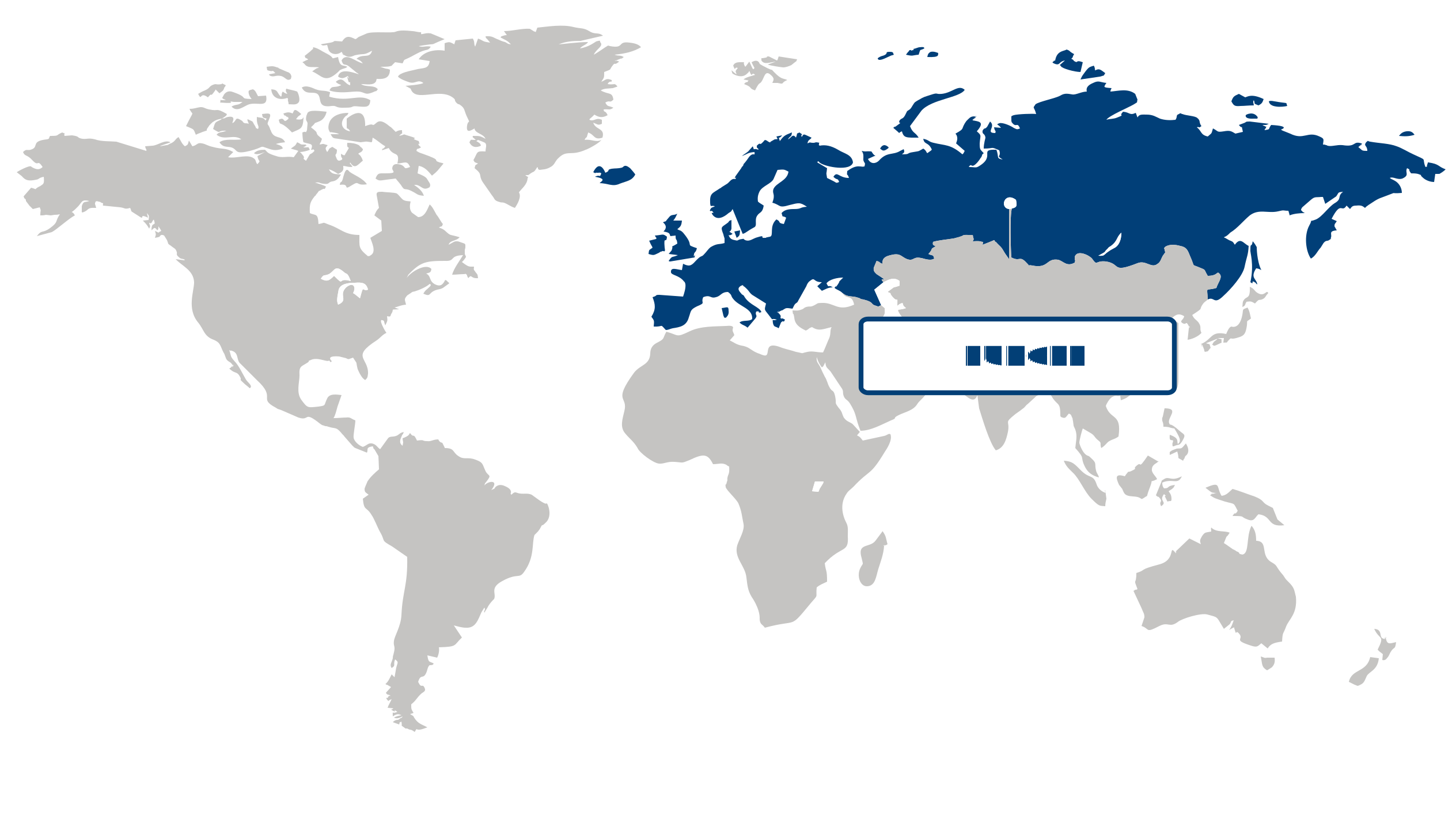
Largest Region
Europe
Largest Market Share in 2026
Europe (Largest Region) vs Asia Pacific (Fastest-Growing Region)
Europe held the largest share of the port wine market in 2026, supported by its established wine culture, long-standing consumer familiarity with fortified wines, and strong connection between premium beverages and regional heritage. The region benefits from developed wine distribution networks and a sophisticated consumer base that values provenance, craftsmanship, and traditional production methods. Demand from hospitality venues, specialty retailers, and premium beverage channels continues to support market visibility, while tourism and wine-focused cultural experiences contribute to consumer engagement. Interest in premium and collectible alcoholic beverages is also helping sustain demand for port wine among consumers seeking distinctive products with established heritage.
Asia Pacific is the fastest-growing region, driven by rising disposable incomes, expanding premium beverage consumption, and increasing exposure to international wine and spirits categories. Urbanization and the development of modern retail and hospitality channels are making imported and premium alcoholic beverages more accessible to consumers. Changing lifestyles are encouraging experimentation with established European wine varieties, while growing interest in food pairing and sophisticated drinking experiences is creating additional opportunities for port wine. Improved distribution and premiumization trends across key asian markets are further supporting the category’s regional expansion.
Key Country Insights
The U.S. market emphasizes premium port wine offerings through specialty retail, hospitality, and online channels. Consumers increasingly seek aged and distinctive labels, encouraging importers to broaden premium portfolios and educational marketing initiatives.
Japan supports port wine demand through premium gifting occasions and upscale hospitality. Importers increasingly position high-quality port wines alongside gourmet food pairings to appeal to consumers seeking distinctive beverage experiences.
South Korea is experiencing greater interest in premium imported wines, including port wine, among urban consumers. Retailers and distributors are expanding curated selections while highlighting pairing opportunities and premium consumption occasions.
Germany maintains steady demand for port wine within specialty wine retail and fine dining. Buyers value authentic product origin, quality certification, and carefully curated selections that appeal to experienced wine consumers.
France values port wine as a complementary offering within an established wine culture, particularly through specialty retailers and gastronomy. French buyers often prioritize authenticity, aging characteristics, and premium product positioning when selecting imported labels.
Italy integrates port wine into premium dining and specialty retail, where dessert pairings and fortified wine appreciation support demand. Italian distributors focus on quality-focused portfolios that complement established wine consumption traditions.
Segment Leadership and Growth Trends
Nature Segment Analysis: Red (Largest Segment) vs White (Fastest-Growing Segment)
The red segment dominated the port wine market, accounting for 63.83% share in 2026. Its established consumer recognition and strong association with traditional port wine consumption support its leading position, while its rich flavor profile and suitability for both standalone consumption and food pairing broaden its appeal. Continued interest in premium and traditional wine experiences further reinforces demand for red varieties across established consumption occasions.
White port is gaining momentum as consumers increasingly explore lighter and more versatile wine styles. Its suitability for chilled consumption, aperitif occasions, and contemporary cocktail applications provides opportunities to attract consumers seeking alternatives to traditional red port. Growing experimentation with different wine styles and evolving serving preferences are supporting the expansion of the white segment.
Distribution Channel Segment Analysis: On-Trade (Largest Segment) vs Off-Trade (Fastest-Growing Segment)
In the port wine market, the on-trade segment held the largest share at 56.7% in 2026. Restaurants, bars, hotels, and other hospitality venues provide consumers with opportunities to experience port wine through curated serving formats and food pairings, supporting product discovery and premium positioning. The experiential nature of on-trade consumption is particularly relevant for a beverage often associated with dining and social occasions.
The off-trade segment is expanding as consumers increasingly purchase alcoholic beverages for home consumption and seek greater convenience in product selection. Retail outlets provide access to a wider range of port wine styles while enabling consumers to purchase products for personal occasions, gifting, and at-home entertaining. The growing importance of convenient retail purchasing is strengthening the role of off-trade channels.
| Report Segmentation | |||
| Segment | Sub-Segment | Largest Segment | Fastest Growing Segment |
|---|---|---|---|
| Nature | Red, White | Red | White |
| Distribution Channel | On-Trade, Off-Trade | On-Trade | Off-Trade |
| Type | Ruby, Tawny, Vintage | Ruby | Tawny |
 Read our Research Approach
Competitive Landscape and Market Positioning
Leading companies in the port wine market:
1. Sogrape Vinhos S.A. (Portugal)
2. Symington Family Estates (Portugal)
3. Sogevinus Fine Wines S.A. (Portugal)
4. C.N. Kopke & Cia Lda. (Portugal)
5. La Martiniquaise-Bardinet (France)
6. A. A. Cálem & Filho S.A. (Portugal)
7. Adriano Ramos Pinto Vinhos S.A. (Portugal)
8. Delaforce Wines (Portugal)
9. Taylor's Port (Portugal)
10. Graham's Port (Portugal)
Heritage-driven branding and premium positioning are shaping the port wine market. Consumer preference for aged and craft alcoholic beverages is influencing production and marketing strategies. The port wine market continues to evolve with a balance of tradition and modern consumption patterns.
Industry Development/News
| Company Name | Date | Key Development |
|---|---|---|
| Angel’s Envy | Apr-26 | Angel’s Envy launched a 2026 dual release featuring its first 10-year age-stated Cask Strength Rye and its annual Cask Strength Bourbon. Both expressions utilize port barrel finishing, highlighting the brand’s commitment to premiumization and product innovation within the port-finished whiskey category, catering to evolving consumer preferences for complex, wood-finished spirits. |
| Kopke Group | May-25 | The wine group formerly known as Sogevinus officially rebranded as Kopke Group. This strategic shift places the historic Kopke brand at the core of the corporate identity to unify its diverse portfolio of Port and Douro wine assets. The transition emphasizes a renewed commitment to heritage, international expansion, wine tourism, and sustainable viticultural practices. |
| Tivoli Hotels & Resorts | Feb-25 | Tivoli Hotels & Resorts opened the Tivoli Kopke Porto Gaia Hotel in Vila Nova de Gaia, Portugal. Developed through the restoration of historic Kopke port wine cellars, the property integrates the legacy of the oldest Port wine house with luxury hospitality, serving as a significant investment in experiential wine tourism. |
| Angel’s Envy | Aug-24 | Angel’s Envy expanded its international market presence by launching its port-finished bourbon portfolio in Australia. This move marks a significant step in the brand’s global growth strategy, increasing the availability of barrel-finished whiskey products in a key market and broadening the commercial footprint of port-influenced spirit profiles. |
| Kopke | Mar-24 | Kopke launched “The Library Collection,” a curated release of rare wines aged in 400-liter barrels at the Vila Nova de Gaia cellars since the early 1900s. This initiative reinforces the brand’s heritage positioning and creates high-value scarcity in the ultra-premium segment of the global port market. |
| Sogrape | Jun-24 | Sogrape executed a strategic release of its 2015 Barca-Velha vintage, following a successful harvest in the Douro region. The release underscores the company’s focus on high-end production and technical excellence in aging processes, maintaining its competitive stature in the premium Douro DOC and fortified wine segments. |
Why Choose Us
Specialized Expertise: Our team comprises industry experts with a deep understanding of your market segment. We bring specialized knowledge and experience that ensures our research and consulting services are tailored to your unique needs.
Customized Solutions: We understand that every client is different. That's why we offer customized research and consulting solutions designed specifically to address your challenges and capitalize on opportunities within your industry.
Proven Results: With a track record of successful projects and satisfied clients, we have demonstrated our ability to deliver tangible results. Our case studies and testimonials speak to our effectiveness in helping clients achieve their goals.
Cutting-Edge Methodologies: We leverage the latest methodologies and technologies to gather insights and drive informed decision-making. Our innovative approach ensures that you stay ahead of the curve and gain a competitive edge in your market.
Client-Centric Approach: Your satisfaction is our top priority. We prioritize open communication, responsiveness, and transparency to ensure that we not only meet but exceed your expectations at every stage of the engagement.
Continuous Innovation: We are committed to continuous improvement and staying at the forefront of our industry. Through ongoing learning, professional development, and investment in new technologies, we ensure that our services are always evolving to meet your evolving needs.
Value for Money: Our competitive pricing and flexible engagement models ensure that you get maximum value for your investment. We are committed to delivering high-quality results that help you achieve a strong return on your investment.
Select Licence Type

