Frozen Bakery Additives Market Size & Growth Forecast 2027–2036, By Segments (Application, Product), Regional Demand Trends (North America, Asia Pacific, Europe), Key Country Insights (U.S., Japan, South Korea, Germany, France, Italy), and Competitive Landscape
Jump to Content
Market Size and Growth Outlook
Frozen Bakery Additives Market size was around USD 2.5 Billion in 2026 and is slated to grow at 5.18% CAGR from 2027 to 2036, attaining USD 4.14 Billion by 2036. The industry revenue for 2027 is calculated at USD 2.61 Billion.
Get more details on this report
Request Free Sample ReportFrozen Bakery Additives Market Intelligence Snapshot
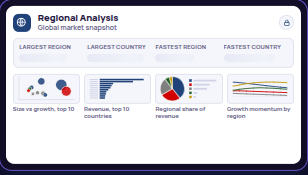
Regional Market Dynamics
- Europe led in 2026, supported by its mature bakery industry, established food-processing infrastructure, and strong demand for convenient frozen bakery products.
- Asia Pacific is the fastest-growing region, supported by expanding bakery consumption, urbanization, food-processing capabilities, organized retail, and demand for convenient products.
Segment Momentum
- Frozen pizza crust accounted for 34.56% of the market in 2026, driven by strong demand for convenient meals and the essential role of additives in preserving texture, shelf life, and product quality.
- Enzymes are the fastest-growing product segment because they improve dough handling, freshness, and product consistency while supporting clean-label formulations and efficient frozen bakery production.
Market Expansion Drivers
- Rising demand for convenient frozen bakery products driving additive formulation innovation
- Increasing health-conscious consumer shift boosting demand for gluten-free bakery additives
- Expanding cold-chain retail infrastructure supporting frozen bakery product penetration globally
Leading Market Participants
- Prominent companies in the frozen bakery additives market include Kerry Group plc (Ireland), Cargill, Incorporated (United States), Archer Daniels Midland Company (United States), Corbion N.V. (Netherlands), Puratos Group (Belgium), Lesaffre et Compagnie (France), Tate & Lyle PLC (United Kingdom), Palsgaard A/S (Denmark)
Global Market Forecast Snapshot
Market Outlook
- 2026 Market Size: USD 2.5 Billion
- 2027 Estimated Market Size: USD 2.61 Billion
- Projected Market Size: USD 4.14 Billion by 2036
- Growth Forecast: 5.18% CAGR (2027-2036)
Regional and Segment Outlook
- Leading Regional Market: Europe
- High-Growth Regional Hub: Asia Pacific
- Core Revenue Segment: Frozen Pizza Crust (Application) | Enzymes (Product)
- Emerging Opportunity Segment: Frozen Cake & Pastry (Application) | Enzymes (Product)
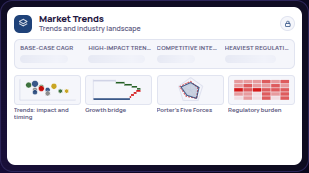
Market Growth Drivers and Industry Trends
Rising demand for convenient frozen bakery products driving additive formulation innovation
Changing consumer lifestyles and growing preference for ready-to-bake and ready-to-eat bakery products are encouraging manufacturers to develop more advanced additive formulations that preserve product quality throughout frozen storage and baking. The frozen bakery additives market growth is driven by the need for ingredients that improve dough stability, maintain texture, enhance flavor retention, and extend product consistency after thawing. Producers are focusing on multifunctional additives that support processing efficiency while ensuring uniform performance across a wide variety of bakery applications. Product innovation is also expanding as manufacturers seek solutions that balance production scalability with the sensory characteristics expected by consumers.
Increasing health-conscious consumer shift boosting demand for gluten-free bakery additives
Growing awareness of dietary preferences and ingredient transparency is encouraging bakery manufacturers to expand gluten-free product portfolios supported by specialized additive solutions. As consumer expectations evolve, the frozen bakery additives market will drive greater adoption of ingredients designed to compensate for the structural and functional properties typically provided by gluten. These additives help improve dough elasticity, moisture retention, texture, and shelf stability while maintaining product quality during freezing and baking processes. Manufacturers are also emphasizing clean-label compatibility and formulation flexibility to address diverse nutritional preferences across retail and foodservice bakery offerings.
Expanding cold-chain retail infrastructure supporting frozen bakery product penetration globally
The expansion of temperature-controlled storage, transportation, and retail distribution networks is improving the availability and quality of frozen bakery products across a broader range of markets. This development will propel the frozen bakery additives market growth by enabling manufacturers to distribute frozen products over longer distances while maintaining product integrity and reducing spoilage risks. Enhanced cold-chain capabilities encourage retailers to diversify frozen bakery assortments, creating demand for additives that preserve freshness, appearance, and baking performance throughout extended storage periods. Improved logistics also support market access in regions where frozen food availability was previously limited due to inadequate refrigeration infrastructure.
| Growth Driver | Impact on CAGR | Regulatory Influence | Geographic Relevance | Adoption Rate | Impact Timeline |
|---|---|---|---|---|---|
| Rising demand for convenient frozen bakery products driving additive formulation innovation | 1.9% | Low | North America, Europe | High | Near Term |
| Increasing health-conscious consumer shift boosting demand for gluten-free bakery additives | 1.7% | Low | Europe, North America | Medium | Mid Term |
| Expanding cold-chain retail infrastructure supporting frozen bakery product penetration globally | 1.4% | Moderate | Asia Pacific, Latin America | Medium | Mid Term |
Unlock insights tailored to your business with our bespoke market research solutions.
Click to get your customized report now.
Regional Demand Dynamics
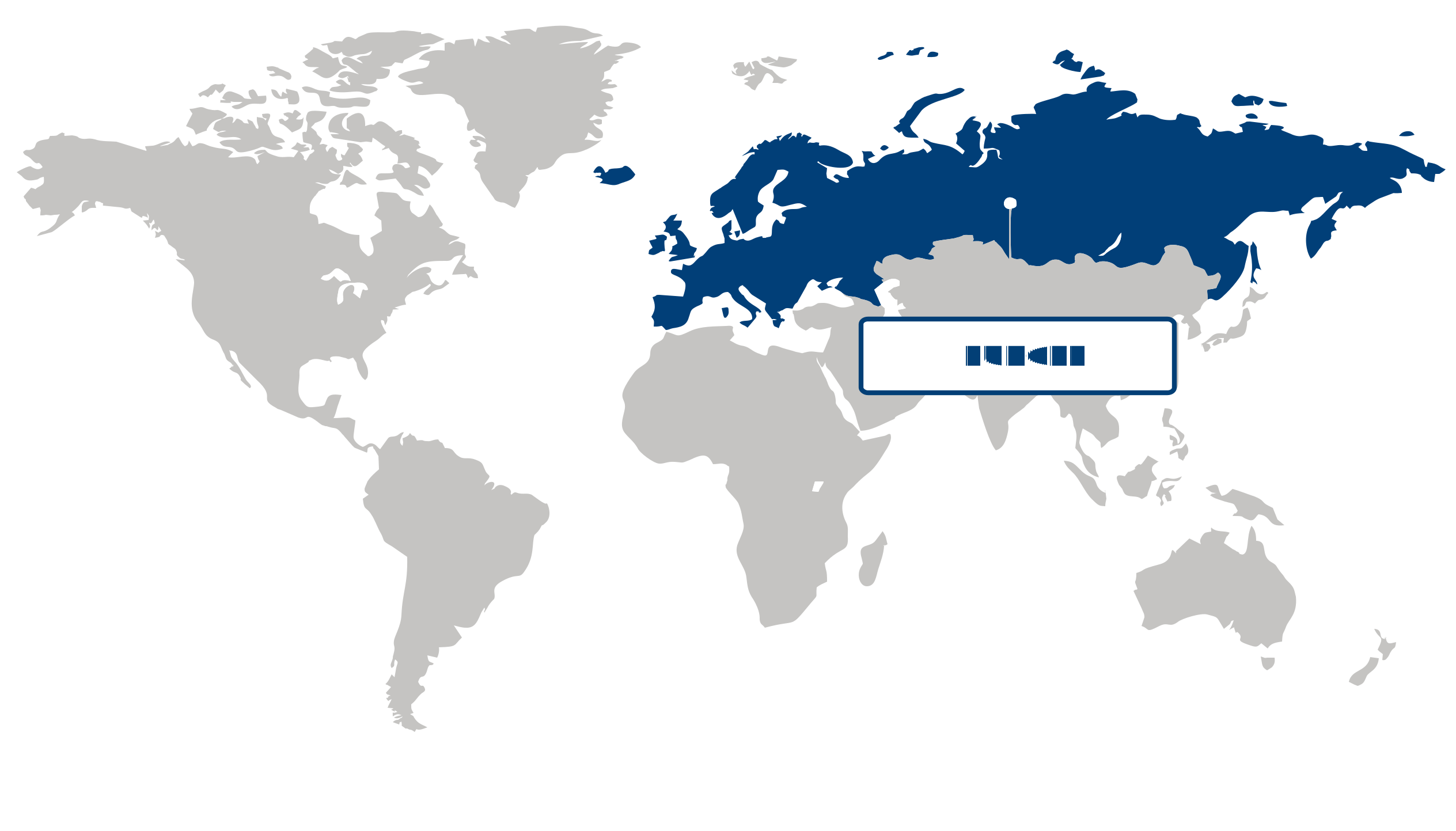
Europe (Largest Region)
Europe accounted for the largest position in the frozen bakery additives market in 2026, supported by a mature bakery industry, strong consumer demand for convenient food products, and widespread adoption of frozen bakery formats across retail and foodservice channels. The region's established food processing infrastructure and emphasis on product quality, shelf life, texture, and consistency are creating steady demand for additives used in frozen dough and bakery applications. Rising preference for ready-to-bake and convenient bakery products is further supporting the use of specialized formulations that maintain product performance during freezing, storage, and preparation.
Asia Pacific (Fastest-Growing Region)
Asia Pacific is anticipated to register the fastest growth, driven by expanding bakery consumption, urbanization, and changing consumer preferences toward convenient and ready-to-eat food products. Growing food processing capabilities and increasing demand for longer-shelf-life bakery products are encouraging manufacturers to adopt frozen bakery additives, while the expansion of organized retail and foodservice channels is creating additional opportunities for market growth.
| Parameter | North America | Asia Pacific | Europe | Latin America | MEA |
|---|---|---|---|---|---|
| Innovation HubiScaleNascentDeveloping Advanced | |||||
| Cost-Sensitive RegioniScaleLowMedium High | |||||
| Regulatory EnvironmentiScaleRestrictiveNeutral Supportive | |||||
| Demand DriversiScaleWeakModerate Strong | |||||
| Development StageiScaleEmergingDeveloping Developed | |||||
| Adoption RateiScaleLowMedium High | |||||
| New Entrants / StartupsiScaleSparseModerate Dense | |||||
| Macro IndicatorsiScaleWeakStable Strong |
Key Country Insights
United States 🇺🇸
Convenience Product InnovationThe U.S. frozen bakery additives market is driven by demand for clean-label formulations, extended shelf life, and consistent product quality. Manufacturers are investing in enzyme blends and functional ingredient solutions that improve processing efficiency while meeting evolving consumer expectations for premium frozen baked goods.
Germany 🇩🇪
Functional Ingredient DevelopmentGermany emphasizes high-performance bakery additives that enhance dough stability, texture, and production consistency for frozen applications. The country's ingredient suppliers focus on formulation innovation that supports industrial bakeries while aligning with quality and clean-label requirements.
Japan 🇯🇵
Precision Baking FormulationsJapan prioritizes frozen bakery additives that maintain product texture, freshness, and appearance throughout freezing and thawing cycles. Ingredient manufacturers continue refining specialty formulations that support premium bakery products and efficient commercial production processes.
South Korea 🇰🇷
Process Efficiency SolutionsSouth Korea is expanding the use of frozen bakery additives to improve production consistency and accommodate growing demand for convenience bakery products. Companies are adopting advanced ingredient systems that enhance dough performance and product stability across modern manufacturing facilities.
France 🇫🇷
Premium Baking QualityFrance focuses on frozen bakery additives that preserve authentic texture, flavor, and product quality across artisan and industrial bakery segments. Ingredient suppliers continue developing solutions that balance processing efficiency with traditional bakery characteristics valued by commercial producers.
Italy 🇮🇹
Artisan Production SupportItaly integrates frozen bakery additives that strengthen dough handling and maintain quality in premium baked goods. The country's manufacturers emphasize ingredient solutions that support efficient frozen production while preserving the sensory characteristics expected in traditional bakery products.
Frozen Bakery Additives Market Share (%), by Application, 2026
Go beyond the chart, access full insights & data tables
Request Free Sample ReportApplication Segment Analysis: Frozen Pizza Crust (Largest Segment) vs Frozen Cake & Pastry (Fastest-Growing Segment)
Holding the largest share of the frozen bakery additives market, the frozen pizza crust segment accounted for 34.56% in 2026. Its leadership is supported by the sustained demand for convenient meal solutions and the widespread consumption of frozen pizza across retail and foodservice channels. Additives play a critical role in preserving dough consistency, improving texture, extending shelf life, and maintaining product quality after freezing and baking, making them indispensable for frozen pizza crust production. Continuous product innovation and the expansion of premium frozen food offerings further reinforce the segment's strong market position.
The frozen cake & pastry segment is expected to register the fastest growth as manufacturers increasingly focus on premium frozen desserts with superior texture, moisture retention, and visual appeal. Bakery additives help maintain product freshness during frozen storage while supporting consistent baking performance and product stability. Rising consumer preference for ready-to-bake indulgent products and the growing availability of frozen bakery items through modern retail channels continue to strengthen demand for additives in this segment.
Product Segment Analysis: Enzymes (Largest & Fastest-Growing Segment)
The frozen bakery additives market was led by the enzymes segment, which held the largest share of 28.62% in 2026 while also emerging as the fastest-growing segment. Enzymes are extensively used to improve dough handling, enhance crumb softness, extend freshness, and maintain consistent product quality throughout freezing and thawing processes. Their ability to optimize production efficiency while reducing dependence on chemical additives aligns with the industry's increasing focus on clean-label formulations and high-performance bakery ingredients. As frozen bakery manufacturers continue introducing premium and convenience-oriented products, the demand for enzyme-based solutions is expected to remain particularly strong.
| Segment | Sub-Segment | Largest Segment | Fastest Growing |
|---|---|---|---|
| Application | Frozen Bread, Frozen Biscuits & Cookies, Frozen Cake & Pastry, Frozen Pizza Crust, Frozen Dough | Frozen Pizza Crust | Frozen Cake & Pastry |
| Product | Flavor & Enhancer, Oxidizing Agents, Colorants, Enzymes, Reducing Agents, Leavening Agents, Emulsifiers | Enzymes | Enzymes |
Competitive Landscape and Market Positioning
Leading companies in the frozen bakery additives market:
- Kerry Group plc (Ireland)
- Cargill Incorporated (United States)
- Archer Daniels Midland Company (United States)
- Corbion N.V. (Netherlands)
- Puratos Group (Belgium)
- Lesaffre et Compagnie (France)
- Tate & Lyle PLC (United Kingdom)
- Palsgaard A/S (Denmark)
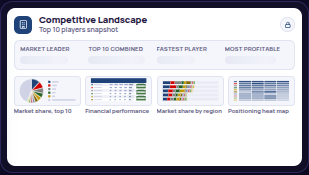
Competitive dynamics within the frozen bakery additives market are evolving as ingredient developers focus on enabling consistent product quality across increasingly complex frozen processing and distribution environments. Innovation is centered on formulations that preserve texture, flavor stability, and shelf life while responding to changing expectations for cleaner ingredient profiles and greater formulation flexibility. Suppliers capable of balancing functional performance with evolving regulatory and consumer requirements are expanding their competitive reach, while application expertise and collaborative product development are becoming increasingly important in supporting diverse bakery manufacturers across multiple product categories.
| Company | Market Share | Company Revenue | Revenue CAGR (%) | Product Portfolio | Geographic Presence | Innovation / R&D Focus | Strategic Developments |
|---|---|---|---|---|---|---|---|
| Kerry Group plc (Ireland) | |||||||
| Cargill Incorporated (United States) | |||||||
| Archer Daniels Midland Company (United States) | |||||||
| Corbion N.V. (Netherlands) | |||||||
| Puratos Group (Belgium) | |||||||
| Lesaffre et Compagnie (France) | |||||||
| Tate & Lyle PLC (United Kingdom) | |||||||
| Palsgaard A/S (Denmark) |
Industry Development/News
| Company Name | Date | Key Development |
|---|---|---|
| Martin Braun-Gruppe | Feb-25 | Hannover-based bakery ingredients and frozen baked foods provider Martin Braun-Gruppe acquired Malden, Massachusetts-based Hoff's Bakery to expand its footprint in the U.S. retail and foodservice sectors. Hoff's Bakery, founded in 1983, specializes in fully finished frozen cakes and desserts, with Nicole Paparian continuing to serve as CEO. |
| CSM Ingredients | Nov-24 | CSM Ingredients partnered with Italian firm Heallo, showcasing innovations at Fi Europe 2024 aimed at developing low glycemic impact bakery products. The collaboration features nutritionally enhanced items, including a protein croissant incorporating textured vegetable protein, specialized protein mixes, and a chocolate protein cream. |
| General Mills | Sep-23 | General Mills announced strategic plans to establish a new baking mixes manufacturing facility in India to address local demand for Pillsbury baking mixes, with full operational capacity targeted for August 2024. |
| Europastry | Dec-22 | Europastry acquired Dawn Foods' frozen bakery manufacturing operations across Europe, the Middle East, Africa, Asia, and the Pacific. The transaction encompassed manufacturing facilities in the Netherlands and the United Kingdom, substantially expanding the company's regional production capabilities and customer base. |
Customize Your Report
Explore examples of how this report can be tailored to different research needs, including custom segments, additional topics or chapters, and related reports. Click a section of the wheel or its numbered marker to explore the available options.
Frozen Bakery Additives Market — Custom Segments
| Segment | Sub-Segment |
|---|---|
| Natural vs. Synthetic | Natural Additives, Synthetic Additives |
| Clean Label Status | Clean Label, Conventional |
| End-User | Industrial Bakeries, Foodservice Operators, Retail Bakeries |
Frozen Bakery Additives Market — Custom TOC
| Custom Chapter | Chapter Details |
|---|---|
| Clean-Label Reformulation Strategies |
|
| Shelf-Life Economics in Frozen Bakery |
|
| Bakery Manufacturer Procurement Priorities |
|
Need a different cut of the data?
Request Custom ResearchFrequently Asked Questions
What is the market size of frozen bakery additives?
What is the expected industry size of frozen bakery additives by 2036?
How are changing consumer preferences influencing innovation in frozen bakery additives?
Why is cold-chain expansion strategically important for the frozen bakery additives market?
Why does the frozen pizza crust segment lead the frozen bakery additives market?
Why are enzymes the fastest-growing product segment in the frozen bakery additives market?
Why does Europe hold the leading position in frozen bakery additives?
How is Asia Pacific driving future market growth?
Which organizations are considered leaders in the frozen bakery additives landscape?
Our Clients
"The report provided a thorough look at market trends, technological advancements, and the competitive landscape. The depth of insights was really valuable."
ITC Limited
"We would highly recommend Fundamental Business Insights & Consulting to anyone looking for reliable, detailed, and comprehensive market research in the Food industry."
Tyson Foods
"The clarity and presentation of the information were commendable. The report was delivered timely, which made the overall experience smooth and convenient."
Mondelēz International
Our Research Team & Methodology
Every Fundamental Business Insights report is built by a dedicated vertical research team, validated through a structured primary-and-secondary methodology, and reviewed for accuracy before it reaches you.
Delivery
Published
Available
Support
- Market Size & Forecast
- Market Segmentation
- Regional Analysis
- Growth Drivers & Challenges
- Market Dynamics
- Competitive Landscape
- Company Profiles
- Competitive Benchmarking
- Mergers & Acquisitions
- Market Share Analysis or Key Company Strategies
- Value Chain Analysis
- Porter's Five Forces
- PESTLE Analysis
- Pricing Trends
- Supply-Demand Analysis
- Technology Landscape
- Regulatory Landscape
- Investment & Funding Landscape
- Emerging Opportunities
- Future Market Outlook