Garment Steamer Market Size & Growth Forecast 2027–2036, By Segments (Distribution Channel, Application), Regional Demand Trends (North America, Asia Pacific, Europe), Key Country Insights (U.S., Japan, South Korea, Germany, France, Italy), and Competitive Landscape
Jump to content
Market Size and Growth Outlook
Garment Steamer Market size stood at USD 3.6 billion in 2026 and is predicted to grow at a 5.51% CAGR from 2027 to 2036, attaining USD 6.16 billion by 2036. The industry revenue for 2027 is estimated at USD 3.77 billion.
Get more details on this report
Request Free Sample ReportGarment Steamer Market Intelligence Snapshot
Regional Market Dynamics
- Europe leads with 36.57% share due to strong appliance penetration, wide retail availability, and consistent consumer demand for convenient fabric-care solutions across households.
- Asia Pacific is expanding at 6.67% CAGR, driven by urban consumption, rising adoption of compact appliances, and growing e-commerce access supporting mass-market penetration.
Segment Momentum
- Online accounted for 80.66% of the market in 2026 because it enables easy comparison of product types, pricing, portability, and user reviews while offering wider product availability across entry-level and premium models.
- Curtains are the fastest-growing application because garment steamers allow large hanging fabrics to be refreshed without removal, providing a more convenient wrinkle-removal solution than conventional ironing methods.
Market Expansion Drivers
- Rising consumer preference for quick, convenient fabric care solutions replacing traditional ironing methods.
- Growth in e-commerce channels expanding accessibility and penetration of home appliance products.
- Increasing adoption in hospitality and retail sectors enhancing professional garment maintenance demand.
Leading Market Participants
- Major players in the garment steamer market include Koninklijke Philips N.V. (Netherlands), AB Electrolux (Sweden), Panasonic Corporation (Japan), Haier Smart Home Co., Ltd. (China), Midea Group Co., Ltd. (China), Groupe SEB S.A. (France), Conair LLC (United States), Jiffy Steamer Company, LLC (United States), Flyco Electrical Appliance Co., Ltd. (China), PurSteam LLC (United States).
Global Market Forecast Snapshot
Market Outlook
- 2026 Market Size: USD 3.6 billion
- 2027 Estimated Market Size: USD 3.77 billion.
- Projected Market Size: USD 6.16 billion by 2036
- Growth Forecast: 5.51% CAGR (2027-2036)
Regional and Segment Outlook
- Leading Regional Market: Europe
- High-Growth Regional Hub: Asia Pacific
- Core Revenue Segment: Online (Distribution Channel) | Clothes (Application)
- Emerging Opportunity Segment: Supermarket/Hypermarket (Distribution Channel) | Curtains (Application)
Market Growth Drivers and Industry Trends
Rising consumer preference for quick, convenient fabric care solutions replacing traditional ironing methods
Demand for time-saving household appliances is supporting the garment steamer market as consumers increasingly prioritize convenient approaches to everyday clothing maintenance. Garment steamers can remove wrinkles without requiring the same setup associated with conventional ironing, making them particularly suitable for rapid touch-ups before work, travel, or social occasions. Their ability to handle different garment types and provide vertical steaming is also attractive to consumers seeking flexible fabric-care routines. As busy lifestyles increase the value placed on appliances that reduce preparation time and simplify household tasks, garment steamers are gaining relevance as an alternative or complementary solution to traditional irons.
Growth in e-commerce channels expanding accessibility and penetration of home appliance products
The continued expansion of online retail is widening access to the garment steamer market by allowing consumers to research, compare, and purchase fabric-care appliances without relying solely on physical stores. E-commerce platforms provide manufacturers and sellers with broader geographic reach while enabling product demonstrations, specifications, customer reviews, and usage information to influence purchasing decisions. The availability of compact handheld models and varied product configurations through digital marketplaces is also helping garment steamers appeal to different household requirements. Greater online visibility can introduce the category to consumers who may not have previously considered steam-based garment care, while convenient home delivery supports purchasing across diverse markets.
Increasing adoption in hospitality and retail sectors enhancing professional garment maintenance demand
Commercial adoption across hotels, clothing retailers, garment stores, and other customer-facing businesses is contributing to the garment steamer market as organizations require efficient methods for maintaining the appearance of apparel and textiles. Hospitality operators may use steamers for uniforms, curtains, bedding, and guest-facing fabrics, while retail businesses rely on garment presentation to ensure products remain visually appealing on sales floors and during customer interactions. Steam-based care can provide a practical solution for removing creases from garments without extensive handling, particularly when products must be prepared quickly for display or service. Increasing emphasis on professional presentation is therefore supporting the use of garment steamers in operational and merchandising environments.
| Growth Driver | Impact on CAGR | Regulatory Influence | Geographic Relevance | Adoption Rate | Impact Timeline |
|---|---|---|---|---|---|
| Rising consumer preference for quick, convenient fabric care solutions replacing traditional ironing methods | 2.00% | Low | North America, Europe, Asia Pacific | High | Near Term |
| Growth in e-commerce channels expanding accessibility and penetration of home appliance products | 1.80% | Low | Asia Pacific, North America | High | Near Term |
| Increasing adoption in hospitality and retail sectors enhancing professional garment maintenance demand | 1.70% | Moderate | Europe, Asia Pacific | Medium | Mid Term |
Unlock insights tailored to your business with our bespoke market research solutions.
Click to get your customized report now.
Regional Demand Dynamics
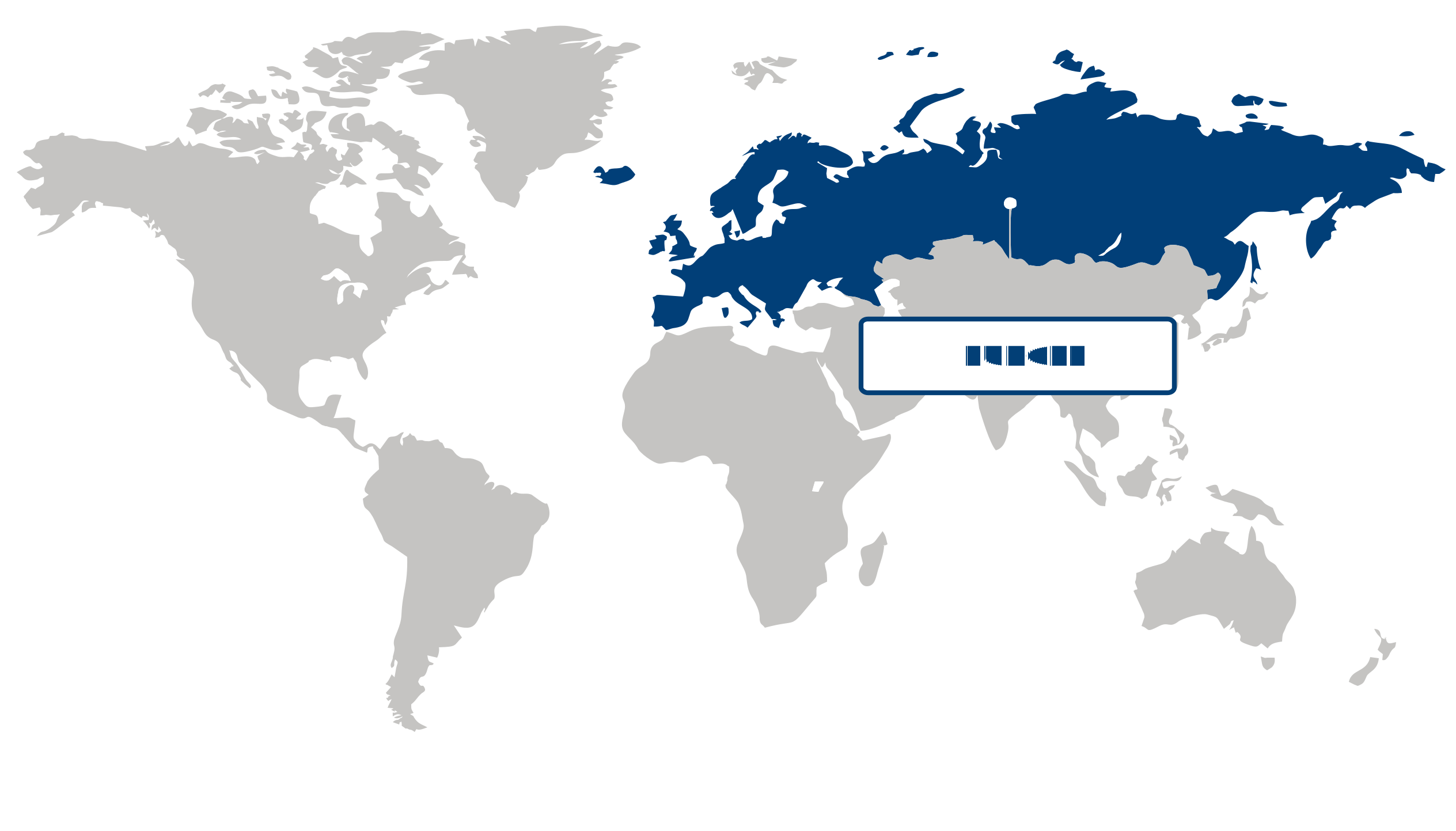
Europe (Largest Region)
Europe dominated the garment steamer market, accounting for a 36.57% share in 2026, supported by established household appliance markets, strong consumer demand for convenient garment-care solutions, and widespread awareness of fabric-friendly clothing maintenance. Consumers increasingly value appliances that simplify daily routines while providing effective wrinkle removal for different types of apparel. Garment steamers are particularly suited to modern lifestyles because of their convenience, portability, and ability to refresh garments without extensive preparation. The region's developed retail infrastructure and strong penetration of premium household appliances further support product accessibility. Continued innovation in compact designs, ease of operation, and improved steaming performance is also encouraging adoption among households seeking more efficient alternatives to conventional ironing.
Asia Pacific (Fastest-Growing Region)
Asia Pacific represents the fastest-growing region, supported by rapid urbanization, rising household purchasing power, and increasing demand for convenient lifestyle appliances. Expanding professional workforces and increasingly time-conscious urban consumers are creating greater interest in products that reduce the effort involved in routine clothing care. Growth in organized retail and e-commerce is improving access to garment steamers across a wider range of markets, while rising awareness of modern fabric-care technologies is encouraging consumers to explore alternatives to traditional irons. Manufacturers are also introducing portable and user-friendly products that appeal to smaller urban households. As household appliance adoption broadens and convenience becomes a stronger purchasing consideration, the region is gaining momentum in garment steamer demand.
| Parameter | North America | Asia Pacific | Europe | Latin America | MEA |
|---|---|---|---|---|---|
| Innovation HubiScaleNascentDeveloping Advanced | |||||
| Cost-Sensitive RegioniScaleLowMedium High | |||||
| Regulatory EnvironmentiScaleRestrictiveNeutral Supportive | |||||
| Demand DriversiScaleWeakModerate Strong | |||||
| Development StageiScaleEmergingDeveloping Developed | |||||
| Adoption RateiScaleLowMedium High | |||||
| New Entrants / StartupsiScaleSparseModerate Dense | |||||
| Macro IndicatorsiScaleWeakStable Strong |
Key Country Insights
Germany 🇩🇪
Precision Appliance StandardsGermany values garment steamers offering durability, energy efficiency, and reliable performance. Brands serving Germany increasingly incorporate advanced temperature control and premium build quality to meet expectations for long-lasting household appliances.
France 🇫🇷
Premium Fabric CareFrance favors garment steamers that protect delicate garments while delivering professional-quality wrinkle removal. Brands in France highlight gentle steaming performance and elegant product design to appeal to consumers investing in premium apparel care.
Italy 🇮🇹
Fashion Care FocusItaly supports garment steamer demand through strong consumer interest in apparel maintenance and textile quality. Companies in Italy develop efficient steaming solutions that preserve garment appearance while fitting both household and boutique retail applications.
Japan 🇯🇵
Compact Urban UtilityJapan prioritizes compact garment steamers designed for limited living spaces and frequent everyday use. Companies in Japan focus on lightweight construction, rapid steam generation, and user-friendly operation for modern urban consumers.
South Korea 🇰🇷
Smart Home IntegrationSouth Korea encourages garment steamers featuring modern aesthetics and convenient performance enhancements. Manufacturers in South Korea increasingly introduce products with improved steam efficiency and compact storage to complement connected home appliance ecosystems.
United States 🇺🇸
Home Convenience SolutionsThe U.S. garment steamer market is driven by demand for convenient fabric care solutions suited to busy households and hybrid lifestyles. Manufacturers in the U.S. emphasize portable designs, faster heating, and multi-fabric compatibility across consumer product lines.
Garment Steamer Market Share (%), by Distribution Channel, 2026
Go beyond the chart, access full insights & data tables
Request Free Sample ReportDistribution Channel Segment Analysis: Online (Largest Segment) vs Supermarket/Hypermarket (Fastest-Growing Segment)
The online segment dominated the garment steamer market, accounting for a 80.66% share in 2026, supported by the convenience of digital purchasing, extensive product availability, and consumers' ability to compare specifications, prices, features, and reviews before making a purchase. Garment steamers are particularly suited to e-commerce because consumers can evaluate product functionality and portability through detailed online listings without requiring an in-store demonstration. Digital channels also provide access to a broad range of models for different household and professional needs, while home delivery simplifies procurement of small household appliances. The continued integration of online shopping into consumer purchasing behavior therefore supports the strong position of this channel.
Supermarkets and hypermarkets are expected to represent the fastest-growing distribution channel as these large-format retailers expand their household appliance assortments and provide consumers with convenient access to garment-care products during routine shopping trips. Physical retail allows customers to examine product design, size, handling characteristics, and packaging before purchasing, which can be valuable for appliance categories where usability influences buying decisions. Promotional displays and broader in-store visibility can also increase consumer awareness of garment steamers. As modern retail networks strengthen their household appliance offerings, supermarket and hypermarket channels are positioned to capture a growing share of demand.
Application Segment Analysis: Clothes (Largest Segment) vs Curtains (Fastest-Growing Segment)
The clothes segment represented the largest share of the garment steamer market in 2026, accounting for a 57.54% share, driven by the widespread need to remove wrinkles from everyday apparel while minimizing the effort associated with conventional ironing. Garment steamers provide a convenient solution for refreshing and smoothing clothing, particularly for delicate fabrics and garments that can be difficult to handle with traditional irons. Their ease of use, relatively quick operation, and suitability for routine garment care make them attractive for household consumers as well as users with frequent clothing-maintenance needs. Growing emphasis on personal appearance and efficient garment-care routines further supports the dominance of clothing applications.
The curtains segment is expected to grow at the fastest rate as consumers and commercial users increasingly recognize steaming as a convenient method for refreshing and smoothing large fabric surfaces that can be difficult to remove and iron conventionally. Steamers can be used on hanging curtains, reducing the need for extensive handling or removal during maintenance. Increasing attention to home presentation, fabric care, and convenient household cleaning routines is supporting greater awareness of this application. The versatility of modern garment steamers across different textile surfaces is also expanding their use beyond clothing, creating additional opportunities for curtain-care applications.
| Segment | Sub-Segment | Largest Segment | Fastest Growing |
|---|---|---|---|
| Distribution Channel | Supermarket/Hypermarket, Online | Online | Supermarket/Hypermarket |
| Application | Clothes, Curtains, Carpets, Others | Clothes | Curtains |
Competitive Landscape and Market Positioning
Prominent players in the garment steamer market:
1. Koninklijke Philips N.V. (Netherlands)
2. AB Electrolux (Sweden)
3. Panasonic Corporation (Japan)
4. Haier Smart Home Co. Ltd. (China)
5. Midea Group Co. Ltd. (China)
6. Groupe SEB S.A. (France)
7. Conair LLC (United States)
8. Jiffy Steamer Company LLC (United States)
9. Flyco Electrical Appliance Co. Ltd. (China)
10. PurSteam LLC (United States)
The garment steamer market is advancing through compact, multifunctional device innovations tailored for modern households. Strong R&D activity is enabling smarter steam control and improved energy efficiency. The garment steamer market is also witnessing rapid product diversification to match changing lifestyle needs.
| Company | Market Share | Company Revenue | Revenue CAGR (%) | Product Portfolio | Geographic Presence | Innovation / R&D Focus | Strategic Developments |
|---|---|---|---|---|---|---|---|
| Koninklijke Philips N.V. (Netherlands) | |||||||
| AB Electrolux (Sweden) | |||||||
| Panasonic Corporation (Japan) | |||||||
| Haier Smart Home Co. Ltd. (China) | |||||||
| Midea Group Co. Ltd. (China) | |||||||
| Groupe SEB S.A. (France) | |||||||
| Conair LLC (United States) | |||||||
| Jiffy Steamer Company LLC (United States) | |||||||
| Flyco Electrical Appliance Co. Ltd. (China) | |||||||
| PurSteam LLC (United States). |
Industry Development / News
| Company Name | Date | Key Development |
|---|---|---|
| Xiaomi | Jan-26 | Xiaomi launched the Mijia Garment Steamer 2 featuring high-capacity steam output of 120 g/min and 500 kPa pressure, alongside dual-heating technology and six fabric-care modes. The product strengthens Xiaomi’s positioning in smart garment care appliances with enhanced performance and fabric-specific treatment functionality. |
| Xiaomi | Apr-24 | Xiaomi introduced a handheld garment steamer in India during its Smart Living launch event, featuring a 160 ml water tank, 775 g lightweight design, and folding structure. The device integrates 1300W continuous steam output, dual heat ironing plate, and rapid 26-second preheating to improve portability and performance efficiency. |
| Philips | Dec-23 | Philips launched the 7000 Series handheld garment steamer (STH7040/80) featuring OptimalTEMP technology enabling safe use across all ironable fabrics without burn risk. The device extends operational durability by up to 70% versus standard models and claims up to 99.99% bacterial elimination for garment refresh and hygiene improvement. |
| Conair | Apr-23 | Conair launched the Steam & Press with Turbo garment care appliance featuring turbo boost steam functionality for enhanced wrinkle removal performance. The compact design targets home and travel use cases, emphasizing improved steam efficiency for faster garment refresh while maintaining fabric-safe operation. |
| Philips | Jul-22 | Philips launched the Handheld Clothing Steamer 7000 Series designed for portable garment care, featuring adjustable head movement, 100 ml water tank, and dual steam settings (Eco and Max). The product targets both consumer and travel segments with emphasis on compact usability and wrinkle removal efficiency. |
Customize Your Report
Explore examples of how this report can be tailored to different research needs, including custom segments, additional topics or chapters, and related reports. Click a section of the wheel or its numbered marker to explore the available options.
Garment Steamer Market — Custom Segments
| Segment | Sub-Segment |
|---|---|
| Product Type | Handheld Steamers, Upright Steamers, Travel Steamers, Steam Presses |
| End User | Household Consumers, Commercial Laundries, Hotels & Hospitality, Apparel Retailers & Garment Services |
| Price Tier | Economy, Mid-Range, Premium |
Garment Steamer Market — Custom TOC
| Custom Chapter | Chapter Details |
|---|---|
| Consumer Usage Behavior and Demand Analysis |
|
| Product Innovation Roadmap |
|
| E-Commerce and Omnichannel Growth Strategy |
|
Need a different cut of the data?
Request Custom ResearchFrequently Asked Questions
How large is the garment steamer market?
What is the expected industry size of garment steamer by 2036?
How are changing consumer lifestyles influencing demand in the garment steamer market?
Why is commercial adoption becoming an important growth driver for the garment steamer market?
Why is the online channel the largest in the garment steamer market?
Why are curtains the fastest-growing application in the garment steamer market?
Why does Europe lead the garment steamer market?
What is driving growth in Asia Pacific garment steamer demand?
Who holds a significant market share in the garment steamer landscape?
Our Clients
"The report provided us with a clear direction, and the level of detail was beyond what we expected. I would definitely recommend their services to others."
Haier Appliances
"The collaboration with Fundamental Business Insights has added significant value to our decision-making process, and we look forward to continuing this partnership for our future market research requirements."
Luxottica Group S.p.A.
"The team at FBI delivered an exceptional research report. The insights on industry innovations were particularly impressive and added a lot of value to the overall report."
Nike
Our Research Team & Methodology
Every Fundamental Business Insights report is built by a dedicated vertical research team, validated through a structured primary-and-secondary methodology, and reviewed for accuracy before it reaches you.
Delivery
Published
Available
Support
- Market Size & Forecast
- Market Segmentation
- Regional Analysis
- Growth Drivers & Challenges
- Market Dynamics
- Competitive Landscape
- Company Profiles
- Competitive Benchmarking
- Mergers & Acquisitions
- Market Share Analysis or Key Company Strategies
- Value Chain Analysis
- Porter's Five Forces
- PESTLE Analysis
- Pricing Trends
- Supply-Demand Analysis
- Technology Landscape
- Regulatory Landscape
- Investment & Funding Landscape
- Emerging Opportunities
- Future Market Outlook