Gluten-free Chocolate Market Size & Growth Forecast 2027–2036, By Segments (Product), Regional Demand Trends (North America, Asia Pacific, Europe), Key Country Insights (U.S., Japan, South Korea, Germany, France, Italy), and Competitive Landscape
Market Size and Growth Outlook
Gluten-free Chocolate Market size stood at USD 2.1 billion in 2026 and is predicted to grow at a 7.89% CAGR from 2027 to 2036, attaining USD 4.49 billion by 2036. The industry revenue for 2027 is calculated at USD 2.24 billion.
Get more details on this report
Request Free Sample ReportGluten-free Chocolate Market Intelligence Snapshot
Regional Market Dynamics
- Europe led the market in 2026 due to strong consumer familiarity with free-from foods, mature labeling practices, broad retail availability, and consistent demand for specialty confectionery.
- Asia Pacific is projected to grow at a 9.38% CAGR, supported by expanding modern retail, e-commerce, greater exposure to specialty confectionery, and rising demand for ingredient-aware products.
Segment Momentum
- Dark chocolate captured a 41.13% share in 2026, supported by its cleaner ingredient profile, higher cocoa content, and strong alignment with consumer preferences for credible gluten-free and premium chocolate products.
- Dark chocolate is also the fastest-growing segment because consumers seeking gluten-free products increasingly prioritize ingredient composition, cleaner-label formulations, and trusted product positioning for both everyday and premium purchases.
Market Expansion Drivers
- Rising prevalence of celiac disease increasing demand for certified gluten-free confectionery products.
- Growing consumer preference for healthier indulgence products boosting gluten-free chocolate consumption.
- Expansion of premium gluten-free bakery and snack portfolios supporting specialty chocolate innovation.
Leading Market Participants
- Major players in the gluten-free chocolate market include Endangered Species Chocolate LLC (United States), Taza Chocolate LLC (United States), nibmor (United States), Dr. Schär AG (Italy), Alter Eco Foods (United States), Enjoy Life Foods (United States), Hu Kitchen (United States), Lily's Sweets (United States), UNREAL Chocolates (United States).
Global Market Forecast Snapshot
Market Outlook
- 2026 Market Size: USD 2.1 billion
- 2027 Estimated Market Size: USD 2.24 billion.
- Projected Market Size: USD 4.49 billion by 2036
- Growth Forecast: 7.89% CAGR (2027-2036)
Regional and Segment Outlook
- Leading Regional Market: Europe
- High-Growth Regional Hub: Asia Pacific
- Core Revenue Segment: Dark (Product)
- Emerging Opportunity Segment: Dark (Product)
Market Growth Drivers and Industry Trends
Rising prevalence of celiac disease increasing demand for certified gluten-free confectionery products
The gluten-free chocolate market will benefit from the rising prevalence of celiac disease as consumers increasingly seek confectionery products that meet certified gluten-free requirements. This demand encourages manufacturers and retailers to expand clearly labeled chocolate offerings, strengthen product assurance, and address the needs of consumers requiring greater confidence in ingredient suitability.
Growing consumer preference for healthier indulgence products boosting gluten-free chocolate consumption
Growing interest in healthier forms of indulgence is supporting the gluten-free chocolate market as consumers look for confectionery options that align with changing dietary preferences. Manufacturers can respond by developing products that combine indulgent chocolate experiences with gluten-free positioning, broadening appeal beyond consumers who specifically avoid gluten for medical reasons.
Expansion of premium gluten-free bakery and snack portfolios supporting specialty chocolate innovation
Expansion of premium gluten-free bakery and snack portfolios is creating additional opportunities for the gluten-free chocolate market through greater product variety and specialty formulation. As these categories become more sophisticated, chocolate manufacturers can develop differentiated offerings suited to premium applications, supporting innovation in flavors, formats, and product positioning.
| Growth Driver | Impact on CAGR | Regulatory Influence | Geographic Relevance | Adoption Rate | Impact Timeline |
|---|---|---|---|---|---|
| Rising prevalence of celiac disease increasing demand for certified gluten-free confectionery products | 1.90% | Moderate | North America, Europe | High | Near Term |
| Growing consumer preference for healthier indulgence products boosting gluten-free chocolate consumption | 1.70% | Low | North America, Asia Pacific | High | Near Term |
| Expansion of premium gluten-free bakery and snack portfolios supporting specialty chocolate innovation | 1.30% | Low | Europe, North America | Medium | Mid Term |
Unlock insights tailored to your business with our bespoke market research solutions.
Click to get your customized report now.
Regional Demand Dynamics
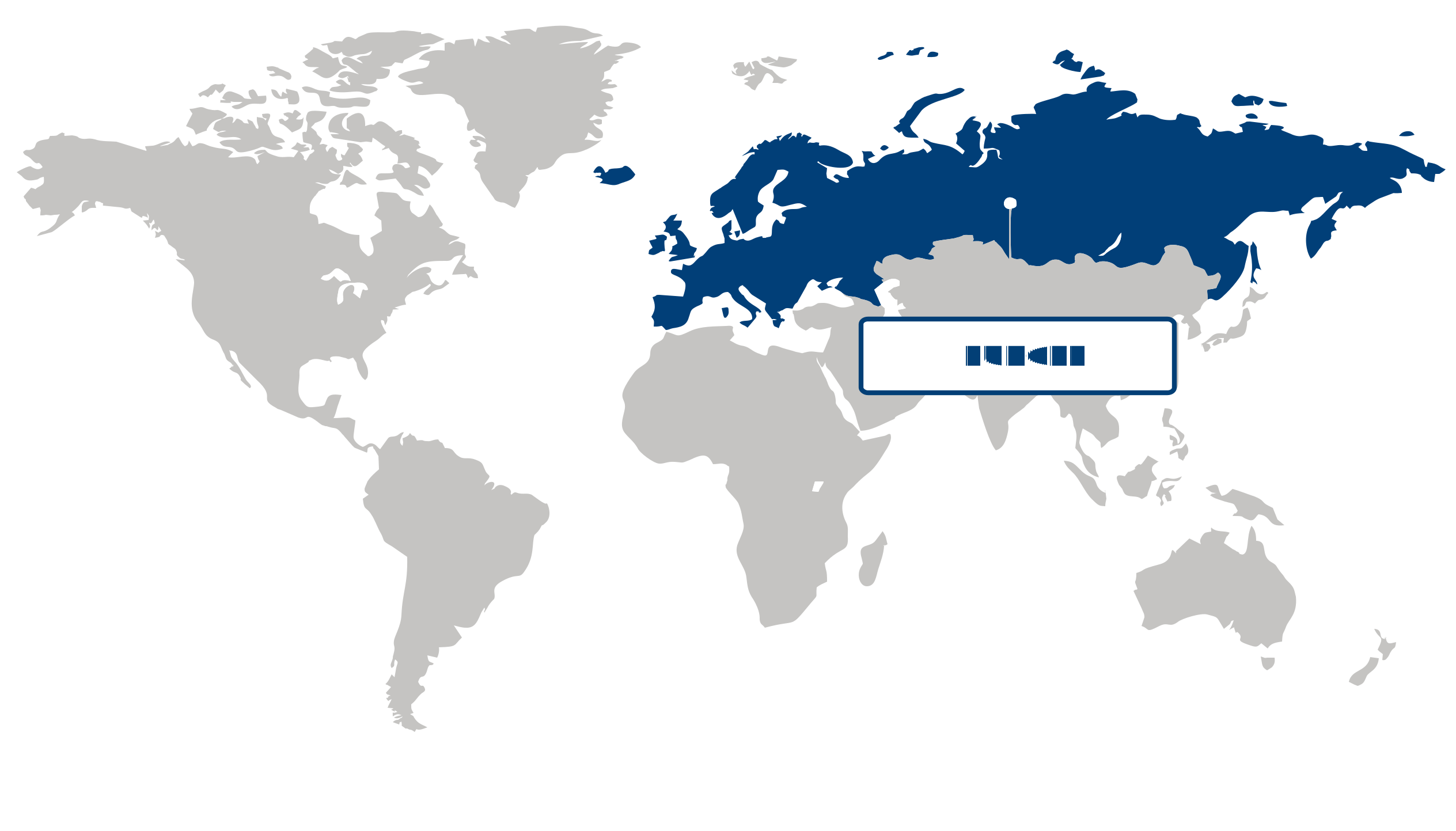
Europe (Largest Region)
Europe led the gluten-free chocolate market, supported by strong consumer awareness of gluten-related dietary requirements, established premium chocolate consumption, and widespread availability of specialty and health-oriented confectionery products. The region benefits from mature food labeling practices, developed retail and e-commerce networks, and growing demand for products positioned around clean-label, free-from, and wellness attributes. Manufacturers are also responding to changing dietary preferences by expanding gluten-free chocolate offerings across premium, organic, and functional product categories, while established consumer familiarity with high-quality chocolate continues to reinforce regional demand. Europe held the largest share in 2026.
Asia Pacific (Fastest-Growing Region)
Asia Pacific is emerging as the fastest-growing regional market, driven by expanding urban populations, rising disposable incomes, evolving dietary preferences, and increasing exposure to international confectionery trends. Growing retail modernization and the rapid development of e-commerce are improving access to specialized gluten-free products beyond major urban centers. In addition, rising consumer interest in healthier indulgence, food transparency, and alternative dietary choices is encouraging manufacturers and retailers to broaden gluten-free chocolate selections. Premiumization within the confectionery sector and increasing awareness of specialized nutrition are expected to further support market development across the region.
| Parameter | North America | Asia Pacific | Europe | Latin America | MEA |
|---|---|---|---|---|---|
| Innovation Hub i Scale Nascent Developing Advanced | |||||
| Cost-Sensitive Region i Scale Low Medium High | |||||
| Regulatory Environment i Scale Restrictive Neutral Supportive | |||||
| Demand Drivers i Scale Weak Moderate Strong | |||||
| Development Stage i Scale Emerging Developing Developed | |||||
| Adoption Rate i Scale Low Medium High | |||||
| New Entrants / Startups i Scale Sparse Moderate Dense | |||||
| Macro Indicators i Scale Weak Stable Strong |
Key Country Insights
Germany 🇩🇪
Premium Ingredient StandardsGermany emphasizes gluten-free chocolate products made with premium ingredients and clear quality certifications. Consumer demand encourages manufacturers to develop artisanal and organic offerings that combine dietary compliance with premium taste experiences.
France 🇫🇷
Artisan Chocolate AdaptationFrance is incorporating gluten-free options into premium chocolate portfolios without compromising traditional craftsmanship. Producers are responding to evolving dietary preferences by offering certified products through specialty food retailers and gourmet channels.
Italy 🇮🇹
Premium Specialty OfferingsItaly is expanding gluten-free chocolate production through established confectionery manufacturers and specialty brands. Market priorities focus on authentic cocoa quality, certified gluten-free formulations, and premium products designed for health-conscious consumers.
Japan 🇯🇵
Functional Confectionery AppealJapan is expanding gluten-free chocolate selections by combining premium confectionery with health-conscious product positioning. Companies focus on refined flavors, portion-controlled formats, and innovative ingredients that appeal to wellness-oriented consumers.
South Korea 🇰🇷
Wellness Snacking DemandSouth Korea is experiencing stronger demand for gluten-free chocolate as consumers seek convenient better-for-you snacks. Brands are introducing premium formulations and attractive packaging while strengthening online and specialty retail availability.
United States 🇺🇸
Better-for-You IndulgenceThe U.S. gluten-free chocolate market is benefiting from rising demand for premium confectionery that aligns with dietary preferences. Manufacturers are expanding clean-label product portfolios while emphasizing ingredient transparency and specialty retail distribution.
Segment Leadership and Growth Trends
Gluten-free Chocolate Market Share (%), by Product, 2026
Go beyond the chart, access full insights & data tables
Request Free Sample ReportProduct Segment Analysis: Dark (Largest & Fastest-Growing Segment)
The dark segment led the gluten-free chocolate market with a 41.13% share in 2026 and is also the fastest-growing product segment. Dark chocolate benefits from strong consumer interest in richer cocoa profiles and products perceived as more closely aligned with premium and wellness-oriented preferences. Its compatibility with gluten-free formulations enables manufacturers to serve consumers seeking indulgent products while maintaining dietary requirements. Growing awareness of gluten-free food choices, combined with continued demand for premium chocolate experiences, is supporting the segment's leading position and growth momentum.
| Segment | Sub-Segment | Largest Segment | Fastest Growing |
|---|---|---|---|
| Product | Dark, Milk, White | Dark | Dark |
Competitive Landscape and Market Positioning
Prominent players in the gluten-free chocolate market:
1. Endangered Species Chocolate LLC (United States)
2. Taza Chocolate LLC (United States)
3. nibmor (United States)
4. Dr. Schär AG (Italy)
5. Alter Eco Foods (United States)
6. Enjoy Life Foods (United States)
7. Hu Kitchen (United States)
8. Lily's Sweets (United States)
9. UNREAL Chocolates (United States)
The gluten-free chocolate market is evolving with increasing focus on premium ingredient formulations. Product development is centered on taste enhancement and allergen-free positioning. The gluten-free chocolate market is also benefiting from rising health-conscious consumption patterns. Innovation is expanding variety across indulgence and functional categories.
| Company | Market Share | Company Revenue | Revenue CAGR (%) | Product Portfolio | Geographic Presence | Innovation / R&D Focus | Strategic Developments |
|---|---|---|---|---|---|---|---|
| Endangered Species Chocolate LLC (United States) | |||||||
| Taza Chocolate LLC (United States) | |||||||
| nibmor (United States) | |||||||
| Dr. Schär AG (Italy) | |||||||
| Alter Eco Foods (United States) | |||||||
| Enjoy Life Foods (United States) | |||||||
| Hu Kitchen (United States) | |||||||
| Lily's Sweets (United States) | |||||||
| UNREAL Chocolates (United States). |
Industry Development/News
| Company Name | Date | Key Development |
|---|---|---|
| Tate’s Bake Shop | Jan-26 | Tate’s Bake Shop extended its gluten-free product line with the nationwide rollout of Gluten Free Double Chocolate Chip and Oatmeal Raisin cookies. By diversifying its gluten-free offerings beyond its original chocolate chip variant, the company is strengthening its market share within the premium baked snacks segment and improving its footprint in the specialty retail channel. |
| Salt & Straw | Jan-26 | Salt & Straw invested in its specialty dessert capabilities by expanding its dairy-free product lineup, specifically featuring a vegan and gluten-free Black Forest ice cream cake. This development highlights the company’s strategic commitment to capturing growth in the allergen-friendly dessert market by diversifying its product architecture to meet complex dietary requirements. |
| Fancypants | Jul-24 | Fancypants expanded its portfolio in the better-for-you and specialty cookie segments with the launch of gluten-free, nut-free, and Non-GMO Project-verified chocolate chip cookies. The incorporation of upcycled ingredients reflects a strategic focus on sustainability and value-added product differentiation, catering to health-conscious consumers seeking transparent supply chain credentials. |
| Mondelēz International | May-24 | Mondelēz International entered the gluten-free category by launching gluten-free versions of its flagship Chips Ahoy! cookie brand. This strategic expansion leverages the company’s massive distribution network to address increasing consumer demand for gluten-free specialty snacks, significantly enhancing its competitive positioning within the mainstream cookie market. |
| Endangered Species Chocolates | Jan-24 | Endangered Species Chocolates launched a new series of eco-friendly dark chocolate products that are gluten-free, vegan, kosher, and non-GMO. This product innovation aligns with the company’s strategic focus on the intersection of ethical sourcing and allergen-free dietary preferences, targeting the growing consumer segment that prioritizes both sustainability and specific health-conscious nutritional profiles. |
| Nothing Bundt Cakes | Jan-24 | Nothing Bundt Cakes introduced a Gluten-Free Lemon Raspberry offering, marking its first addition to the gluten-free category since 2018. This expansion demonstrates a strategic effort to enhance the company’s competitive relevance in the specialty bakery sector by addressing consumer demand for inclusive dietary options through targeted, innovation-driven portfolio growth. |
Customize Your Report
Explore examples of how this report can be tailored to different research needs, including custom segments, additional topics or chapters, and related reports. Click a section of the wheel or its numbered marker to explore the available options.
Gluten-free Chocolate Market — Custom Segments
| Segment | Sub-Segment |
|---|---|
| Sales Channel | Supermarkets & Hypermarkets, Specialty Stores, Convenience Stores, Online Retail, Other Retail Channels |
| Consumption Occasion | Everyday Snacking, Gifting, Holidays & Celebrations, Baking & Food Preparation |
| Price Tier | Economy, Mid-Range, Premium, Luxury |
Gluten-free Chocolate Market — Custom TOC
| Custom Chapter | Custom Details |
|---|---|
| Consumer Health Consciousness Impact Analysis |
|
| Premium Chocolate Positioning Assessment |
|
| Allergen-free Product Innovation Landscape |
|
Need a different cut of the data?
Request Custom ResearchWhat is the current revenue of the gluten-free chocolate market?
What is the projected value of the gluten-free chocolate industry by 2036?
How is rising medical diagnosis of gluten sensitivity reshaping procurement and certification priorities in the gluten-free chocolate market?
How is the shift toward healthier indulgence influencing product positioning and innovation in the gluten-free chocolate market?
Why is dark chocolate the leading product segment in the gluten-free chocolate market?
What is driving the continued growth of dark chocolate in the gluten-free chocolate market?
Why does Europe lead the gluten-free chocolate market?
What is driving gluten-free chocolate market growth in Asia Pacific?
Which companies are driving growth in the gluten-free chocolate landscape?
Our Clients
"The report provided a thorough look at market trends, technological advancements, and the competitive landscape. The depth of insights was really valuable."
ITC Limited
"We would highly recommend Fundamental Business Insights & Consulting to anyone looking for reliable, detailed, and comprehensive market research in the Food industry."
Tyson Foods
"The clarity and presentation of the information were commendable. The report was delivered timely, which made the overall experience smooth and convenient."
Mondelēz International
Our Research Team & Methodology
Every Fundamental Business Insights report is built by a dedicated vertical research team, validated through a structured primary-and-secondary methodology, and reviewed for accuracy before it reaches you.
Research Team Overview
Prepared by the Food & Beverage Research Team
Delivery
Published
Demand
Available
Support
Trust & Compliance
Research Intelligence
Research Workflow & Quality Assurance
Data Collection
Verified information gathered through primary and secondary research.
Data Triangulation
Cross-validation using multiple independent data sources.
Forecast Modelling
Market estimates developed using historical trends and analytical models.
Analyst Validation
Findings reviewed by domain experts for accuracy and consistency.
Editorial & Quality Review
Final editorial, quality, and compliance checks before publication.
Final Publication
Released after successful completion of the internal review process.
Report Coverage
📊 Market Assessment
- Market Size & Forecast
- Market Segmentation
- Regional Analysis
- Growth Drivers & Challenges
- Market Dynamics
🏢 Competitive Intelligence
- Competitive Landscape
- Company Profiles
- Competitive Benchmarking
- Mergers & Acquisitions
- Market Share Analysis or Key Company Strategies
🔍 Strategic Analysis
- Value Chain Analysis
- Porter's Five Forces
- PESTLE Analysis
- Pricing Trends
- Supply-Demand Analysis
🚀 Future Outlook
- Technology Landscape
- Regulatory Landscape
- Investment & Funding Landscape
- Emerging Opportunities
- Future Market Outlook
Have a question about this report or need a custom scope?
Request Customization