Gluten-free Oats Market Size & Growth Forecast 2027–2036, By Segments (Flavor, Product Type, Distribution Channel), Regional Demand Trends (North America, Asia Pacific, Europe), Key Country Insights (U.S., Japan, South Korea, Germany, France, Italy), and Competitive Landscape
Jump to Content
Market Size and Growth Outlook
Gluten-free Oats Market size was valued at USD 292.6 million in 2026 and is anticipated to grow at a 7.41% CAGR from 2027 to 2036, crossing USD 598.03 million by 2036. The industry revenue for 2027 is calculated at USD 310.86 million.
Get more details on this report
Request Free Sample ReportGluten-free Oats Market Intelligence Snapshot
Regional Market Dynamics
- Europe held a 36.99% market share in 2026, supported by mature gluten-free product availability, established labeling practices, and consistent demand for certified health-focused food products.
- Asia Pacific is projected to expand at an 8.81% CAGR as health awareness, changing dietary habits, and wider retail and e-commerce availability increase demand for gluten-free oat products.
Segment Momentum
- Unflavored captured 80.18% of the market in 2026 due to its versatility across household cooking, bakery products, and food manufacturing, allowing buyers to use it in diverse recipes without changing flavor profiles.
- Rolled Oats are both the largest and fastest-growing product type, holding a 79.8% share in 2026 because of their versatility, convenience, and broad use in breakfast, baking, and packaged foods.
Market Expansion Drivers
- Rising celiac awareness and health-conscious gluten-free dietary adoption.
- Expansion of gluten-free product variants across retail and packaged food industry.
- Growing demand for clean-label and organic breakfast cereals enhancing oat consumption.
Leading Market Participants
- Prominent players in the gluten-free oats market include Bob’s Red Mill Natural Foods (United States), Nature’s Path Foods (Canada), General Mills, Inc. (United States), Quaker Oats Company (United States), Freedom Foods Group Ltd (Australia), Glutenfreeda Foods, Inc. (United States), Bakery On Main (United States), Purely Elizabeth (United States), Arrowhead Mills (United States), One Degree Organic Foods (Canada).
Global Market Forecast Snapshot
Market Outlook
- 2026 Market Size: USD 292.6 million
- 2027 Estimated Market Size: USD 310.86 million.
- Projected Market Size: USD 598.03 million by 2036
- Growth Forecast: 7.41% CAGR (2027-2036)
Regional and Segment Outlook
- Leading Regional Market: Europe
- High-Growth Regional Hub: Asia Pacific
- Core Revenue Segment: Unflavored (Flavor) | Rolled Oats (Product Type) | Supermarkets and Hypermarkets (Distribution Channel)
- Emerging Opportunity Segment: Flavored (Flavor) | Rolled Oats (Product Type) | Online Retail (Distribution Channel)
Market Growth Drivers and Industry Trends
Rising celiac awareness and health-conscious gluten-free dietary adoption
Growing awareness of celiac disease, gluten sensitivity, and the broader benefits associated with gluten-free eating is encouraging consumers to reconsider their staple food choices, which will drive the gluten-free oats market growth. Greater access to nutritional information and increasing consumer attention toward digestive wellness are supporting demand for naturally gluten-free grain alternatives, particularly among individuals seeking convenient foods that align with specific dietary requirements. Oats are also gaining recognition as a versatile breakfast ingredient that can be incorporated into porridge, granola, baked products, and snacks, allowing health-conscious consumers to maintain dietary variety while avoiding conventional gluten-containing cereals.
Expansion of gluten-free product variants across retail and packaged food industry
The increasing availability of gluten-free offerings across supermarkets, specialty retailers, online grocery platforms, and packaged food categories is making gluten-free oats more accessible to a broader consumer base. Manufacturers are incorporating certified gluten-free oats into an expanding range of cereals, snack bars, instant breakfast products, baking mixes, and ready-to-eat foods, helping consumers integrate them into everyday diets with greater convenience. This widening product assortment will boost the gluten-free oats market demand by moving consumption beyond specialized dietary products and into mainstream packaged food shelves, while improved product positioning and convenient formats encourage repeat purchases among consumers seeking practical gluten-free alternatives.
Growing demand for clean-label and organic breakfast cereals enhancing oat consumption
Consumer preference for recognizable ingredients, minimally processed foods, and organic cereal products is strengthening interest in oats as a breakfast staple, supporting the gluten-free oats market growth. Clean-label positioning appeals to shoppers who increasingly examine ingredient lists and prefer products perceived as simple, natural, and nutritionally appropriate for regular consumption. Organic sourcing further complements this trend by attracting consumers who associate certified agricultural practices with product quality and environmental responsibility, while gluten-free oat-based cereals, porridges, granolas, and related breakfast formats provide manufacturers with opportunities to combine these attributes within convenient products.
| Growth Driver | Impact on CAGR | Regulatory Influence | Geographic Relevance | Adoption Rate | Impact Timeline |
|---|---|---|---|---|---|
| Rising celiac awareness and health-conscious gluten-free dietary adoption | 2.00% | High | Europe, North America | High | Near Term |
| Expansion of gluten-free product variants across retail and packaged food industry | 1.70% | Moderate | Europe, Asia Pacific | High | Near Term |
| Growing demand for clean-label and organic breakfast cereals enhancing oat consumption | 1.50% | Moderate | North America, Asia Pacific | Medium | Mid Term |
Go beyond the chart, access full insights & data tables
Request Free Sample ReportRegional Demand Dynamics
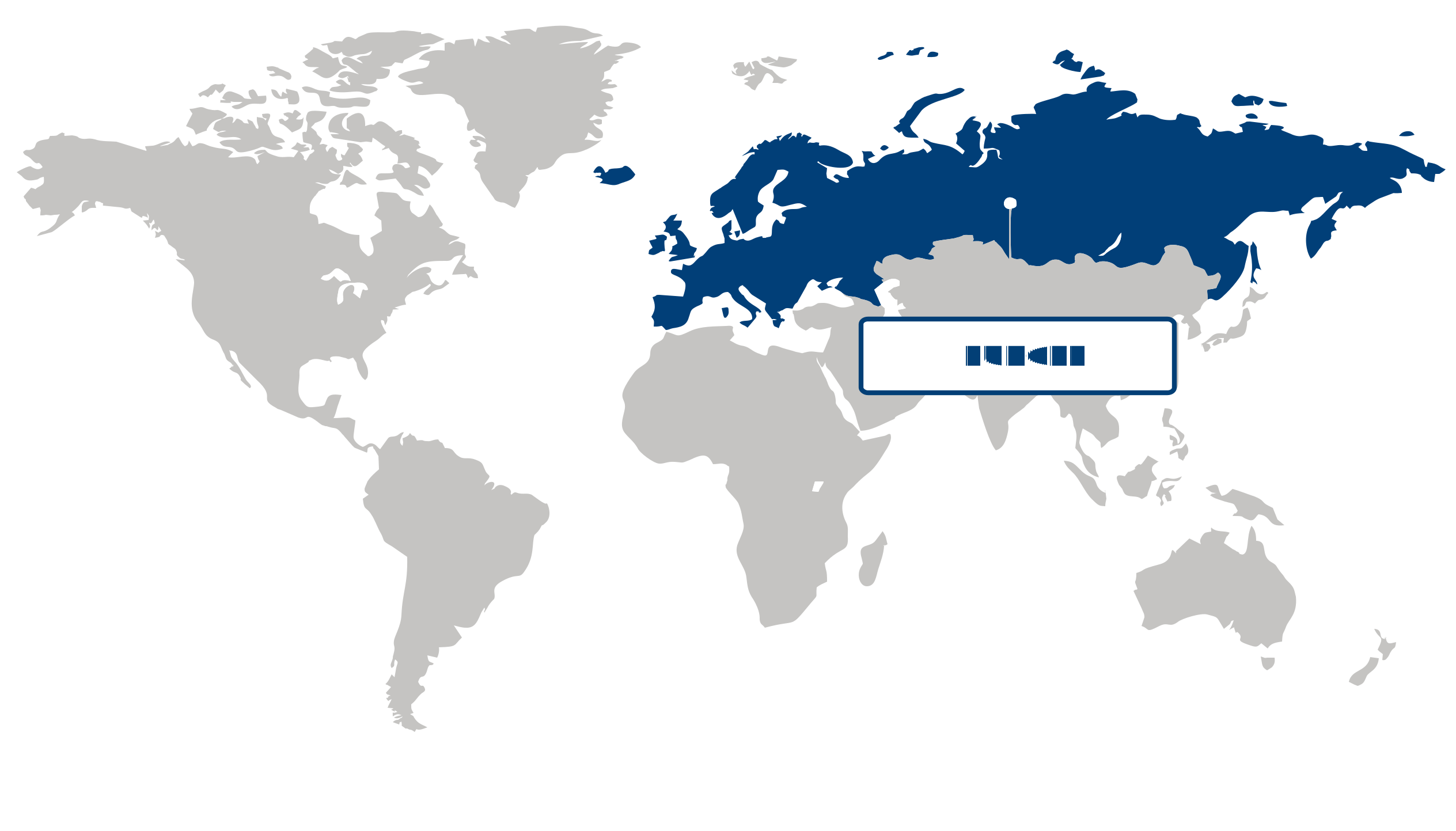
Europe (Largest Region)
The gluten-free oats market was led by Europe, which held a 36.99% share in 2026, supported by strong consumer interest in healthier food choices and established demand for specialty dietary products. Growing awareness of gluten-free diets and increased attention to nutritional quality are supporting consumption across retail and foodservice channels. Mature food markets and broad availability of health-oriented products further strengthen regional adoption.
Asia Pacific (Fastest-Growing Region)
Asia Pacific is emerging as the fastest-growing region for the gluten-free oats market, driven by changing dietary preferences, rising health awareness, and expanding demand for nutritious food products. Increasing consumer interest in functional and specialty foods is creating opportunities for gluten-free oat products, while expanding modern retail and foodservice networks are improving product accessibility. Growing urbanization and evolving consumption habits are also supporting greater adoption.
| Parameter | North America | Asia Pacific | Europe | Latin America | MEA |
|---|---|---|---|---|---|
| Innovation HubiScaleNascentDeveloping Advanced | |||||
| Cost-Sensitive RegioniScaleLowMedium High | |||||
| Regulatory EnvironmentiScaleRestrictiveNeutral Supportive | |||||
| Demand DriversiScaleWeakModerate Strong | |||||
| Development StageiScaleEmergingDeveloping Developed | |||||
| Adoption RateiScaleLowMedium High | |||||
| New Entrants / StartupsiScaleSparseModerate Dense | |||||
| Macro IndicatorsiScaleWeakStable Strong |
Key Country Insights
Germany 🇩🇪
Certified Ingredient FocusGermany places considerable importance on traceability and certification in gluten-free oat production. Food manufacturers in Germany are seeking reliable ingredient supplies that meet stringent labeling requirements and support premium gluten-free product positioning.
France 🇫🇷
Specialty Bakery ApplicationsFrance is expanding the use of gluten-free oats in bakery and breakfast categories to address dietary sensitivities and premium nutrition trends. French producers are focusing on ingredient quality and formulation versatility to support specialty food innovation.
Italy 🇮🇹
Better-For-You IngredientsItaly is increasingly adopting gluten-free oats in packaged foods and health-oriented recipes. Italian manufacturers are developing products that satisfy demand for nutritious ingredients while accommodating consumers seeking alternatives to conventional grain-based products.
Japan 🇯🇵
Convenient Health FoodsJapan is integrating gluten-free oats into convenient food formats such as cereals and nutrition bars. Japanese consumers increasingly value products that combine digestive wellness with easy consumption, encouraging innovation in oat-based applications.
South Korea 🇰🇷
Wellness Diet AdoptionSouth Korea is experiencing growing interest in gluten-free oats among consumers seeking healthier dietary alternatives. Food companies in South Korea are introducing oat-based products that align with fitness, weight management, and clean-label eating preferences.
United States 🇺🇸
Clean Label NutritionThe U.S. market for gluten-free oats is supported by strong demand for allergen-friendly and health-oriented food products. Manufacturers in the U.S. are emphasizing certified sourcing and incorporating gluten-free oats into snacks, breakfast foods, and functional nutrition products.
Gluten-free Oats Market Share (%), by Flavor, 2026
Unlock insights tailored to your business with our bespoke market research solutions.
Click to get your customized report now.
Go beyond the chart, access full insights & data tables
Request Free Sample ReportFlavor Segment Analysis: Unflavored (Largest Segment) vs Flavored (Fastest-Growing Segment)
Holding the largest share of the gluten-free oats market in 2026, the unflavored segment accounted for 80.18% of the market. Its strong position is supported by the versatility of plain oats across breakfast preparations, baking, smoothies, and other food applications, allowing consumers to customize taste and nutrition according to their preferences. Unflavored oats also align well with clean-label and minimally processed food preferences, while their compatibility with different ingredients makes them suitable for a broad range of dietary routines.
Flavored oats are gaining traction as consumers look for convenient products that combine the nutritional attributes of oats with greater taste variety. Ready-to-eat and easy-to-prepare breakfast options are encouraging demand for products incorporating fruit, spice, chocolate, and other flavor profiles, reducing the need for additional preparation or ingredients. The expansion of premium and convenience-oriented gluten-free food offerings is further creating opportunities for flavored products to attract consumers seeking greater variety within their dietary choices.
Product Type Segment Analysis: Rolled Oats (Largest & Fastest-Growing Segment)
The rolled oats segment led the gluten-free oats market in 2026, representing 79.8% of the market, while also emerging as the fastest-growing product type. Rolled oats combine convenience, versatility, and a familiar texture, making them suitable for breakfast bowls, overnight oats, baking, and other everyday food preparations. Their ability to accommodate different recipes while retaining the nutritional appeal associated with whole-grain oats supports broad consumer adoption, and the increasing availability of gluten-free options is reinforcing their relevance among consumers seeking convenient products that fit specialized dietary requirements.
| Segment | Sub-Segment | Largest Segment | Fastest Growing |
|---|---|---|---|
| Flavor | Flavored, Unflavored | Unflavored | Flavored |
| Product Type | Rolled Oats, Steel-Cut Oats, Instant Oats | Rolled Oats | Rolled Oats |
| Distribution Channel | Supermarkets and Hypermarkets, Convenience Stores, Online Retail, Others | Supermarkets and Hypermarkets | Online Retail |
Competitive Landscape and Market Positioning
Leading companies in the gluten-free oats market:
1. Bob’s Red Mill Natural Foods (United States)
2. Nature’s Path Foods (Canada)
3. General Mills Inc. (United States)
4. Quaker Oats Company (United States)
5. Freedom Foods Group Ltd (Australia)
6. Glutenfreeda Foods Inc. (United States)
7. Bakery On Main (United States)
8. Purely Elizabeth (United States)
9. Arrowhead Mills (United States)
10. One Degree Organic Foods (Canada)
Demand trends in the gluten-free oats market are increasing due to heightened awareness of dietary sensitivities and health-focused consumption. Product diversification is expanding to meet varied nutritional and convenience needs. R&D efforts are focused on improving processing purity and contamination control. The market is also witnessing entry of new participants, intensifying competitive dynamics.
| Company | Market Share | Company Revenue | Revenue CAGR (%) | Product Portfolio | Geographic Presence | Innovation / R&D Focus | Strategic Developments |
|---|---|---|---|---|---|---|---|
| Bob’s Red Mill Natural Foods (United States) | |||||||
| Nature’s Path Foods (Canada) | |||||||
| General Mills Inc. (United States) | |||||||
| Quaker Oats Company (United States) | |||||||
| Freedom Foods Group Ltd (Australia) | |||||||
| Glutenfreeda Foods Inc. (United States) | |||||||
| Bakery On Main (United States) | |||||||
| Purely Elizabeth (United States) | |||||||
| Arrowhead Mills (United States) | |||||||
| One Degree Organic Foods (Canada). |
Industry Development/News
| Company Name | Date | Key Development |
|---|---|---|
| Oat Co Scotland | Jan-26 | Oat Co Scotland secured a nationwide distribution agreement with Tesco, becoming the sole supplier of the retailer's own-brand free-from oats. This listing significantly strengthens the company's retail footprint within the UK grocery channel, leveraging its dedicated gluten-free oat milling capabilities to meet growing consumer demand for allergen-friendly, locally sourced breakfast products. |
| Oddlygood | Dec-25 | Oddlygood expanded its plant-based portfolio with the launch of a four-product Barista Oat range, scheduled for retail distribution through Sainsbury’s. This product rollout targets the increasing demand for dairy alternatives in café-style beverages, reinforcing the company's competitive positioning and expanding its retail presence in the UK market. |
| FREEE | Dec-25 | FREEE launched a new line of gluten-free muesli, including Swiss-Style and Chocolate variants, via Ocado and online channels. This addition to its breakfast portfolio solidifies the brand’s position in the free-from category, offering consumers more diverse, allergen-conscious cereal alternatives and enhancing the company's product depth in the gluten-free oat segment. |
| Zego | Dec-25 | Zego acquired assets from Montana Gluten Free to establish a new specialized production venture. This transaction materially increases the company's manufacturing and processing capacity, securing a more robust supply chain for gluten-free oat-based ingredients and supporting broader product scaling across health-oriented and specialty food categories. |
| MALK | Nov-25 | MALK expanded its plant-based beverage portfolio by introducing oat-based dairy alternatives, including creamers, with national distribution through Sprouts Farmers Market. This strategic expansion broadens the company’s reach in the functional beverage segment, capitalizing on the rising trend of dairy-free and gluten-free oat applications in the U.S. retail market. |
| Tirlán | Nov-25 | Tirlán launched “Truly Gluten Free Premium Irish Oat Milk” under its Truly Grass Fed brand, marking the company’s entry into the U.S. oat beverage segment. This launch demonstrates a strategic effort to diversify its product portfolio and address international market demand for high-quality, gluten-free, and plant-based dairy alternatives. |
| Bob's Red Mill | Apr-22 | Bob's Red Mill introduced a new line of certified gluten-free oats, utilizing dedicated harvesting fields and specialized processing facilities to ensure product purity. This development addressed critical safety and quality concerns for celiac and gluten-sensitive consumer segments, strengthening the company's position as a provider of reliable, allergen-safe oat products. |
| General Mills | Apr-20 | General Mills expanded its gluten-free product portfolio by incorporating gluten-free oats across its established brands, including Cheerios and Chex. This strategic initiative to integrate gluten-free variants into high-volume product lines significantly increased the accessibility of gluten-free options, catering to a broader consumer base and reflecting the company's commitment to scaling its allergen-conscious offerings. |
Customize Your Report
Explore examples of how this report can be tailored to different research needs, including custom segments, additional topics or chapters, and related reports. Click a section of the wheel or its numbered marker to explore the available options.
Gluten-free Oats Market — Custom Segments
| Segment | Sub-Segment |
|---|---|
| Consumer Type | Household Consumers, Foodservice Operators, Food Manufacturers, Institutional Buyers |
| Certification Standard | Certified Gluten-Free, Naturally Gluten-Free Without Certification, Organic & Gluten-Free Certified |
| End-Use Application | Breakfast Foods, Bakery & Confectionery, Snacks & Nutrition Foods, Food Ingredients & Processing |
Gluten-free Oats Market — Custom TOC
| Custom Chapter | Chapter Details |
|---|---|
| Gluten-Free Certification and Market Access Landscape |
|
| Consumer Adoption and Dietary Trend Analysis |
|
| Clean-Label Product Innovation Opportunities |
|
Need a different cut of the data?
Request Custom ResearchFrequently Asked Questions
How big is the gluten-free oats market?
How is the gluten-free oats industry expected to grow over the next 10 years?
How is rising celiac awareness influencing demand patterns in the gluten-free oats market?
How is the expansion of gluten-free product variants shaping commercial growth in the gluten-free oats market?
Why do unflavored gluten-free oats hold the largest market share?
Which product type is leading growth in the gluten-free oats market?
Why is Europe the largest regional market for gluten-free oats?
Why is Asia Pacific the fastest-growing region in the gluten-free oats market?
Who are the major participants shaping the gluten-free oats landscape?
Our Clients
"The report provided a thorough look at market trends, technological advancements, and the competitive landscape. The depth of insights was really valuable."
ITC Limited
"We would highly recommend Fundamental Business Insights & Consulting to anyone looking for reliable, detailed, and comprehensive market research in the Food industry."
Tyson Foods
"The clarity and presentation of the information were commendable. The report was delivered timely, which made the overall experience smooth and convenient."
Mondelēz International
Our Research Team & Methodology
Every Fundamental Business Insights report is built by a dedicated vertical research team, validated through a structured primary-and-secondary methodology, and reviewed for accuracy before it reaches you.
Delivery
Published
Available
Support
- Market Size & Forecast
- Market Segmentation
- Regional Analysis
- Growth Drivers & Challenges
- Market Dynamics
- Competitive Landscape
- Company Profiles
- Competitive Benchmarking
- Mergers & Acquisitions
- Market Share Analysis or Key Company Strategies
- Value Chain Analysis
- Porter's Five Forces
- PESTLE Analysis
- Pricing Trends
- Supply-Demand Analysis
- Technology Landscape
- Regulatory Landscape
- Investment & Funding Landscape
- Emerging Opportunities
- Future Market Outlook