



Inter Array Offshore Wind Cable Market Size & Growth Forecast 2027–2036, By Segments (Voltage Rating, Conductor Material), Regional Demand Trends (North America, Asia Pacific, Europe), Key Country Insights (U.S., Japan, South Korea, Germany, France, Italy), and Competitive Landscape
Market Size and Growth Outlook
Inter Array Offshore Wind Cable Market size was worth USD 1.45 Billion in 2026 and is expected to grow at 39.74% CAGR between 2027 and 2036, reaching USD 41.17 Billion by 2036. The industry revenue for 2027 is estimated at USD 1.99 Billion.
Base Year Value (2026)
USD 1.45 Billion
CAGR (2027-2036)
39.74%
Forecast Year Value (2036)
USD 41.17 Billion

Historical Data Period
2022-2026

Largest Region
Europe

Forecast Period
2027-2036
Inter Array Offshore Wind Cable Market Intelligence Snapshot:
-
Regional Market Dynamics:
- Europe led in 2025 due to its established offshore wind industry, expanding renewable infrastructure, and continued offshore project development.
- Asia Pacific is growing fastest through accelerating offshore wind development, renewable infrastructure investment, improving supply chains, and expanding marine energy expertise.
-
Segment Momentum:
- The 11kV–33kV segment leads the market because it balances transmission efficiency, installation costs, and operational reliability while remaining widely compatible with existing offshore wind farm designs.
- The 34kV–66kV segment is growing rapidly as larger offshore wind farms require higher-capacity inter-array networks that reduce electrical losses and improve overall system performance.
-
Market Expansion Drivers:
- Rapid offshore wind farm expansion driving inter-array cable demand
- Offshore renewable energy investments accelerating subsea cable infrastructure growth
- Grid-scale offshore energy transmission upgrades supporting cable capacity expansion
-
Leading Market Participants:
Leading companies in the inter array offshore wind cable market include Prysmian Group (Italy), Nexans SA (France), NKT A/S (Denmark), LS Cable & System Ltd. (South Korea), Sumitomo Electric Industries Ltd. (Japan), Furukawa Electric Co., Ltd. (Japan), Hellenic Cables (Greece), JDR Cable Systems Ltd. (United Kingdom), ZTT Group (China), Orient Cable Co., Ltd. (China)
Global Market Forecast Snapshot:
-
Market Outlook:
- 2026 Market Size: USD 1.45 Billion
- 2027 Estimated Market Size: USD 1.99 Billion
- Projected Market Size: USD 41.17 Billion by 2036
- Growth Forecasts: 39.74% CAGR (2027-2036)
-
Regional and Segment Outlook:
- Leading Regional Market: Europe
- High-Growth Regional Hub: Asia Pacific
- Core Revenue Segment: 11kV-33kV (Voltage Rating) | Copper (Conductor Material)
- Emerging Opportunity Segment: 34kV-66kV (Voltage Rating) | Aluminum (Conductor Material)
Market Growth Drivers and Industry Trends
Rapid offshore wind farm expansion driving inter-array cable demand
The accelerating construction of offshore wind farms is creating sustained demand for subsea electrical infrastructure that connects individual turbines within offshore arrays. This expansion will drive the inter array offshore wind cable market growth as developers require reliable cable systems capable of transmitting generated electricity from multiple turbines to offshore substations under demanding marine conditions. Inter-array cables are essential components of offshore wind projects because they enable efficient power collection while supporting the operational continuity and electrical integrity of large-scale renewable energy installations.
Offshore renewable energy investments accelerating subsea cable infrastructure growth
Increasing investments in offshore renewable energy projects are strengthening demand for specialized subsea transmission infrastructure that supports expanding generation capacity. The inter array offshore wind cable market benefits from these investments because every new offshore wind development requires extensive cable networks to establish dependable electrical connections between turbines and offshore collection points. Growing capital allocation toward offshore renewable projects is also encouraging advancements in cable design, installation techniques, and long-term durability to meet the demanding requirements of marine energy infrastructure.
Grid-scale offshore energy transmission upgrades supporting cable capacity expansion
Modernization of offshore transmission networks is increasing the need for cable systems capable of accommodating larger volumes of electricity generated by next-generation wind farms. This trend will propel the inter array offshore wind cable market growth as developers and grid operators expand cable capacity to support higher-power turbines, improved network reliability, and more efficient offshore energy collection systems. Enhanced inter-array cable infrastructure enables stable power transmission within increasingly complex offshore wind installations while supporting evolving grid integration requirements for large-scale renewable electricity generation.
| Growth Driver Assessment Framework | |||||
| Growth Driver | Impact On CAGR | Regulatory Influence | Geographic Relevance | Adoption Rate | Impact Timeline |
|---|---|---|---|---|---|
| Rapid offshore wind farm expansion driving inter-array cable demand | 2% | High | Europe, Asia Pacific | High | Near Term |
| Offshore renewable energy investments accelerating subsea cable infrastructure growth | 1.8% | High | Europe, North America | High | Near Term |
| Grid-scale offshore energy transmission upgrades supporting cable capacity expansion | 1.7% | High | Europe | High | Mid Term |
Unlock insights tailored to your business with our bespoke market research solutions - Click to get your customized report now!
Regional Demand Dynamics
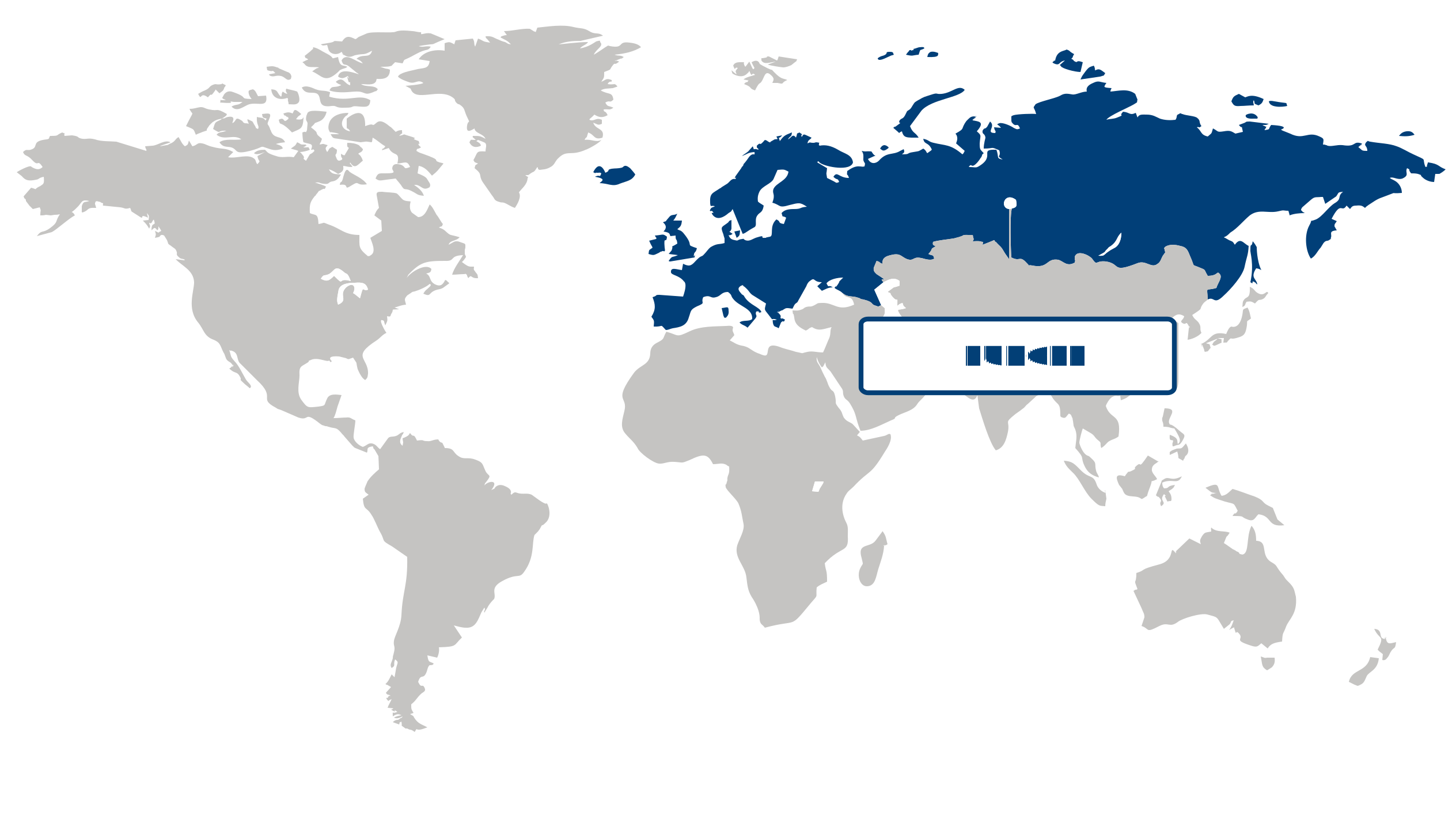
Largest Region
Europe
Largest Market Share in 2026
Europe (Largest Region) vs Asia Pacific (Fastest-Growing Region)
The inter array offshore wind cable market was led by Europe in 2026, reflecting the region's established offshore wind industry, expanding renewable power infrastructure, and strong focus on integrating offshore generation into electricity networks. Continued development of offshore wind projects is supporting demand for reliable inter array cable systems that connect individual turbines within wind farms. Europe's emphasis on clean energy deployment, grid modernization, and efficient offshore power transmission is further reinforcing regional demand for these specialized cables.
Asia Pacific is the fastest-growing region for the inter array offshore wind cable market, supported by accelerating offshore wind development and increasing investments in renewable electricity infrastructure. Countries across the region are expanding their offshore energy capabilities as they seek to diversify power generation and reduce reliance on conventional energy sources. Growing development of offshore wind farms, coupled with improving supply chains and increasing technical expertise in marine energy infrastructure, is creating favorable conditions for wider adoption of inter array cable systems.
No card data available for this language/report.
Segment Leadership and Growth Trends
Voltage Rating Segment Analysis: 11kV-33kV (Largest Segment) vs 34kV-66kV (Fastest-Growing Segment)
The 11kV-33kV voltage rating segment held the largest share in 2026 within the inter array offshore wind cable market. This voltage range is extensively used to connect individual wind turbines within offshore wind farms, offering an effective balance between transmission efficiency, installation costs, and operational reliability. Its widespread compatibility with existing offshore wind project designs and electrical infrastructure has supported broad deployment across established offshore developments. Continued expansion of offshore wind capacity and ongoing investments in renewable energy infrastructure are expected to sustain the segment's dominant position.
The 34kV-66kV voltage rating segment is expected to witness the fastest growth as offshore wind farms increase in scale and require higher-capacity electrical networks. Larger projects located farther from shore demand more efficient inter-array power transmission to minimize electrical losses and improve overall system performance. Growing deployment of next-generation offshore wind installations and higher-capacity turbines is expected to accelerate adoption of this voltage range.
Conductor Material Segment Analysis: Copper (Largest Segment) vs Aluminum (Fastest-Growing Segment)
The copper conductor material segment dominated the inter array offshore wind cable market and held the largest share in 2026. Copper remains the preferred conductor because of its superior electrical conductivity, mechanical strength, and long-term durability under demanding offshore operating conditions. Its ability to deliver reliable power transmission while withstanding harsh marine environments has made it the material of choice for critical offshore wind infrastructure. Continued investment in high-performance offshore transmission systems supports the segment's market leadership.
The aluminum conductor material segment is anticipated to register the fastest growth as developers increasingly seek lighter and more cost-efficient cable solutions for large-scale offshore wind projects. Aluminum offers advantages in weight reduction and material efficiency while providing suitable electrical performance for modern offshore installations. Rising emphasis on optimizing project economics and supporting larger offshore developments is expected to drive increased adoption of aluminum conductors.
| Report Segmentation | |||
| Segment | Sub-Segment | Largest Segment | Fastest Growing Segment |
|---|---|---|---|
| Voltage Rating | 11kV-33kV, 34kV-66kV | 11kV-33kV | 34kV-66kV |
| Conductor Material | Aluminum, Copper | Copper | Aluminum |
 Read our Research Approach
Competitive Landscape and Market Positioning
Prominent players in the inter array offshore wind cable market:
- Prysmian Group (Italy)
- Nexans SA (France)
- NKT A/S (Denmark)
- LS Cable & System Ltd. (South Korea)
- Sumitomo Electric Industries Ltd. (Japan)
- FurUKawa Electric Co., Ltd. (Japan)
- Hellenic Cables (Greece)
- JDR Cable Systems Ltd. (United Kingdom)
- ZTT Group (China)
- Orient Cable Co., Ltd. (China)
Demand for larger offshore wind developments is intensifying competition around the ability to deliver highly reliable cable systems capable of supporting increasingly complex array layouts and challenging marine conditions. Manufacturers are investing in advanced materials, improved cable designs, and specialized installation expertise to reduce operational risk across the project lifecycle, making technical execution a decisive competitive factor. The market also reflects growing emphasis on supply chain resilience, encouraging participants to expand production flexibility, secure specialized manufacturing capabilities, and strengthen project delivery capacity as developers seek dependable partners for large-scale offshore deployments.
Industry Development/News
| Company Name | Date | Key Development |
|---|---|---|
| Hellenic Cables | Jan-22 | Hellenic Cables completed the contract for cable manufacturing and loading for shipment, awarded by Dominion Energy, for the Coastal Virginia Offshore Wind commercial project. The scope included the design, supply, and storage of 50 km of 66 kV inter-array cables, reinforcing the company's global manufacturing footprint and operational execution. |
| Orsted | Dec-21 | Orsted, in partnership with Hellenic Cables, invested USD 140 million in a new inter-array manufacturing facility located in Maryland. This strategic industrial expansion supports the Skipjack 2.1 offshore wind project and is designed to supply the broader United States market demand. |
Why Choose Us
Specialized Expertise: Our team comprises industry experts with a deep understanding of your market segment. We bring specialized knowledge and experience that ensures our research and consulting services are tailored to your unique needs.
Customized Solutions: We understand that every client is different. That's why we offer customized research and consulting solutions designed specifically to address your challenges and capitalize on opportunities within your industry.
Proven Results: With a track record of successful projects and satisfied clients, we have demonstrated our ability to deliver tangible results. Our case studies and testimonials speak to our effectiveness in helping clients achieve their goals.
Cutting-Edge Methodologies: We leverage the latest methodologies and technologies to gather insights and drive informed decision-making. Our innovative approach ensures that you stay ahead of the curve and gain a competitive edge in your market.
Client-Centric Approach: Your satisfaction is our top priority. We prioritize open communication, responsiveness, and transparency to ensure that we not only meet but exceed your expectations at every stage of the engagement.
Continuous Innovation: We are committed to continuous improvement and staying at the forefront of our industry. Through ongoing learning, professional development, and investment in new technologies, we ensure that our services are always evolving to meet your evolving needs.
Value for Money: Our competitive pricing and flexible engagement models ensure that you get maximum value for your investment. We are committed to delivering high-quality results that help you achieve a strong return on your investment.
Select Licence Type

