Luxury Handbags Market Size & Growth Forecast 2027–2036, By Segments (Material, Distribution Channel, End User, Product), Regional Demand Trends (North America, Asia Pacific, Europe), Key Country Insights (U.S., Japan, South Korea, Germany, France, Italy), and Competitive Landscape
Market Size and Growth Outlook
Luxury Handbags Market size was worth USD 27.82 Billion in 2026 and is expected to grow at 6.36% CAGR between 2027 and 2036, surpassing USD 51.54 Billion by 2036. The industry revenue for 2027 is assessed at USD 29.32 Billion.
Get more details on this report
Request Free Sample ReportLuxury Handbags Market Intelligence Snapshot
Regional Market Dynamics
- Europe accounted for 37.8% in 2026, supported by its established luxury ecosystem, premium retail infrastructure, tourism spending, and strong consumer affinity for craftsmanship and exclusivity.
- Asia Pacific is the fastest-growing region, driven by rising disposable incomes, expanding affluent consumers, sophisticated retail environments, and stronger digital engagement among younger buyers.
Segment Momentum
- Leather held a 40.28% share in 2026 and remained the fastest-growing material, valued for its premium appearance, durability, refined texture, and ability to meet consumer demand for timeless luxury accessories.
- Online sales are growing fastest as luxury brands enhance premium e-commerce experiences, offering convenient shopping, exclusive product launches, personalized recommendations, and seamless omnichannel purchasing.
Market Expansion Drivers
- Rising disposable incomes and premium lifestyle consumption driving luxury handbag demand
- Expanding influence of social media and fashion trends boosting premium accessory purchases
- Growing female workforce participation increasing demand for premium fashion and luxury goods
Leading Market Participants
- Top players in the luxury handbags market include Hermès International S.A. (France), LVMH Moët Hennessy Louis Vuitton SE (France), Kering S.A. (France), Chanel S.A. (France), Prada S.p.A. (Italy), Burberry Group plc (United Kingdom), Giorgio Armani S.p.A. (Italy), Tapestry, Inc. (United States), Ralph Lauren Corporation (United States), Valentino S.p.A. (Italy)
Global Market Forecast Snapshot
Market Outlook
- 2026 Market Size: USD 27.82 Billion
- 2027 Estimated Market Size: USD 29.32 Billion
- Projected Market Size: USD 51.54 Billion by 2036
- Growth Forecast: 6.36% CAGR (2027-2036)
Regional and Segment Outlook
- Leading Regional Market: Europe
- High-Growth Regional Hub: Asia Pacific
- Core Revenue Segment: Leather (Material) | Offline (Distribution Channel) | Women (End User) | Tote Bags (Product)
- Emerging Opportunity Segment: Leather (Material) | Online (Distribution Channel) | Men (End User) | Crossbody Bags (Product)
Market Growth Drivers and Industry Trends
Rising disposable incomes and premium lifestyle consumption driving luxury handbag demand
Higher disposable incomes across both developed and emerging economies are encouraging consumers to allocate a greater share of discretionary spending toward premium fashion products that reflect personal style and social status. As purchasing power improves, demand extends beyond occasional luxury purchases to more frequent investments in high-end accessories, particularly among aspirational buyers seeking superior craftsmanship and exclusive designs. The luxury handbags market is benefiting from this shift as evolving lifestyle preferences place greater emphasis on premium ownership experiences, product authenticity, and distinctive fashion statements that align with changing consumer expectations across diverse demographic groups.
Expanding influence of social media and fashion trends boosting premium accessory purchases
Digital platforms have become powerful channels for shaping consumer preferences by rapidly amplifying fashion trends, influencer recommendations, and seasonal collections. Continuous exposure to luxury styling content encourages consumers to engage with premium accessories as essential elements of contemporary fashion, accelerating purchase decisions and increasing brand visibility. Within this evolving retail environment, the luxury handbags market is experiencing stronger demand as online engagement enhances product desirability, stimulates interest in limited-edition collections, and broadens access to global fashion inspiration across different consumer segments.
Growing female workforce participation increasing demand for premium fashion and luxury goods
An expanding female workforce, supported by greater financial independence and career advancement, is contributing to increased expenditure on premium personal accessories that combine functionality with sophisticated design. Professional environments often encourage investment in high-quality handbags that complement workplace attire while serving practical daily requirements. As employment opportunities continue to expand, the luxury handbags market is witnessing sustained demand from working professionals who prioritize durability, aesthetic appeal, and versatile designs that seamlessly transition between professional, business, and social settings.
| Growth Driver | Impact on CAGR | Regulatory Influence | Geographic Relevance | Adoption Rate | Impact Timeline |
|---|---|---|---|---|---|
| Rising disposable incomes and premium lifestyle consumption driving luxury handbag demand | 2% | Low | North America, Asia Pacific | High | Near Term |
| Expanding influence of social media and fashion trends boosting premium accessory purchases | 1.8% | Low | Europe, Asia Pacific | High | Near Term |
| Growing female workforce participation increasing demand for premium fashion and luxury goods | 1.6% | Low | North America, Europe | High | Mid Term |
Explore Growth Opportunities
Request Free Sample ReportRegional Demand Dynamics
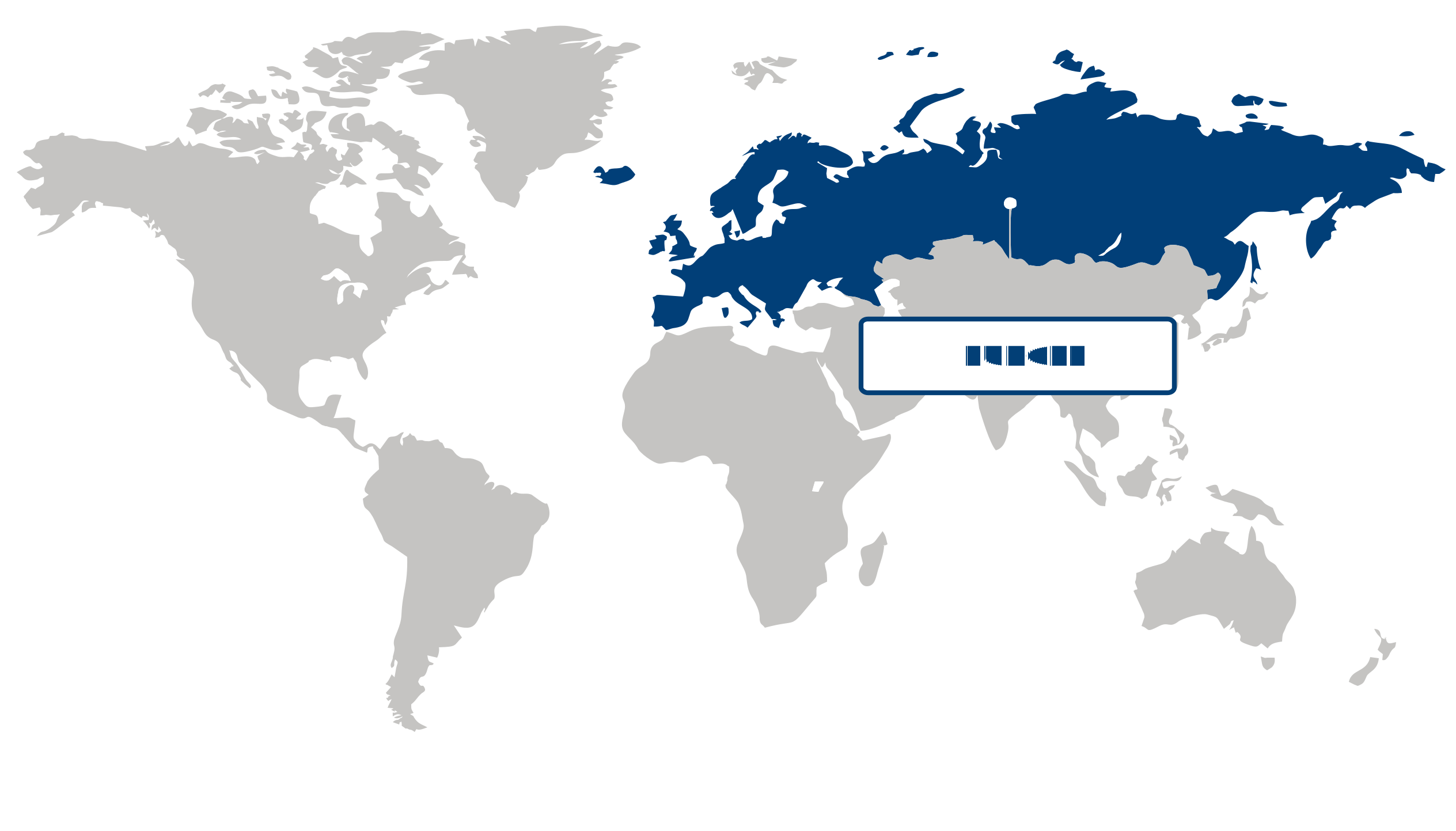
Europe (Largest Region)
Europe accounted for the largest share of the luxury handbags market at 37.8% in 2026, supported by its established luxury goods ecosystem, strong consumer affinity for premium fashion, and deep-rooted influence in global luxury culture. High-end retail infrastructure, tourism-related spending, and sustained demand for premium accessories contribute to the region's strong market position. In addition, continued product innovation and consumer interest in craftsmanship, exclusivity, and distinctive design reinforce demand across established European luxury markets.
Asia Pacific (Fastest-Growing Region)
Asia Pacific is expected to experience the fastest growth, driven by rising disposable incomes, expanding affluent consumer groups, and increasing exposure to premium international fashion. Urbanization and the development of sophisticated retail environments are broadening access to luxury products, while younger consumers are increasingly engaging with premium brands through digital channels and evolving lifestyle preferences. Growing interest in status-oriented and experiential consumption is also creating favorable conditions for luxury handbag demand across the region.
| Parameter | North America | Asia Pacific | Europe | Latin America | MEA |
|---|---|---|---|---|---|
| Innovation Hub i Scale Nascent Developing Advanced | |||||
| Cost-Sensitive Region i Scale Low Medium High | |||||
| Regulatory Environment i Scale Restrictive Neutral Supportive | |||||
| Demand Drivers i Scale Weak Moderate Strong | |||||
| Development Stage i Scale Emerging Developing Developed | |||||
| Adoption Rate i Scale Low Medium High | |||||
| New Entrants / Startups i Scale Sparse Moderate Dense | |||||
| Macro Indicators i Scale Weak Stable Strong |
Key Country Insights
United States 🇺🇸
Premium Retail EvolutionThe U.S. luxury handbags market is shaped by strong omnichannel retail strategies, exclusive product launches, and growing consumer interest in premium craftsmanship. Luxury brands in the U.S. continue enhancing personalized shopping experiences across physical and digital channels.
Germany 🇩🇪
Heritage Luxury DemandGermany values luxury handbags that combine timeless craftsmanship, premium materials, and understated design. Brands operating in Germany are strengthening product collections that emphasize quality, durability, and long-term brand value for discerning consumers.
Japan 🇯🇵
Craftsmanship AppreciationJapan places strong emphasis on meticulous craftsmanship, refined aesthetics, and exceptional product quality within the luxury handbags market. Luxury companies in Japan continue introducing limited collections and premium customer experiences that reinforce long-term brand loyalty.
South Korea 🇰🇷
Trend-Driven LuxurySouth Korea combines fashion-conscious consumers with rapid digital engagement, encouraging frequent product launches and premium brand collaborations. Luxury handbag brands in South Korea are expanding exclusive collections and personalized retail experiences to strengthen customer engagement.
France 🇫🇷
Luxury Brand HeritageFrance remains focused on preserving craftsmanship while introducing contemporary luxury handbag collections that appeal to evolving consumer preferences. Brands in France continue balancing heritage design with innovation across premium retail and boutique channels.
Italy 🇮🇹
Artisan Design ExcellenceItaly is recognized for luxury handbags built around artisanal manufacturing, premium leather sourcing, and distinctive design traditions. Luxury manufacturers in Italy continue investing in craftsmanship, product exclusivity, and sustainable material selection to reinforce premium brand positioning.
Segment Leadership and Growth Trends
Luxury Handbags Market Share (%), by Material, 2026
Go beyond the chart, access full insights & data tables
Request Free Sample ReportMaterial Segment Analysis: Leather (Largest & Fastest-Growing Segment)
The luxury handbags market was led by the leather segment, which accounted for 40.28% in 2026 while also emerging as the fastest-growing material category. Leather remains the preferred material because of its premium appearance, durability, refined texture, and long product lifespan, characteristics that strongly align with consumer expectations in the luxury fashion industry. Manufacturers continue to introduce innovative finishes, superior craftsmanship, and high-quality leather processing techniques that enhance product exclusivity and aesthetic appeal. Growing consumer willingness to invest in timeless luxury accessories and premium-quality materials continues to reinforce the segment's leadership.
Distribution Channel Segment Analysis: Offline (Largest Segment) vs Online (Fastest-Growing Segment)
The offline distribution channel held the largest position in 2026, supported by consumers' preference for experiencing luxury products firsthand before making high-value purchases. Physical boutiques and department stores provide personalized customer service, opportunities to assess craftsmanship and material quality, and an exclusive shopping environment that enhances brand perception. These factors continue to make offline retail the dominant distribution channel for luxury handbags.
The luxury handbags market is witnessing the fastest growth in the online distribution channel as luxury brands expand their digital presence and enhance premium e-commerce experiences. Consumers increasingly value the convenience of browsing extensive product collections, accessing exclusive online launches, and purchasing through secure digital platforms. Improvements in digital merchandising, personalized recommendations, and omnichannel retail strategies continue to strengthen online sales growth.
End User Segment Analysis: Women (Largest Segment) vs Men (Fastest-Growing Segment)
The women segment held the largest share in 2026, driven by sustained demand for luxury handbags as both fashion accessories and functional lifestyle products. Broad product availability across various styles, materials, and premium collections, together with evolving fashion trends, continues to support strong purchasing activity among women. Frequent product launches and increasing emphasis on craftsmanship and design innovation further reinforce the segment's leading market position.
The men segment is emerging as the fastest-growing end-user category as changing fashion preferences and greater acceptance of luxury accessories among male consumers continue to expand the addressable market. Growing demand for premium business bags, travel bags, crossbody styles, and multifunctional luxury accessories is encouraging brands to broaden their men's product portfolios. Evolving consumer lifestyles and increasing interest in luxury fashion are expected to sustain robust growth in this segment.
| Segment | Sub-Segment | Largest Segment | Fastest Growing |
|---|---|---|---|
| Material | Cotton, Leather, Nylon, Synthetic | Leather | Leather |
| Distribution Channel | Online, Offline | Offline | Online |
| End User | Men, Women | Women | Men |
| Product | Tote Bags, Crossbody Bags, Mini and Micro Bags, Backpacks, Others | Tote Bags | Crossbody Bags |
Unlock insights tailored to your business with our bespoke market research solutions.
Click to get your customized report now.
Competitive Landscape and Market Positioning
Key companies in the luxury handbags market:
- Hermès International S.A. (France)
- LVMH Moët Hennessy Louis Vuitton SE (France)
- Kering S.A. (France)
- Chanel S.A. (France)
- Prada S.p.A. (Italy)
- Burberry Group plc (United Kingdom)
- Giorgio Armani S.p.A. (Italy)
- Tapestry, Inc. (United States)
- Ralph Lauren Corporation (United States)
- Valentino S.p.A. (Italy)
Shifts in consumer purchasing behavior are redefining competitive positioning as brands seek to balance exclusivity with broader digital engagement without diluting their premium appeal. Distinctive craftsmanship and heritage remain influential, yet sustained advantage increasingly depends on the ability to introduce limited collections, personalize customer experiences, and maintain relevance across both physical boutiques and digital commerce channels. Secondary market activity and heightened interest in product authenticity are further encouraging investment in traceability, after-sales services, and brand-controlled customer relationships, making long-term loyalty as strategically important as attracting new luxury consumers.
| Company | Market Share | Company Revenue | Revenue CAGR (%) | Product Portfolio | Geographic Presence | Innovation / R&D Focus | Strategic Developments |
|---|---|---|---|---|---|---|---|
| Hermès International S.A. (France) | |||||||
| LVMH Moët Hennessy Louis Vuitton SE (France) | |||||||
| Kering S.A. (France) | |||||||
| Chanel S.A. (France) | |||||||
| Prada S.p.A. (Italy) | |||||||
| Burberry Group plc (United Kingdom) | |||||||
| Giorgio Armani S.p.A. (Italy) | |||||||
| Tapestry Inc. (United States) | |||||||
| Ralph Lauren Corporation (United States) | |||||||
| Valentino S.p.A. (Italy) |
Industry Development/News
| Company Name | Date | Key Development |
|---|---|---|
| Fusemachines | Jul-26 | Fusemachines expanded its collaboration with a major global luxury retailer to integrate AI-driven demand planning and pricing prediction tools. This initiative aims to enhance inventory management and optimize retail margins through advanced enterprise AI deployment, reflecting the ongoing digital transformation within luxury handbag retail operations. |
| Fashionphile | May-26 | Fashionphile engaged a high-profile brand ambassador for its "Get Your Bag" campaign to reinforce its competitive standing in the luxury resale sector. This strategic move aims to boost consumer engagement and brand visibility within the secondary luxury market, specifically targeting the collectible handbag segment. |
| Luxus | Nov-25 | Luxus launched a specialized investment fund focused on premium luxury handbags, specifically targeting high-value models from Hermès. By formalizing luxury handbags as an alternative asset class, the firm is expanding the financial ecosystem surrounding collectible accessories and influencing market investment activity. |
| Alo Yoga | Aug-25 | Activewear brand Alo Yoga executed a strategic market entry into luxury accessories by launching a premium handbag collection. The move leverages Italian manufacturing to expand the company’s product portfolio beyond fitness apparel, reflecting a broader trend of cross-category expansion into high-end fashion segments. |
| Rebag | Jun-25 | Rebag expanded its omnichannel retail-resale strategy through distribution partnerships with major national retailers, including Amazon, Walmart, and Bloomingdale's. This move significantly scales the availability of authenticated pre-owned luxury handbags, demonstrating a shift toward deeper integration between mainstream retail platforms and the secondary luxury market. |
| Grey/Ven | Feb-25 | Grey/Ven entered the premium accessories segment with the debut of its inaugural luxury handbag collection. The launch, timed with a New York Fashion Week presentation, marks a deliberate expansion of the brand's product portfolio to capture market share in the luxury handbag category. |
| Delvaux | Sep-24 | Delvaux partnered with E Ink to integrate electronic paper display technology into a limited-edition handbag. This project represents a significant technology integration effort, merging traditional luxury leather craftsmanship with digital innovation to offer customizable aesthetics and differentiated product functionality in the high-end handbag market. |
| Rebag | Apr-24 | Rebag launched the Rebag+ membership program to increase customer retention and repeat purchase rates. By providing a structured financial model for managing and acquiring luxury handbags, the company is refining its business model to improve long-term commercial scalability and customer loyalty in the resale market. |
| Louis Vuitton | Feb-22 | Louis Vuitton initiated a capacity expansion for ultra-high-end handbag production in France to address rising global demand. This investment serves to bolster manufacturing output and intensify competitive positioning against industry peers in the luxury leather goods sector, where supply constraints for premium items remain a critical market challenge. |
| Montegrappa | — | Luxury writing instrument manufacturer Montegrappa officially entered the luxury handbag and accessories market. The firm is supporting this strategic diversification with a planned retail footprint expansion, including a new flagship boutique in New York, signaling a pivot toward a broader luxury lifestyle brand positioning. |
Customize Your Report
Explore examples of how this report can be tailored to different research needs, including custom segments, additional topics or chapters, and related reports. Click a section of the wheel or its numbered marker to explore the available options.
Luxury Handbags Market — Custom Segments
| Segment | Sub-Segment |
|---|---|
| Price Tier | Accessible Luxury, Premium Luxury, Ultra-Luxury |
| Purchase Occasion | Everyday Use, Work & Professional Use, Social & Formal Occasions, Travel & Leisure, Gifting |
| Purchase Motivation | Self-Expression & Fashion, Status & Prestige, Investment & Collectability, Functional Utility, Gifting |
Luxury Handbags Market — Custom TOC
| Custom Chapter | Chapter Details |
|---|---|
| Luxury Handbag Resale Economy |
|
| Clienteling & High-Value Customer Engagement |
|
| Circularity & Sustainable Luxury Models |
|
Need a different cut of the data?
Request Custom ResearchHow large is the luxury handbags market?
What is the expected industry size of luxury handbags by 2036?
How are changing consumer lifestyles influencing the luxury handbags market?
Why is digital engagement becoming a key demand driver for luxury handbags?
Why does leather dominate the luxury handbags market?
Why is the online channel the fastest-growing distribution channel in the luxury handbags market?
Why does Europe hold the largest share of the luxury handbags market?
How is Asia Pacific accelerating luxury handbag market growth?
Who holds a significant market share in the luxury handbags landscape?
Our Clients
"The report provided us with a clear direction, and the level of detail was beyond what we expected. I would definitely recommend their services to others."
Haier Appliances
"The collaboration with Fundamental Business Insights has added significant value to our decision-making process, and we look forward to continuing this partnership for our future market research requirements."
Luxottica Group S.p.A.
"The team at FBI delivered an exceptional research report. The insights on industry innovations were particularly impressive and added a lot of value to the overall report."
Nike
Our Research Team & Methodology
Every Fundamental Business Insights report is built by a dedicated vertical research team, validated through a structured primary-and-secondary methodology, and reviewed for accuracy before it reaches you.
Research Team Overview
Prepared by the Consumer Goods & Services Research Team
Delivery
Published
Demand
Available
Support
Trust & Compliance
Research Intelligence
| Source | Reference |
|---|---|
| International Organization for Standardization (ISO) | www.iso.org |
| ASTM International | www.astm.org |
| U.S. Consumer Product Safety Commission (CPSC) | www.cpsc.gov |
| European Commission – Consumer Safety | ec.europa.eu/safety-gate |
| Consumer Technology Association (CTA) | www.cta.tech |
| National Retail Federation (NRF) | nrf.com |
| World Retail Congress | www.worldretailcongress.com |
| World Travel & Tourism Council (WTTC) | wttc.org |
| UN Tourism | www.unwto.org |
| Personal Care Products Council (PCPC) | www.personalcarecouncil.org |
| Cosmetics Europe | cosmeticseurope.eu |
| International Housewares Association (IHA) | www.housewares.org |
| American Apparel & Footwear Association (AAFA) | www.aafaglobal.org |
| World Federation of the Sporting Goods Industry (WFSGI) | wfsgi.org |
| Juvenile Products Manufacturers Association (JPMA) | www.jpma.org |
| Pet Industry Joint Advisory Council (PIJAC) | pijac.org |
| International Council of Toy Industries (ICTI) | www.toy-icti.org |
| International Association of Amusement Parks and Attractions (IAAPA) | iaapa.org |
| Organisation for Economic Co-operation and Development (OECD) | www.oecd.org |
| World Bank Data | data.worldbank.org |
Research Workflow & Quality Assurance
Data Collection
Verified information gathered through primary and secondary research.
Data Triangulation
Cross-validation using multiple independent data sources.
Forecast Modelling
Market estimates developed using historical trends and analytical models.
Analyst Validation
Findings reviewed by domain experts for accuracy and consistency.
Editorial & Quality Review
Final editorial, quality, and compliance checks before publication.
Final Publication
Released after successful completion of the internal review process.
Report Coverage
📊 Market Assessment
- Market Size & Forecast
- Market Segmentation
- Regional Analysis
- Growth Drivers & Challenges
- Market Dynamics
🏢 Competitive Intelligence
- Competitive Landscape
- Company Profiles
- Competitive Benchmarking
- Mergers & Acquisitions
- Market Share Analysis or Key Company Strategies
🔍 Strategic Analysis
- Value Chain Analysis
- Porter's Five Forces
- PESTLE Analysis
- Pricing Trends
- Supply-Demand Analysis
🚀 Future Outlook
- Technology Landscape
- Regulatory Landscape
- Investment & Funding Landscape
- Emerging Opportunities
- Future Market Outlook
Have a question about this report or need a custom scope?
Request Customization