Luxury Leather Goods Market Size & Growth Forecast 2027–2036, By Segments (Product, Distribution Channel), Regional Demand Trends (North America, Asia Pacific, Europe), Key Country Insights (U.S., Japan, South Korea, Germany, France, Italy), and Competitive Landscape
Jump to content
Market Size and Growth Outlook
Luxury Leather Goods Market size stood at USD 111.99 billion in 2026 and is predicted to grow at a 5.13% CAGR from 2027 to 2036, surpassing USD 184.69 billion by 2036. The industry revenue for 2027 is calculated at USD 116.83 billion.
Get more details on this report
Request Free Sample ReportLuxury Leather Goods Market Intelligence Snapshot
Regional Market Dynamics
- Europe leads with 34.34% share due to heritage luxury brands, strong craftsmanship networks, and established high-end retail presence across major fashion and tourism hubs.
- Asia Pacific grows at 6.22% CAGR driven by rising high-income consumers, expanding brand store networks, and increasing luxury adoption among younger aspirational buyers across digital and retail channels.
Segment Momentum
- Handbags & Purses accounted for 35.3% of the market in 2026, driven by their strong association with brand identity, craftsmanship, premium pricing, and repeat demand linked to seasonal collections and gifting.
- Online is the fastest-growing channel as brands strengthen direct-to-consumer platforms, digital merchandising, and remote engagement, making premium leather goods more accessible through convenient branded shopping experiences.
Market Expansion Drivers
- Rising consumer preference for premium fashion and status-driven luxury leather products.
- Growth of e-commerce and digital luxury retail channels expanding global brand reach.
- Increasing demand for sustainable and ethically sourced leather products influencing brand positioning.
Leading Market Participants
- Top players in the luxury leather goods market include Louis Vuitton Malletier SAS (France), Gucci S.p.A. (Italy), Chanel S.A. (France), Prada S.p.A. (Italy), Hermès International S.A. (France), Burberry Group plc (United Kingdom), Tapestry, Inc. (United States), Salvatore Ferragamo S.p.A. (Italy).
Global Market Forecast Snapshot
Market Outlook
- 2026 Market Size: USD 111.99 billion
- 2027 Estimated Market Size: USD 116.83 billion.
- Projected Market Size: USD 184.69 billion by 2036
- Growth Forecast: 5.13% CAGR (2027-2036)
Regional and Segment Outlook
- Leading Regional Market: Europe
- High-Growth Regional Hub: Asia Pacific
- Core Revenue Segment: Handbags & Purses (Product) | Exclusive Brand Outlets (Distribution Channel)
- Emerging Opportunity Segment: Small Leather Accessories (Product) | Online (Distribution Channel)
Market Growth Drivers and Industry Trends
Rising consumer preference for premium fashion and status-driven luxury leather products
Rising consumer preference for premium fashion and status-driven products will drive the luxury leather goods market growth as consumers increasingly view high-quality leather accessories as expressions of personal style, social standing, and exclusivity. Luxury handbags, wallets, belts, footwear, and other leather products benefit from their association with craftsmanship, durability, distinctive design, and brand prestige. Consumers seeking differentiated fashion products are also more inclined to purchase premium leather goods as part of aspirational lifestyles, while demand for refined materials and recognizable luxury aesthetics supports continued spending across key product categories.
Growth of e-commerce and digital luxury retail channels expanding global brand reach
The expansion of digital commerce is broadening access to luxury products, and the luxury leather goods market is benefiting from the ability of brands and retailers to reach consumers beyond traditional physical boutiques. Online storefronts, mobile shopping platforms, digital product discovery, and personalized customer experiences make premium leather goods more accessible across geographically dispersed markets. Digital channels also allow brands to showcase detailed product craftsmanship, collections, and styling options, while convenient purchasing and broader product availability encourage consumers who may not have direct access to luxury retail locations to participate in the category.
Increasing demand for sustainable and ethically sourced leather products influencing brand positioning
Increasing attention to responsible sourcing and environmental considerations is influencing purchasing decisions within the luxury leather goods market, particularly among consumers who expect premium products to reflect stronger sustainability standards. Brands are responding by emphasizing traceable materials, responsible sourcing practices, improved manufacturing processes, and greater transparency around the origins of leather. Ethical positioning can strengthen consumer trust while helping luxury producers differentiate products in a competitive market, with sustainability becoming increasingly integrated into product development, material selection, packaging, and broader brand identity.
| Growth Driver | Impact on CAGR | Regulatory Influence | Geographic Relevance | Adoption Rate | Impact Timeline |
|---|---|---|---|---|---|
| Rising consumer preference for premium fashion and status-driven luxury leather products | 2.00% | Low | Europe, Asia Pacific | High | Near Term |
| Growth of e-commerce and digital luxury retail channels expanding global brand reach | 1.70% | Moderate | Asia Pacific, North America | High | Near Term |
| Increasing demand for sustainable and ethically sourced leather products influencing brand positioning | 1.50% | Moderate | Europe, North America | Medium | Mid Term |
Unlock insights tailored to your business with our bespoke market research solutions.
Click to get your customized report now.
Regional Demand Dynamics
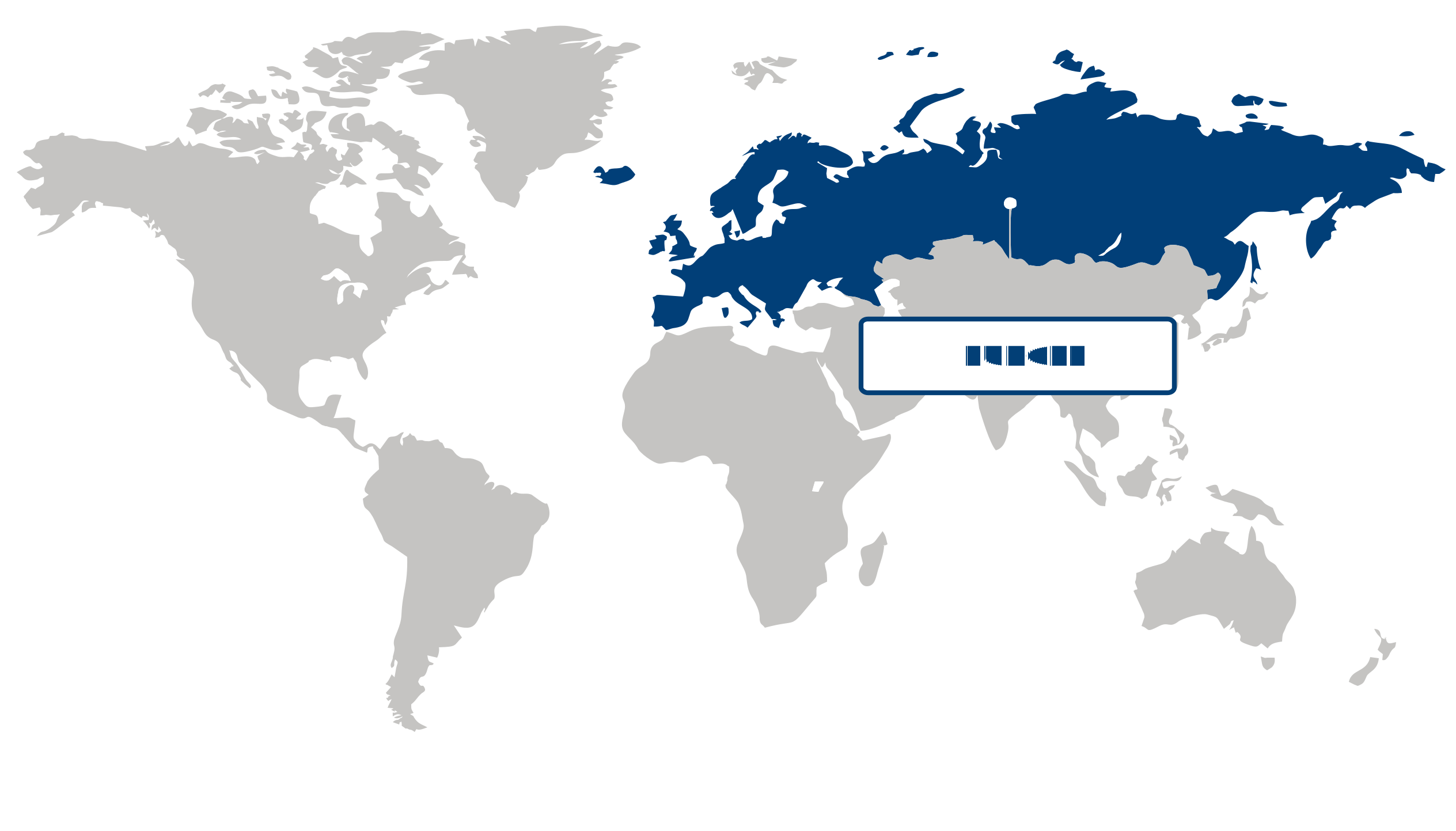
Europe (Largest Region)
Europe held the largest share of the luxury leather goods market, accounting for 34.34% in 2026, supported by its established luxury fashion ecosystem, strong craftsmanship capabilities, and deep consumer affinity for premium leather products. The region benefits from sophisticated manufacturing and design expertise, established tourism and luxury retail channels, and sustained demand for high-quality handbags, footwear, accessories, and travel goods. Growing emphasis on craftsmanship, product durability, traceability, and responsible sourcing is also influencing purchasing decisions and encouraging continued innovation in premium leather goods.
Asia Pacific (Fastest-Growing Region)
Asia Pacific is the fastest-growing region, driven by rising disposable incomes, expanding affluent consumer groups, and increasing interest in premium and luxury products. Urbanization and the development of sophisticated retail environments are broadening access to international luxury categories, while e-commerce is enabling consumers beyond traditional luxury centers to engage with premium brands and products. Growing luxury tourism and increasing consumer preference for distinctive, high-quality accessories are further supporting demand for leather goods across the region.
| Parameter | North America | Asia Pacific | Europe | Latin America | MEA |
|---|---|---|---|---|---|
| Innovation HubiScaleNascentDeveloping Advanced | |||||
| Cost-Sensitive RegioniScaleLowMedium High | |||||
| Regulatory EnvironmentiScaleRestrictiveNeutral Supportive | |||||
| Demand DriversiScaleWeakModerate Strong | |||||
| Development StageiScaleEmergingDeveloping Developed | |||||
| Adoption RateiScaleLowMedium High | |||||
| New Entrants / StartupsiScaleSparseModerate Dense | |||||
| Macro IndicatorsiScaleWeakStable Strong |
Key Country Insights
Germany 🇩🇪
Craftsmanship Appreciation MarketGermany places strong emphasis on product quality, durability, and heritage craftsmanship in luxury leather goods. German consumers increasingly value sustainably sourced materials and timeless designs, encouraging brands to highlight artisanal production and responsible sourcing practices.
France 🇫🇷
Artisanal Brand HeritageFrance remains closely associated with luxury leather craftsmanship and high-value brand storytelling. French companies are emphasizing artisanal production techniques and sustainable sourcing initiatives to reinforce product authenticity and maintain premium positioning.
Italy 🇮🇹
Luxury Manufacturing ExcellenceItaly's luxury leather goods market benefits from its extensive network of specialized leather manufacturers and design houses. Italian producers are concentrating on preserving craftsmanship while adopting traceability and sustainability measures that align with evolving luxury consumer expectations.
Japan 🇯🇵
Heritage Luxury DemandJapan's luxury leather goods market favors meticulous craftsmanship and limited-edition products with strong brand heritage. Companies in Japan are prioritizing premium materials and refined retail experiences that cater to consumers seeking exclusivity and long-term product value.
South Korea 🇰🇷
Trend-Led Luxury ConsumptionSouth Korea's luxury leather goods market is shaped by fashion-conscious consumers and strong digital engagement. Brands are focusing on contemporary designs, collaborations, and omnichannel retail strategies to address rapidly changing consumer preferences in South Korea.
United States 🇺🇸
Premium Consumer MarketThe U.S. luxury leather goods market is influenced by strong demand for premium handbags, accessories, and personalized products. Brands in the U.S. are investing in direct-to-consumer channels and digital engagement strategies that enhance customer experience and product exclusivity.
Luxury Leather Goods Market Share (%), by Product, 2026
Go beyond the chart, access full insights & data tables
Request Free Sample ReportProduct Segment Analysis: Handbags & Purses (Largest Segment) vs Small Leather Accessories (Fastest-Growing Segment)
Handbags and purses led the luxury leather goods market with a 35.3% share in 2026, reflecting their established role as prominent luxury fashion products and important expressions of style and status. Demand is supported by consumers' preference for premium craftsmanship, distinctive designs, durable materials, and products that combine functionality with brand positioning. The category also benefits from its strong visibility within fashion and gifting occasions, reinforcing its importance within luxury leather consumption.
Small leather accessories are gaining faster traction as consumers increasingly seek accessible luxury products that combine practicality with premium design. Wallets, card holders, belts, and similar accessories can provide consumers with opportunities to engage with luxury craftsmanship across a broader range of everyday purchases. Their compact format, gifting suitability, and functional use are supporting greater demand as luxury consumption increasingly encompasses versatile lifestyle products.
Distribution Channel Segment Analysis: Exclusive Brand Outlets (Largest Segment) vs Online (Fastest-Growing Segment)
Exclusive brand outlets accounted for the largest distribution channel in the luxury leather goods market in 2026, supported by the importance of immersive retail experiences in premium purchasing decisions. Dedicated stores allow consumers to evaluate craftsmanship, materials, product presentation, and service quality in an environment designed around luxury positioning. Personalized assistance and controlled brand presentation further strengthen the role of exclusive outlets in building consumer confidence and supporting high-value purchases.
Online distribution is expanding rapidly as luxury consumers increasingly embrace digital browsing, remote purchasing, and convenient access to premium products. E-commerce also enables consumers to explore broader product assortments and engage with luxury offerings without being limited by physical store locations. Improvements in digital presentation, secure purchasing experiences, and personalized online engagement are supporting the continued expansion of online luxury leather goods sales.
| Segment | Sub-Segment | Largest Segment | Fastest Growing |
|---|---|---|---|
| Product | Luggage (Travel Bag & Backpacks), Handbags & Purses, Footwear, Apparel, Small Leather Accessories, Others | Handbags & Purses | Small Leather Accessories |
| Distribution Channel | Exclusive Brand Outlets, Specialty Stores, Online, Airports, Others | Exclusive Brand Outlets | Online |
Competitive Landscape and Market Positioning
Major players in the luxury leather goods market:
1. Louis Vuitton Malletier SAS (France)
2. Gucci S.p.A. (Italy)
3. Chanel S.A. (France)
4. Prada S.p.A. (Italy)
5. Hermès International S.A. (France)
6. Burberry Group plc (United Kingdom)
7. Tapestry Inc. (United States)
8. Salvatore Ferragamo S.p.A. (Italy)
The luxury leather goods market is shaped by evolving consumer preferences toward craftsmanship and sustainable materials. In this market, design innovation and premium positioning strategies are driving brand distinction. Increasing emphasis on ethical sourcing and material innovation is influencing product development direction.
| Company | Market Share | Company Revenue | Revenue CAGR (%) | Product Portfolio | Geographic Presence | Innovation / R&D Focus | Strategic Developments |
|---|---|---|---|---|---|---|---|
| Louis Vuitton Malletier SAS (France) | |||||||
| Gucci S.p.A. (Italy) | |||||||
| Chanel S.A. (France) | |||||||
| Prada S.p.A. (Italy) | |||||||
| Hermès International S.A. (France) | |||||||
| Burberry Group plc (United Kingdom) | |||||||
| Tapestry Inc. (United States) | |||||||
| Salvatore Ferragamo S.p.A. (Italy). |
Industry Development / News
| Company Name | Date | Key Development |
|---|---|---|
| Prada | Mar-26 | Prada completed the acquisition of Versace in a €1.25 billion transaction. This consolidation represents a major strategic shift in the luxury fashion and leather goods sector, significantly altering the competitive landscape and expanding the parent company’s operational footprint within the high-end market. |
| Smythson of Bond Street | Mar-26 | Smythson of Bond Street was acquired by Iconic BrandCo, a division of Oakley Capital. This acquisition provides the brand with necessary capital and strategic resources to accelerate development and broaden its market reach across premium leather goods categories. |
| ALO | Mar-26 | ALO entered the premium leather goods market with the launch of its inaugural handbag collection. This strategic move represents a deliberate diversification beyond the company’s core apparel segment, aiming to capture new customer segments in the luxury accessories space. |
| Strathberry | Mar-26 | Strathberry reported 35% year-over-year revenue growth. This performance is attributed to successful international expansion initiatives and sustained global demand for its luxury handbag offerings, underscoring the commercial efficacy of its current market-penetration strategy. |
| Polène | Feb-26 | Polène secured a minority investment from Bernard Arnault. This financial injection provides critical backing to support the brand's growth and international expansion, directly strengthening its competitive positioning and operational scalability within the increasingly crowded luxury leather goods sector. |
Customize Your Report
Explore examples of how this report can be tailored to different research needs, including custom segments, additional topics or chapters, and related reports. Click a section of the wheel or its numbered marker to explore the available options.
Luxury Leather Goods Market — Custom Segments
| Segment | Sub-Segment |
|---|---|
| Price Tier | Accessible Luxury, Premium Luxury, Ultra-Luxury |
| Consumer Demographic | Millennials, Generation X, Baby Boomers, Generation Z |
| Material Type | Full-Grain Leather, Top-Grain Leather, Exotic Leather, Sustainable / Alternative Leather |
Luxury Leather Goods Market — Custom TOC
| Custom Chapter | Chapter Details |
|---|---|
| Luxury Consumer Behavior Mapping |
|
| Brand Heritage and Exclusivity Benchmarking |
|
| Luxury Retail Channel Transformation |
|
Need a different cut of the data?
Request Custom ResearchFrequently Asked Questions
What is the current revenue of the luxury leather goods market?
How much is the luxury leather goods industry expected to grow by 2036?
How is rising consumer preference for premium fashion shaping demand in the luxury leather goods market?
How are digital luxury retail channels expanding growth in the luxury leather goods market?
Why do Handbags & Purses lead the luxury leather goods market?
Why is the online channel the fastest-growing distribution segment in the luxury leather goods market?
Why does Europe lead the luxury leather goods market?
Why is Asia Pacific the fastest-growing luxury leather goods market?
Which companies are driving growth in the luxury leather goods landscape?
Our Clients
"The report provided us with a clear direction, and the level of detail was beyond what we expected. I would definitely recommend their services to others."
Haier Appliances
"The collaboration with Fundamental Business Insights has added significant value to our decision-making process, and we look forward to continuing this partnership for our future market research requirements."
Luxottica Group S.p.A.
"The team at FBI delivered an exceptional research report. The insights on industry innovations were particularly impressive and added a lot of value to the overall report."
Nike
Our Research Team & Methodology
Every Fundamental Business Insights report is built by a dedicated vertical research team, validated through a structured primary-and-secondary methodology, and reviewed for accuracy before it reaches you.
Delivery
Published
Available
Support
- Market Size & Forecast
- Market Segmentation
- Regional Analysis
- Growth Drivers & Challenges
- Market Dynamics
- Competitive Landscape
- Company Profiles
- Competitive Benchmarking
- Mergers & Acquisitions
- Market Share Analysis or Key Company Strategies
- Value Chain Analysis
- Porter's Five Forces
- PESTLE Analysis
- Pricing Trends
- Supply-Demand Analysis
- Technology Landscape
- Regulatory Landscape
- Investment & Funding Landscape
- Emerging Opportunities
- Future Market Outlook