Malt Ingredients Market Size & Growth Forecast 2027–2036, By Segments (Source, Application), Regional Demand Trends (North America, Asia Pacific, Europe), Key Country Insights (U.S., Japan, South Korea, Germany, France, Italy), and Competitive Landscape
Jump to content
Market Size and Growth Outlook
Malt Ingredients Market size was valued at USD 30.1 billion in 2026 and is anticipated to grow at a 5.61% CAGR from 2027 to 2036, surpassing USD 51.95 billion by 2036. The industry revenue for 2027 is estimated at USD 31.52 billion.
Get more details on this report
Request Free Sample ReportMalt Ingredients Market Intelligence Snapshot
Regional Market Dynamics
- Europe leads with 36.57% share due to its established brewing and distilling base, mature food processing industry, strong barley sourcing, and dense malt production infrastructure.
- North America is fastest-growing at 6.78% CAGR driven by craft brewing expansion, premium beverage demand, and rising adoption of specialty malt ingredients across food and drink applications.
Segment Momentum
- Beverage held an 81.51% share in 2026 because malt ingredients are deeply integrated into beverage production, supporting flavor, fermentable content, color, and essential formulation requirements.
- Rye is gaining momentum as manufacturers seek differentiated ingredient profiles and distinctive product characteristics, making it an attractive option for expanding malt-based product development.
Market Expansion Drivers
- Growing craft beer and premium spirits consumption increasing demand for specialty malt ingredients.
- Expanding food and beverage applications driving malt ingredient utilization in bakery and dairy products.
- Rising preference for natural and plant-based ingredients strengthening malt adoption in functional formulations.
Leading Market Participants
- Top players in the malt ingredients market include Cargill, Incorporated (United States), Archer Daniels Midland Company (United States), Malteurop Groupe (France), Soufflet Malt (InVivo Group) (France), Crisp Malt (United Kingdom), Muntons plc (United Kingdom), Viking Malt Oy (Finland), Simpsons Malt Limited (United Kingdom), GrainCorp Limited (Australia), Boortmalt (Axéréal Group) (France).
Global Market Forecast Snapshot
Market Outlook
- 2026 Market Size: USD 30.1 billion
- 2027 Estimated Market Size: USD 31.52 billion.
- Projected Market Size: USD 51.95 billion by 2036
- Growth Forecast: 5.61% CAGR (2027-2036)
Regional and Segment Outlook
- Leading Regional Market: Europe
- High-Growth Regional Hub: North America
- Core Revenue Segment: Barley (Source) | Beverage (Application)
- Emerging Opportunity Segment: Rye (Source) | Food (Application)
Market Growth Drivers and Industry Trends
Growing craft beer and premium spirits consumption increasing demand for specialty malt ingredients
Rising consumption of craft beer and premium spirits is supporting the malt ingredients market because producers increasingly require specialty malts to develop distinctive flavor, aroma, color, and texture profiles. Craft beverage manufacturers often differentiate products through ingredient selection and brewing or distilling characteristics, creating opportunities for malt varieties with specific functional and sensory properties. The growing emphasis on premiumization is encouraging producers to experiment with specialty malt ingredients that can contribute to differentiated beverage formulations and more diverse product offerings.
Expanding food and beverage applications driving malt ingredient utilization in bakery and dairy products
Broader use of malt ingredients across food and beverage applications is contributing to the malt ingredients market by extending demand beyond traditional brewing uses. In bakery products, malt can support flavor development, coloration, fermentation, and product characteristics, while dairy formulations can incorporate malt for taste and formulation purposes. As manufacturers continue developing differentiated bakery and dairy products, the versatility of malt ingredients enables their integration into a wider range of formulations, including products designed around distinctive flavors and functional attributes.
Rising preference for natural and plant-based ingredients strengthening malt adoption in functional formulations
Increasing consumer preference for natural and plant-based ingredients is creating favorable conditions for the malt ingredients market as manufacturers seek recognizable components for functional food and beverage formulations. Malt-derived ingredients can contribute flavor and other formulation characteristics while fitting into products positioned around naturally sourced and plant-based attributes. This compatibility is encouraging food and beverage producers to explore malt as an alternative or complementary ingredient in formulations targeting consumers who prioritize ingredient transparency and plant-derived components.
| Growth Driver | Impact on CAGR | Regulatory Influence | Geographic Relevance | Adoption Rate | Impact Timeline |
|---|---|---|---|---|---|
| Growing craft beer and premium spirits consumption increasing demand for specialty malt ingredients | 1.90% | Moderate | North America, Europe | High | Near Term |
| Expanding food and beverage applications driving malt ingredient utilization in bakery and dairy products | 1.70% | Low | Asia Pacific, Europe | High | Mid Term |
| Rising preference for natural and plant-based ingredients strengthening malt adoption in functional formulations | 1.50% | Moderate | North America, Asia Pacific | Medium | Mid Term |
Unlock insights tailored to your business with our bespoke market research solutions.
Click to get your customized report now.
Regional Demand Dynamics
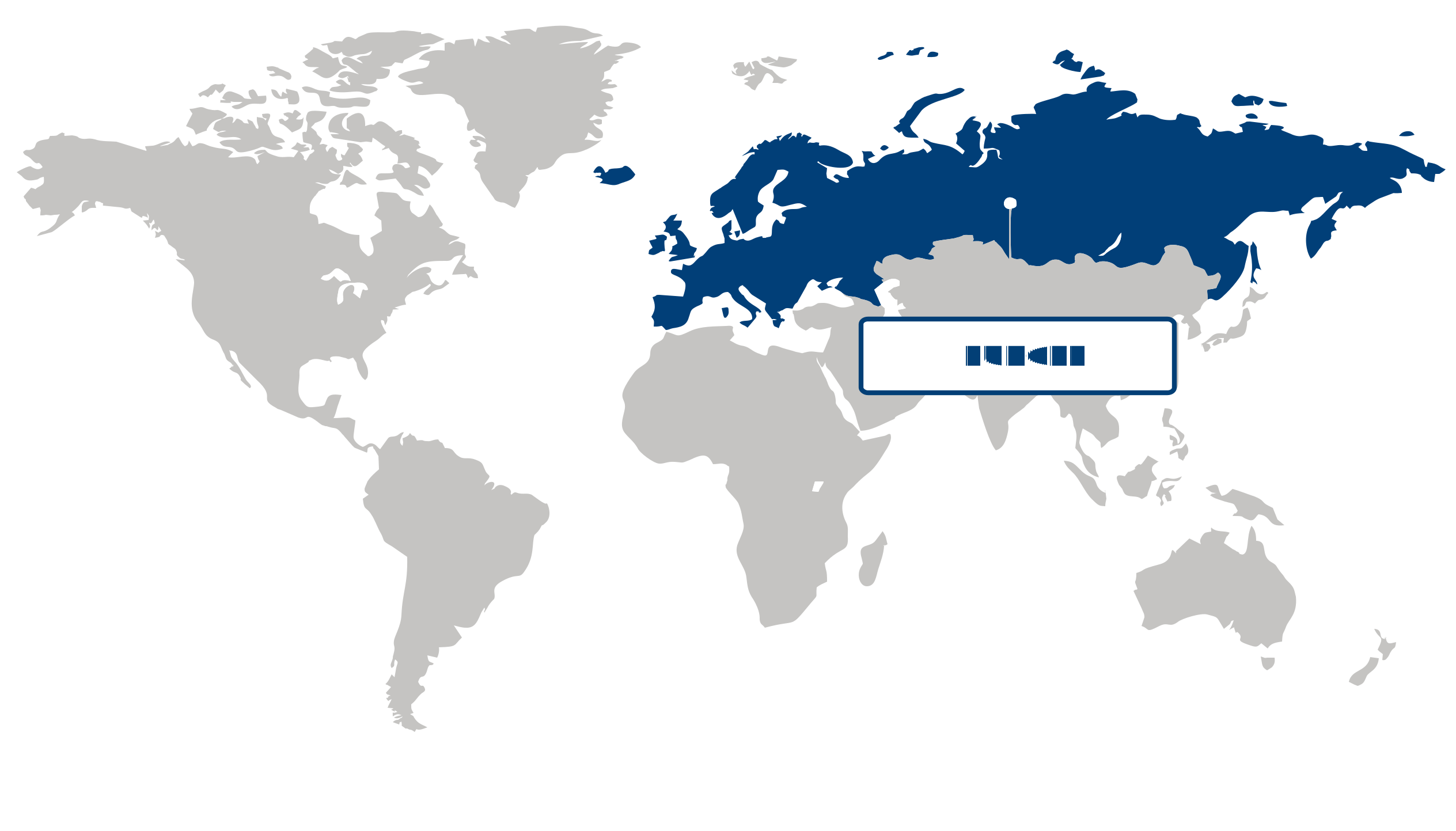
Europe (Largest Region)
In the malt ingredients market, Europe held the largest share at 36.57% in 2026, reflecting the region's deep-rooted brewing and food-processing industries and established demand for malt-based ingredients. Malt is widely integrated into brewing, bakery, confectionery, cereals, and other food applications, while consumer preference for natural ingredients and distinctive flavor profiles continues to support its use. The region's mature food manufacturing infrastructure, strong product quality standards, and established expertise in grain processing provide a stable foundation for market development. Growing interest in specialty beverages and premium food products is also encouraging greater use of differentiated malt varieties and functional formulations.
North America (Fastest-Growing Region)
North America represents the fastest-growing region, supported by expanding demand for craft and specialty beverages, innovation in food and beverage formulation, and increasing consumer interest in natural ingredient solutions. Malt ingredients are gaining broader application beyond traditional brewing as manufacturers explore their flavor, color, nutritional, and textural properties in bakery, snacks, cereals, and other processed foods. A dynamic food innovation environment and strong demand for premium and differentiated products are encouraging manufacturers to experiment with new malt formats and applications. Continued diversification of malt usage across food and beverage categories is therefore creating additional opportunities for regional expansion.
| Parameter | North America | Asia Pacific | Europe | Latin America | MEA |
|---|---|---|---|---|---|
| Innovation HubiScaleNascentDeveloping Advanced | |||||
| Cost-Sensitive RegioniScaleLowMedium High | |||||
| Regulatory EnvironmentiScaleRestrictiveNeutral Supportive | |||||
| Demand DriversiScaleWeakModerate Strong | |||||
| Development StageiScaleEmergingDeveloping Developed | |||||
| Adoption RateiScaleLowMedium High | |||||
| New Entrants/StartupsiScaleLowMedium High | |||||
| Macro IndicatorsiScaleWeakStable Strong |
Key Country Insights
Germany 🇩🇪
Brewing Quality StandardsGermany prioritizes premium malt ingredients that support consistent brewing performance and high-quality food production. Malt producers in Germany are refining processing methods to deliver reliable functionality and distinctive flavor profiles for commercial manufacturers.
France 🇫🇷
Artisan Ingredient FocusFrance values malt ingredients that enhance premium bakery, brewing, and gourmet food applications. Manufacturers in France are incorporating specialty malt products to strengthen flavor complexity and maintain authentic product positioning across established food categories.
Italy 🇮🇹
Premium Baking ApplicationsItaly is expanding the use of malt ingredients in artisan baking and specialty food manufacturing. Producers in Italy are prioritizing ingredients that improve dough performance, crust development, and flavor while preserving traditional product characteristics.
Japan 🇯🇵
Premium Food ApplicationsJapan is incorporating malt ingredients into bakery, confectionery, and beverage formulations that emphasize refined taste and product quality. Food manufacturers in Japan are selecting specialty malt varieties that improve texture, color, and formulation consistency.
South Korea 🇰🇷
Diversified Beverage FormulationSouth Korea is broadening the use of malt ingredients across craft beverages, bakery products, and processed foods. Producers in South Korea are focusing on versatile malt solutions that support product innovation while maintaining efficient manufacturing processes.
United States 🇺🇸
Functional Ingredient InnovationThe U.S. malt ingredients market is emphasizing specialty malt applications across brewing, bakery, and nutritional foods. Manufacturers in the U.S. are expanding ingredient portfolios that enhance flavor, natural labeling, and product differentiation while supporting evolving consumer preferences.
Malt Ingredients Market Share (%), by Source, 2026
Go beyond the chart, access full insights & data tables
Request Free Sample ReportSource Segment Analysis: Barley (Largest Segment) vs Rye (Fastest-Growing Segment)
The barley segment dominated the malt ingredients market, accounting for 52.36% share in 2026, supported by its established role as a primary raw material for malt production and its broad use across brewing and food applications. Barley offers favorable malting characteristics, including efficient germination and enzyme development, which support consistent processing and product quality. Its widespread cultivation, established supply chains, and compatibility with diverse malt formulations further reinforce its strong position across the industry.
Rye represents the fastest-growing source segment, benefiting from increasing interest in distinctive malt profiles and specialty products. Its characteristic flavor and functional properties make it increasingly relevant for craft beverages and differentiated food formulations, while growing experimentation with alternative grains is encouraging broader adoption of rye-based malt ingredients.
Application Segment Analysis: Beverage (Largest Segment) vs Food (Fastest-Growing Segment)
In the malt ingredients market, the beverage segment held the largest share of 81.51% in 2026, reflecting the extensive use of malt ingredients in beer and other malt-based beverages. Malt provides essential fermentable sugars, color, flavor, and body, making it fundamental to beverage formulation and production. Continued consumer interest in diverse beer styles and premium beverage experiences supports sustained demand for high-quality malt ingredients.
The food segment is expanding at the fastest pace as manufacturers increasingly incorporate malt ingredients into baked goods, cereals, confectionery, and other formulations for flavor enhancement and functional benefits. Growing preference for naturally derived ingredients and the use of malt to improve taste, color, and product characteristics are broadening its role beyond traditional beverage applications.
| Segment | Sub-Segment | Largest Segment | Fastest Growing |
|---|---|---|---|
| Source | Barley, Wheat, Rye, Others | Barley | Rye |
| Application | Food, Beverage, Pharmaceutical, Others | Beverage | Food |
Competitive Landscape and Market Positioning
Major players in the malt ingredients market:
1. Cargill Incorporated (United States)
2. Archer Daniels Midland Company (United States)
3. Malteurop Groupe (France)
4. Soufflet Malt (InVivo Group) (France)
5. Crisp Malt (United Kingdom)
6. Muntons plc (United Kingdom)
7. Viking Malt Oy (Finland)
8. Simpsons Malt Limited (United Kingdom)
9. GrainCorp Limited (Australia)
10. Boortmalt (Axéréal Group) (France)
The malt ingredients market is advancing with improved processing techniques that enhance flavor consistency and application versatility. Continuous innovation is supporting better quality control in food and beverage production. The malt ingredients market is also shaped by growing demand for specialty brewing and bakery applications.
| Company | Market Share | Company Revenue | Revenue CAGR (%) | Product Portfolio | Geographic Presence | Innovation / R&D Focus | Strategic Developments |
|---|---|---|---|---|---|---|---|
| Cargill Incorporated (United States) | |||||||
| Archer Daniels Midland Company (United States) | |||||||
| Malteurop Groupe (France) | |||||||
| Soufflet Malt (InVivo Group) (France) | |||||||
| Crisp Malt (United Kingdom) | |||||||
| Muntons plc (United Kingdom) | |||||||
| Viking Malt Oy (Finland) | |||||||
| Simpsons Malt Limited (United Kingdom) | |||||||
| GrainCorp Limited (Australia) | |||||||
| Boortmalt (Axéréal Group) (France). |
Industry Development / News
| Company Name | Date | Key Development |
|---|---|---|
| Soufflet Malt / HEINEKEN | Mar-25 | Soufflet Malt and HEINEKEN Beverages entered a commercial partnership in South Africa, including a EUR 100 million investment in a new malting facility adjacent to the Sedibeng Brewery. Scheduled for completion in mid-2027, the facility aims to strengthen local supply chains for brewing operations and support South African barley farmers. |
| Simpsons Malt Limited | Feb-25 | Over 120 contracted farmers within the Chivas Brothers Strathclyde Growers Group achieved the U.K.’s first 100% Farm Sustainability Assessment (FSA) Gold verification for distilling wheat. This milestone ensures the supply of sustainably sourced grain for Scotch whisky production, reflecting the company’s commitment to verifiable agricultural sustainability. |
| Boortmalt | Dec-24 | Boortmalt announced capacity expansion projects at its Scottish malting facilities, adding 40,000 tonnes at Buckie and 15,000 tonnes at Glenesk. These upgrades are scheduled to come on stream in early 2026, directly supporting the growing demand from the local distilling industry and providing increased processing capacity for Scottish barley growers. |
| PureMalt Products Ltd | Jan-24 | PureMalt Products Ltd announced a significant leadership transition, with Managing Director Bruce Turner moving to a non-executive director role. This organizational restructuring is a key development in the company's operational leadership, designed to support ongoing strategic growth and stability within the malt ingredients sector. |
| Simpsons Malt Ltd | Jun-23 | Simpsons Malt Ltd launched a long-term collaboration with Yara UK and Varda to decarbonize its malting barley and distilling wheat supply chain. By implementing fossil-free green fertilizers and precision farming, the partners aim to enhance nutrient efficiency and achieve Simpsons Malt’s 2030 carbon-neutral production goal. |
| Malteries Soufflet | Mar-23 | Malteries Soufflet announced a proposal to acquire United Malt Group for approximately A$5.001 per share. This strategic acquisition aimed to create the world's largest maltster with an annual capacity of 3.7 million tons, significantly enhancing the company's global footprint in the craft beer market and strategic presence in North America and Australia. |
Customize Your Report
Explore examples of how this report can be tailored to different research needs, including custom segments, additional topics or chapters, and related reports. Click a section of the wheel or its numbered marker to explore the available options.
Malt Ingredients Market — Custom Segments
| Segment | Sub-Segment |
|---|---|
| Ingredient Format | Malt Extracts, Malt Flour, Malt Syrups, Malted Grains |
| Functional Role | Flavoring & Coloring, Sweetening, Enzymatic Activity, Fermentation Support |
| Customer Type | Breweries & Distilleries, Food & Beverage Manufacturers, Pharmaceutical Manufacturers, Specialty Ingredient Producers |
Malt Ingredients Market — Custom TOC
| Custom Chapter | Chapter Details |
|---|---|
| Brewing and Food Industry Demand Outlook |
|
| Barley Supply and Climate Risk Assessment |
|
| High-Growth Application Opportunity Mapping |
|
Need a different cut of the data?
Request Custom ResearchFrequently Asked Questions
How large is the malt ingredients market?
How is the malt ingredients industry expected to grow over the next 10 years?
How is the growth of craft beer and premium spirits influencing demand in the malt ingredients market?
How is the expansion of food applications and natural ingredient trends affecting malt ingredient adoption?
Why does Beverage dominate the malt ingredients market by application?
Why is Rye the fastest-growing source segment in the malt ingredients market?
Why does Europe lead the malt ingredients market?
How is North America contributing to malt ingredients market growth?
Who holds a significant market share in the malt ingredients landscape?
Our Clients
"The report provided a thorough look at market trends, technological advancements, and the competitive landscape. The depth of insights was really valuable."
ITC Limited
"We would highly recommend Fundamental Business Insights & Consulting to anyone looking for reliable, detailed, and comprehensive market research in the Food industry."
Tyson Foods
"The clarity and presentation of the information were commendable. The report was delivered timely, which made the overall experience smooth and convenient."
Mondelēz International
Our Research Team & Methodology
Every Fundamental Business Insights report is built by a dedicated vertical research team, validated through a structured primary-and-secondary methodology, and reviewed for accuracy before it reaches you.
Delivery
Published
Available
Support
- Market Size & Forecast
- Market Segmentation
- Regional Analysis
- Growth Drivers & Challenges
- Market Dynamics
- Competitive Landscape
- Company Profiles
- Competitive Benchmarking
- Mergers & Acquisitions
- Market Share Analysis or Key Company Strategies
- Value Chain Analysis
- Porter's Five Forces
- PESTLE Analysis
- Pricing Trends
- Supply-Demand Analysis
- Technology Landscape
- Regulatory Landscape
- Investment & Funding Landscape
- Emerging Opportunities
- Future Market Outlook