Medical Device Packaging Market Size & Growth Forecast 2027–2036, By Segments (Type, Material, Product, Application), Regional Demand Trends (North America, Asia Pacific, Europe), Key Country Insights (U.S., Japan, South Korea, Germany, France, Italy), and Competitive Landscape
Market Size and Growth Outlook
Medical Device Packaging Market size was valued at USD 39.37 Billion in 2026 and is anticipated to grow at 6.89% CAGR from 2027 to 2036, crossing USD 76.65 Billion by 2036. The industry revenue for 2027 is calculated at USD 41.67 Billion.
Get more details on this report
Request Free Sample ReportMedical Device Packaging Market Intelligence Snapshot
Regional Market Dynamics
- Europe leads through its mature medical device manufacturing base, stringent safety requirements, and established healthcare infrastructure supporting sterile and compliant packaging solutions.
- Asia Pacific is the fastest-growing region, supported by expanding healthcare infrastructure, medical device production, healthcare access, and investment in local manufacturing capabilities.
Segment Momentum
- Sterile packaging held a 65.28% market share in 2026 because it preserves product sterility throughout storage, transportation, and clinical use while supporting patient safety and regulatory compliance.
- Clamshell and blister packs are the fastest-growing product segment as they improve product visibility, protection, tamper evidence, and handling efficiency, supporting better inventory management and distribution.
Market Expansion Drivers
- Stringent regulatory requirements driving adoption of sterile and compliant packaging solutions
- Expansion of home healthcare and diagnostics increasing demand for secure packaging formats
- Shift toward sustainable packaging materials supporting eco-friendly healthcare packaging innovation
Leading Market Participants
- Major companies in the medical device packaging market include Amcor plc (Australia), DuPont de Nemours Inc. (United States), Berry Global Group, Inc. (United States), Sealed Air Corporation (United States), WestRock Company (United States), CCL Industries Inc. (Canada), Schott AG (Germany), Nelipak Corporation (United States), Klöckner Pentaplast Group (Germany), Wipak Group (Finland)
Global Market Forecast Snapshot
Market Outlook
- 2026 Market Size: USD 39.37 Billion
- 2027 Estimated Market Size: USD 41.67 Billion
- Projected Market Size: USD 76.65 Billion by 2036
- Growth Forecast: 6.89% CAGR (2027-2036)
Regional and Segment Outlook
- Leading Regional Market: Europe
- High-Growth Regional Hub: Asia Pacific
- Core Revenue Segment: Sterile Packaging (Type) | Plastics (Material) | Bags and Pouches (Product) | Implants (Application)
- Emerging Opportunity Segment: Sterile Packaging (Type) | Plastics (Material) | Clamshell and Blister Packs (Product) | Implants (Application)
Market Growth Drivers and Industry Trends
Stringent regulatory requirements driving adoption of sterile and compliant packaging solutions
Stringent regulatory frameworks governing medical devices are increasing the emphasis on packaging systems that preserve sterility, maintain product integrity, and ensure traceability throughout the supply chain. The medical device packaging market growth is driven by manufacturers adopting validated packaging materials and processes that comply with evolving quality and safety standards across domestic and international markets. Sterile barrier systems, tamper-evident features, and durable labeling are becoming essential components of packaging strategies to reduce contamination risks and support regulatory approvals. Compliance requirements are also encouraging greater investment in packaging validation, material testing, and quality assurance procedures to meet demanding healthcare and distribution conditions.
Expansion of home healthcare and diagnostics increasing demand for secure packaging formats
The growing adoption of home-based healthcare services and self-administered diagnostic products is creating new packaging requirements focused on convenience, protection, and ease of use. As medical devices increasingly reach patients through retail and direct-to-consumer channels, the medical device packaging market is benefiting from rising demand for packaging formats that safeguard sensitive products during transportation and storage while remaining user-friendly. Manufacturers are developing solutions with enhanced barrier properties, intuitive opening mechanisms, and clear instructional labeling to support safe handling by non-professional users. Packaging designs are also evolving to accommodate compact diagnostic kits, wearable devices, and portable monitoring equipment distributed across decentralized healthcare settings.
Shift toward sustainable packaging materials supporting eco-friendly healthcare packaging innovation
Environmental sustainability objectives are encouraging healthcare manufacturers to evaluate packaging materials that reduce environmental impact without compromising sterility or product protection. This transition will propel the medical device packaging market growth as recyclable, renewable, and resource-efficient materials gain greater acceptance within medical packaging applications. Material innovation is enabling the development of packaging structures that balance regulatory compliance with reduced material consumption and improved waste management compatibility. Manufacturers are also redesigning packaging configurations to optimize transportation efficiency, minimize excess packaging, and support broader corporate sustainability initiatives integrated into healthcare supply chains.
| Growth Driver | Impact on CAGR | Regulatory Influence | Geographic Relevance | Adoption Rate | Impact Timeline |
|---|---|---|---|---|---|
| Stringent regulatory requirements driving adoption of sterile and compliant packaging solutions | 2% | High | North America, Europe | High | Near Term |
| Expansion of home healthcare and diagnostics increasing demand for secure packaging formats | 1.8% | High | Asia Pacific, North America | High | Near Term |
| Shift toward sustainable packaging materials supporting eco-friendly healthcare packaging innovation | 1.5% | Moderate | Europe, Asia Pacific | Medium | Mid Term |
Unlock insights tailored to your business with our bespoke market research solutions.
Click to get your customized report now.
Regional Demand Dynamics
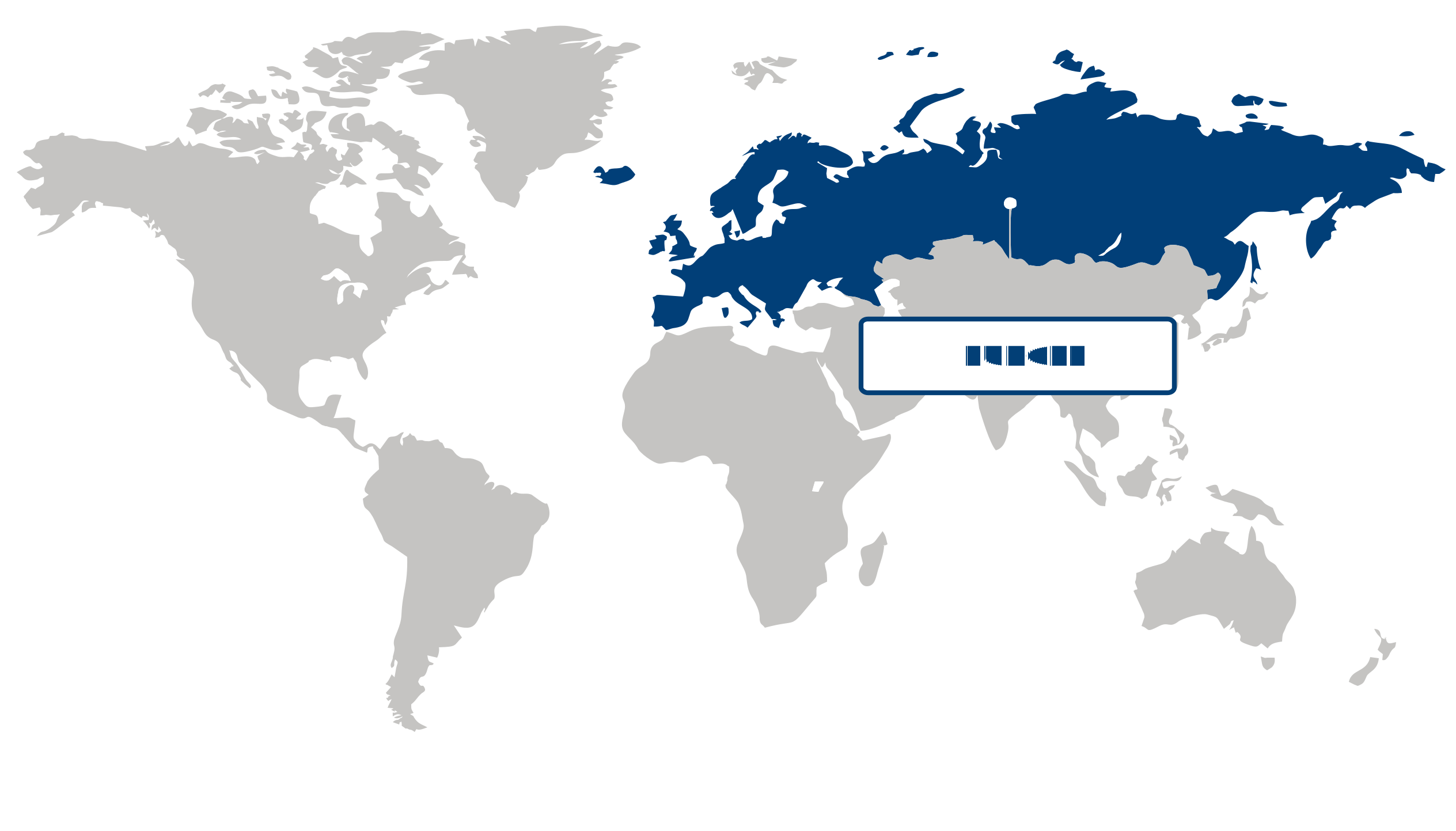
Europe (Largest Region)
Europe accounted for the largest share of the medical device packaging market in 2026, supported by a mature medical device manufacturing base, stringent product safety requirements, and strong emphasis on sterile and compliant packaging solutions. The region's well-established healthcare infrastructure and focus on maintaining the integrity, traceability, and shelf life of medical products continue to sustain demand for advanced packaging formats. Regulatory requirements surrounding device safety and contamination control further encourage manufacturers to adopt reliable and technically sophisticated packaging systems.
Asia Pacific (Fastest-Growing Region)
Asia Pacific is expected to register the fastest growth, supported by expanding healthcare infrastructure, increasing medical device production, and improving access to healthcare services. Rising demand for diagnostic and therapeutic equipment is creating additional requirements for protective, sterile, and durable packaging solutions. Growing investments in healthcare manufacturing and the development of local medical device industries are also strengthening the regional packaging ecosystem and supporting wider adoption of specialized packaging technologies.
| Parameter | North America | Asia Pacific | Europe | Latin America | MEA |
|---|---|---|---|---|---|
| Innovation Hub i Scale Nascent Developing Advanced | |||||
| Cost-Sensitive Region i Scale Low Medium High | |||||
| Regulatory Environment i Scale Restrictive Neutral Supportive | |||||
| Demand Drivers i Scale Weak Moderate Strong | |||||
| Development Stage i Scale Emerging Developing Developed | |||||
| Adoption Rate i Scale Low Medium High | |||||
| New Entrants / Startups i Scale Sparse Moderate Dense | |||||
| Macro Indicators i Scale Weak Stable Strong |
Key Country Insights
United States 🇺🇸
Sterile Packaging InnovationThe U.S. medical device packaging market emphasizes sterile barrier systems that support complex devices and regulatory compliance. Manufacturers invest in high-performance materials, packaging validation, and automation to improve product protection across healthcare supply chains.
Germany 🇩🇪
Precision Compliance FocusGermany prioritizes medical device packaging with reliable sterilization compatibility, traceability, and manufacturing consistency. Companies strengthen sustainable material adoption while maintaining strict packaging integrity requirements for domestic and export markets.
Japan 🇯🇵
High-Quality Sterile SolutionsJapan focuses on medical device packaging that combines compact design, contamination control, and dependable sealing performance. Packaging suppliers enhance material quality and precision manufacturing to support advanced medical technologies.
South Korea 🇰🇷
Smart Manufacturing IntegrationSouth Korea advances medical device packaging through automated production, digital quality monitoring, and efficient sterile packaging processes. Domestic manufacturers expand packaging capabilities to support growing medical technology exports.
France 🇫🇷
Sustainable Sterility BalanceFrance encourages medical device packaging that balances environmental objectives with uncompromised sterile protection. Companies evaluate recyclable materials and optimized packaging formats while ensuring compliance with healthcare quality standards.
Italy 🇮🇹
Flexible Production SupportItaly strengthens medical device packaging through specialized converters serving diverse medical equipment manufacturers. Packaging providers focus on customization, reliable sterilization performance, and efficient production for regional and international customers.
Segment Leadership and Growth Trends
Medical Device Packaging Market Share (%), by Type, 2026
Go beyond the chart, access full insights & data tables
Request Free Sample ReportType Segment Analysis: Sterile Packaging (Largest & Fastest-Growing Segment)
The sterile packaging segment accounted for a 65.28% share of the medical device packaging market in 2026 and also represented the fastest-growing type. Its dominance is driven by the critical need to preserve product sterility throughout storage, transportation, and clinical use while minimizing contamination risks. Increasing regulatory emphasis on patient safety, expanding production of single-use medical devices, and growing healthcare quality standards continue to encourage the widespread adoption of sterile packaging solutions. Ongoing innovations in barrier materials and packaging technologies further support the segment's sustained leadership.
Material Segment Analysis: Plastics (Largest & Fastest-Growing Segment)
The plastics segment dominated the medical device packaging market with a 58.3% share in 2026 and also emerged as the fastest-growing material category. Plastics are widely utilized because they offer excellent durability, lightweight characteristics, design flexibility, and compatibility with sterilization processes. Their ability to provide reliable barrier protection while supporting cost-effective manufacturing has made them the preferred material for a broad range of medical device packaging applications. Continued advancements in medical-grade polymer technologies and increasing demand for high-performance packaging solutions are expected to reinforce the segment's growth.
Product Segment Analysis: Bags and Pouches (Largest Segment) vs Clamshell and Blister Packs (Fastest-Growing Segment)
The bags and pouches segment held the largest share of the medical device packaging market in 2026. Its leading position is attributed to its versatility, ease of handling, and ability to maintain sterile conditions for a wide variety of medical devices. These packaging formats are extensively used because they offer efficient storage, reliable barrier protection, and compatibility with multiple sterilization methods. Their adaptability across diverse healthcare applications continues to support strong market demand.
The clamshell and blister packs segment is anticipated to witness the fastest growth as healthcare providers and manufacturers increasingly prioritize packaging solutions that enhance product visibility, protection, and ease of use. These formats help safeguard delicate medical devices from physical damage while enabling organized presentation and convenient handling. Rising demand for tamper-evident packaging, improved inventory management, and efficient distribution solutions is expected to accelerate the adoption of clamshell and blister packs.
| Segment | Sub-Segment | Largest Segment | Fastest Growing |
|---|---|---|---|
| Type | Sterile Packaging, Non-sterile Packaging | Sterile Packaging | Sterile Packaging |
| Material | Plastics, Paper and Paperboard, Metal, Others | Plastics | Plastics |
| Product | Bags and Pouches, Films, Clamshell and Blister Packs, Boxes, Others | Bags and Pouches | Clamshell and Blister Packs |
| Application | Dental Devices, Diagnostic Products, Surgical Instruments, Imaging Equipment, Implants | Implants | Implants |
Competitive Landscape and Market Positioning
Prominent players in the medical device packaging market:
- Amcor plc (Australia)
- DuPont de Nemours, Inc. (United States)
- Berry Global Group, Inc. (United States)
- Sealed Air Corporation (United States)
- WestRock Company (United States)
- CCL Industries, Inc. (Canada)
- Schott AG (Germany)
- Nelipak Corporation (United States)
- Klöckner Pentaplast Group (Germany)
- Wipak Group (Finland)
Demand for higher standards of product protection and regulatory compliance is reshaping competitive dynamics in the medical device packaging market, encouraging suppliers to invest in advanced barrier materials, sterile packaging technologies, and validation expertise. Rather than competing primarily on packaging formats, manufacturers are strengthening integrated capabilities that support design optimization, testing, and documentation throughout the product development process. Sustainability is emerging as a complementary area of differentiation, prompting innovation in recyclable materials and resource-efficient manufacturing while preserving the performance characteristics required for sensitive medical applications.
| Company | Market Share | Company Revenue | Revenue CAGR (%) | Product Portfolio | Geographic Presence | Innovation / R&D Focus | Strategic Developments |
|---|---|---|---|---|---|---|---|
| Amcor plc (Australia) | |||||||
| DuPont de Nemours Inc. (United States) | |||||||
| Berry Global Group Inc. (United States) | |||||||
| Sealed Air Corporation (United States) | |||||||
| WestRock Company (United States) | |||||||
| CCL Industries Inc. (Canada) | |||||||
| Schott AG (Germany) | |||||||
| Nelipak Corporation (United States) | |||||||
| Klöckner Pentaplast Group (Germany) | |||||||
| Wipak Group (Finland) |
Industry Development/News
| Company Name | Date | Key Development |
|---|---|---|
| Amcor | Apr-26 | Amcor inaugurated an advanced healthcare packaging coating facility in Subang Jaya, Malaysia, following a US$35 million investment. This expansion strengthens the company's regional production infrastructure and enhances its specialized healthcare packaging capabilities, directly supporting the growing demand for sophisticated medical device packaging solutions. |
| Smurfit Westrock | Nov-25 | Smurfit Westrock established a clinical packaging facility near Dublin, Ireland, backed by a €40 million investment. The site is dedicated to the development of specialized clinical packaging solutions, supporting the manufacturing and distribution requirements for next-generation medical and healthcare applications. |
| Shawpak | Oct-25 | Shawpak introduced the LT range of linear thermoforming machines specifically engineered for medical device packaging. This addition to the company's capital equipment portfolio enhances the production capabilities of medical manufacturers by enabling more efficient, high-precision thermoformed packaging assembly, directly addressing requirements for advanced medical device sterility and containment. |
| Olympus | Oct-25 | Olympus initiated a strategic partnership with DuPont to transition over 100 single-use medical devices to renewable Tyvek packaging by 2026. This adoption of sustainable materials represents a major effort to reduce the corporate carbon footprint within the medical packaging value chain while maintaining the protective integrity required for sterile medical device delivery. |
| Boulder BioMed | Aug-25 | Boulder BioMed launched Boulder BioLabs to provide specialized contract distribution and packaging validation services for medical devices. This initiative expands the company's service portfolio to support manufacturers during critical stages of sterilization transition and regulatory compliance, addressing significant operational hurdles in the medical device packaging validation lifecycle. |
| ChargePoint Technology | Jun-25 | ChargePoint Technology commissioned a new manufacturing facility in Liverpool, featuring an ISO6 cleanroom environment. The expansion significantly increases production capacity for single-use powder handling assemblies and supports the operational launch of its dedicated Flexible Packaging division, enhancing its footprint in specialized pharmaceutical and medical device supply chains. |
| West Pharmaceutical Services | Jan-25 | West Pharmaceutical Services launched a nested format for its Daikyo PLASCAP Ready-to-Use Validated closures. This development expands the company's portfolio of specialized packaging components for advanced therapy treatments, streamlining the integration of these closures into automated pharmaceutical and medical device filling lines. |
| Klöckner Pentaplast | Oct-24 | Klöckner Pentaplast launched kpNext MDR1, a medical device packaging film designed to be fully recyclable in the RIC 1 stream. The film is engineered for direct compatibility with existing packaging lines, allowing manufacturers to improve sustainability profiles and transition to circular packaging formats without incurring the costs associated with equipment retooling. |
| TekniPlex Healthcare | Sep-24 | TekniPlex Healthcare introduced the HPC74 Series, a reinforced medical paper offering superior puncture and tear resistance alongside optimized porosity levels. Designed for rigorous protection and sterilization requirements, the heat-seal coated construction provides enhanced durability for medical device distribution, meeting critical safety and performance standards for clinical packaging. |
| Amcor | Feb-24 | Amcor executed a major thermoforming capacity expansion at its Wisconsin facility. The investment serves to increase production throughput and streamline manufacturing processes specifically for medical, pharmaceutical, and consumer health packaging applications, improving the company’s ability to meet stringent industry standards for device protection and distribution. |
Customize Your Report
Explore examples of how this report can be tailored to different research needs, including custom segments, additional topics or chapters, and related reports. Click a section of the wheel or its numbered marker to explore the available options.
Medical Device Packaging Market — Custom Segments
| Segment | Sub-Segment |
|---|---|
| Device Reprocessing Status | Single-Use Devices, Reusable Devices |
| Packaging Performance Requirement | Standard Protection, Moisture Protection, Oxygen Barrier, Light Protection, High-Barrier Protection |
| Healthcare Facility Type | Hospitals, Ambulatory Surgical Centers, Specialty Clinics, Diagnostic Laboratories, Other Healthcare Facilities |
Medical Device Packaging Market — Custom TOC
| Custom Chapter | Custom Details |
|---|---|
| Sterile Packaging Design Strategy |
|
| Material Substitution & Innovation Pathways |
|
| Supply Chain Resilience & Sourcing Strategy |
|
Need a different cut of the data?
Request Custom ResearchHow big is the medical device packaging market?
How will the medical device packaging industry grow in terms of size and CAGR by 2036?
How are regulatory requirements influencing innovation in medical device packaging?
Why is sustainability becoming a strategic priority in the medical device packaging market?
Why is sterile packaging the leading type in the Medical Device Packaging Market?
Which product segment is expanding the fastest in the Medical Device Packaging Market?
What makes Europe the leading region for medical device packaging?
How is Asia Pacific accelerating medical device packaging market growth?
Who are the major participants shaping the medical device packaging landscape?
Our Clients
"The report helped us understand emerging consumer trends in our product category. It clarified where to focus innovation for the next product launch."
LyondellBasell
"The regional forecast section was incredibly useful. We were able to identify two new potential partners in Europe thanks to the vendor mapping you included."
SABIC
"We appreciated how actionable the recommendations were. It guided us to improve supply chain resilience."
Olin Corporation
Our Research Team & Methodology
Every Fundamental Business Insights report is built by a dedicated vertical research team, validated through a structured primary-and-secondary methodology, and reviewed for accuracy before it reaches you.
Research Team Overview
Prepared by the Chemicals & Materials Research Team
Delivery
Published
Demand
Available
Support
Trust & Compliance
Research Domains
10 coverage areasResearch Intelligence
| Source | Reference |
|---|---|
| American Chemistry Council (ACC) | www.americanchemistry.com |
| European Chemical Industry Council (Cefic) | cefic.org |
| International Council of Chemical Associations (ICCA) | icca-chem.org |
| European Chemicals Agency (ECHA) | echa.europa.eu |
| U.S. Environmental Protection Agency (EPA) | www.epa.gov |
| ASTM International | www.astm.org |
| International Organization for Standardization (ISO) | www.iso.org |
| National Institute of Standards and Technology (NIST) | www.nist.gov |
| Plastics Industry Association (PLASTICS) | www.plasticsindustry.org |
| European Biplastics | www.european-bioplastics.org |
| The Adhesive and Sealant Council (ASC) | www.ascouncil.org |
| National Association of Corrosion Engineers (AMPP) | www.ampp.org |
| Society of Plastics Engineers (SPE) | www.4spe.org |
| International Fertilizer Association (IFA) | www.fertilizer.org |
| CropLife International | croplife.org |
| Packaging Europe | packagingeurope.com |
| Flexible Packaging Association (FPA) | www.flexpack.org |
| Battery Council International (BCI) | batterycouncil.org |
| International Copper Association (ICA) | internationalcopper.org |
| World Steel Association | worldsteel.org |
Research Workflow & Quality Assurance
Data Collection
Verified information gathered through primary and secondary research.
Data Triangulation
Cross-validation using multiple independent data sources.
Forecast Modelling
Market estimates developed using historical trends and analytical models.
Analyst Validation
Findings reviewed by domain experts for accuracy and consistency.
Editorial & Quality Review
Final editorial, quality, and compliance checks before publication.
Final Publication
Released after successful completion of the internal review process.
Report Coverage
📊 Market Assessment
- Market Size & Forecast
- Market Segmentation
- Regional Analysis
- Growth Drivers & Challenges
- Market Dynamics
🏢 Competitive Intelligence
- Competitive Landscape
- Company Profiles
- Competitive Benchmarking
- Mergers & Acquisitions
- Market Share Analysis or Key Company Strategies
🔍 Strategic Analysis
- Value Chain Analysis
- Porter's Five Forces
- PESTLE Analysis
- Pricing Trends
- Supply-Demand Analysis
🚀 Future Outlook
- Technology Landscape
- Regulatory Landscape
- Investment & Funding Landscape
- Emerging Opportunities
- Future Market Outlook
Have a question about this report or need a custom scope?
Request Customization