



Soybean Derivatives Market Size & Growth Forecast 2027–2036, By Segments (Derivatives Type, End-use, Distribution Channel), Regional Demand Trends (North America, Asia Pacific, Europe), Key Country Insights (U.S., Japan, South Korea, Germany, France, Italy), and Competitive Landscape
Market Size and Growth Outlook
Soybean Derivatives Market size stood at USD 305.95 Billion in 2026 and is predicted to grow at 7.42% CAGR from 2027 to 2036, exceeding USD 625.9 Billion by 2036. The industry revenue for 2027 is calculated at USD 325.22 Billion.
Base Year Value (2026)
USD 305.95 Billion
CAGR (2027-2036)
7.42%
Forecast Year Value (2036)
USD 625.9 Billion

Historical Data Period
2022-2026

Largest Region
Asia Pacific

Forecast Period
2027-2036
Soybean Derivatives Market Intelligence Snapshot:
-
Regional Market Dynamics:
- Asia Pacific led in 2025, supported by substantial food processing, animal feed, and edible oil industries creating diversified demand for soybean-derived products.
- Growth is driven by rising population, processed food consumption, protein-rich ingredient demand, livestock and poultry production, and expanding processing infrastructure.
-
Segment Momentum:
- Food and beverages accounted for 43.2% of the market in 2025, driven by extensive use of soybean ingredients in bakery, beverages, dairy alternatives, meat substitutes, and processed foods.
- Soy protein isolate is growing fastest due to rising demand for plant-based, high-protein ingredients in functional foods, sports nutrition, and dairy alternatives, supported by advances in processing technologies.
-
Market Expansion Drivers:
- Rising vegan population driving demand for plant-based protein ingredients and derivatives
- Growing health awareness increasing consumption of soy-based functional and nutritional products
- Expansion of processed food industry increasing utilization of soy derivatives in formulations
-
Leading Market Participants:
Prominent companies in the soybean derivatives market include Cargill, Incorporated (United States), Archer Daniels Midland Company (United States), Bunge Global SA (United States), Louis Dreyfus Company B.V. (Netherlands), Wilmar International Limited (Singapore), CHS Inc. (United States), AG Processing Inc. (United States), Kerry Group plc (Ireland), Ingredion Incorporated (United States), Fuji Oil Co., Ltd. (Japan)
Global Market Forecast Snapshot:
-
Market Outlook:
- 2026 Market Size: USD 305.95 Billion
- 2027 Estimated Market Size: USD 325.22 Billion
- Projected Market Size: USD 625.9 Billion by 2036
- Growth Forecasts: 7.42% CAGR (2027-2036)
-
Regional and Segment Outlook:
- Leading Regional Market: Asia Pacific
- High-Growth Regional Hub: Asia Pacific
- Core Revenue Segment: Soybean Meal (Derivatives Type) | Food and Beverages (End-use) | Online Retail (Distribution Channel)
- Emerging Opportunity Segment: Soy Protein Isolate (Derivatives Type) | Animal Feed (End-use) | Online Retail (Distribution Channel)
Market Growth Drivers and Industry Trends
Rising vegan population driving demand for plant-based protein ingredients and derivatives
The growing adoption of vegan and plant-focused dietary patterns will drive the soybean derivatives market growth by increasing demand for protein-rich ingredients used across food, beverage, and nutritional product categories. Soy-derived ingredients provide functional versatility, balanced nutritional profiles, and compatibility with a wide range of plant-based formulations, making them valuable alternatives to animal-derived components. Food manufacturers are expanding product portfolios that incorporate soy proteins, oils, lecithin, and other derivatives to satisfy evolving consumer preferences for plant-based nutrition.
Growing health awareness increasing consumption of soy-based functional and nutritional products
Increasing attention to balanced nutrition and preventive wellness is encouraging greater consumption of functional food ingredients, and the soybean derivatives market benefits from expanding use in health-oriented product formulations. Consumers are seeking foods that combine nutritional value with functional benefits, leading manufacturers to incorporate soybean derivatives into products designed for everyday dietary support. Their versatility across nutritional beverages, fortified foods, dietary supplements, and specialized food applications further strengthens demand among health-conscious consumer segments.
Expansion of processed food industry increasing utilization of soy derivatives in formulations
The rapid expansion of processed and convenience food manufacturing will propel the soybean derivatives market growth through wider utilization of soy-based ingredients in commercial food production. Soy derivatives perform multiple functional roles, including emulsification, texture enhancement, moisture retention, and product stability, making them essential components in numerous processed food formulations. As manufacturers continue developing innovative packaged foods with consistent quality and extended shelf life, demand for versatile soybean-derived ingredients continues to broaden across diverse processing applications.
| Growth Driver Assessment Framework | |||||
| Growth Driver | Impact On CAGR | Regulatory Influence | Geographic Relevance | Adoption Rate | Impact Timeline |
|---|---|---|---|---|---|
| Rising vegan population driving demand for plant-based protein ingredients and derivatives | 2% | Low | North America, Europe | High | Near Term |
| Growing health awareness increasing consumption of soy-based functional and nutritional products | 1.7% | Low | Asia Pacific, North America | High | Mid Term |
| Expansion of processed food industry increasing utilization of soy derivatives in formulations | 1.6% | Moderate | Asia Pacific, Europe | High | Mid Term |
Unlock insights tailored to your business with our bespoke market research solutions - Click to get your customized report now!
Regional Demand Dynamics
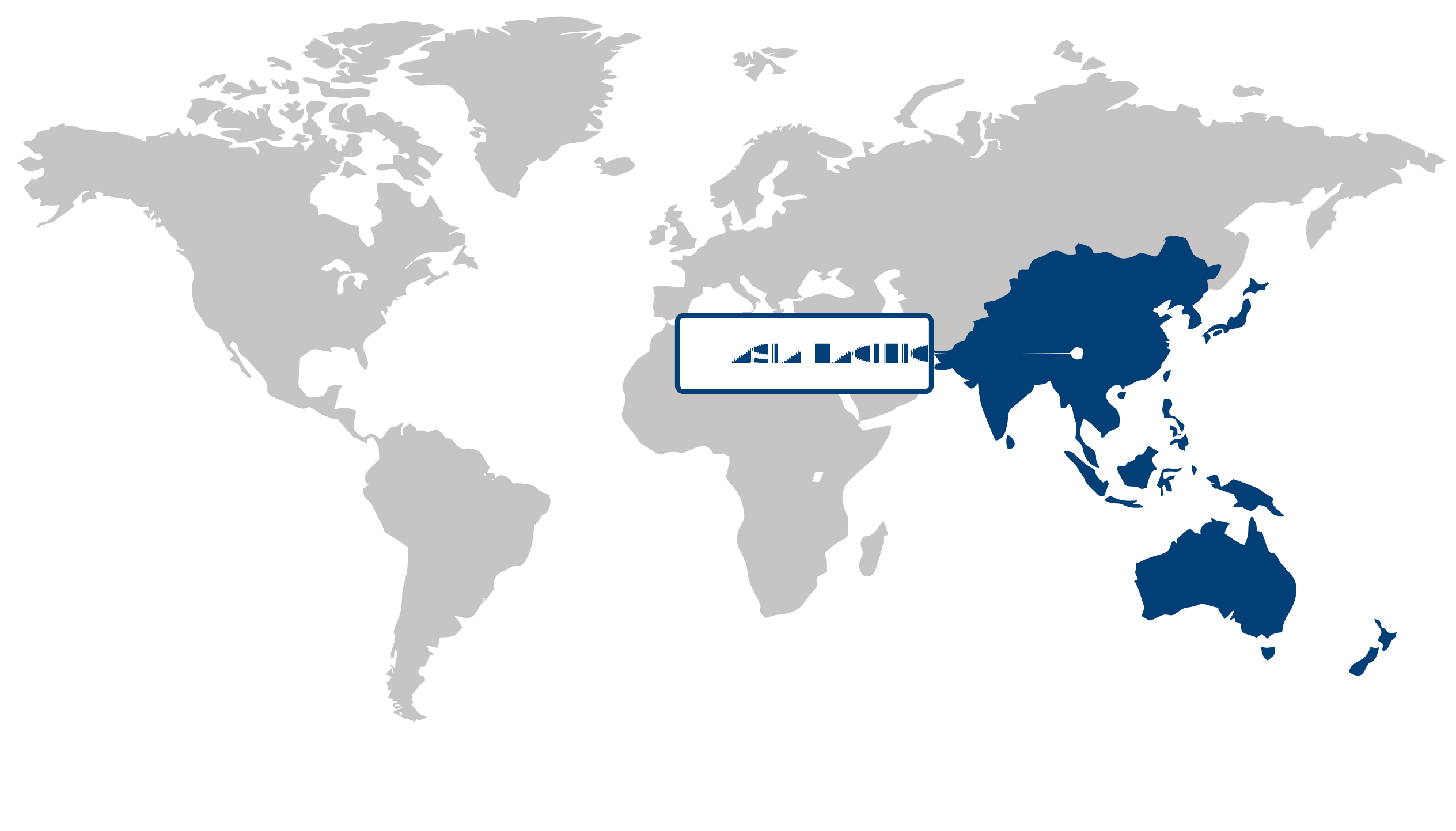
Largest Region
Asia Pacific
Largest Market Share in 2026
Asia Pacific (Largest & Fastest-Growing Region)
The Asia Pacific region held the largest share of the soybean derivatives market in 2026 and is also the fastest-growing regional market, supported by the region's substantial food processing, animal feed, and edible oil industries. Soybean-derived products are widely utilized across food and beverage applications as well as feed formulations, creating a broad and diversified demand base. Rising population, changing dietary patterns, expanding processed food consumption, and increasing demand for protein-rich ingredients are strengthening the utilization of soybean derivatives. At the same time, growth in livestock and poultry production is supporting demand for soybean-based feed ingredients, while expanding food processing capacity and improving agricultural and supply-chain infrastructure are creating further opportunities for market development.
No card data available for this language/report.
Segment Leadership and Growth Trends
Derivatives Type Segment Analysis: Soybean Meal (Largest Segment) vs Soy Protein Isolate (Fastest-Growing Segment)
Holding the largest share of the soybean derivatives market, the soybean meal segment accounted for 32.72% in 2026. Its leadership was supported by its widespread use as a high-protein ingredient in livestock and poultry nutrition, where it delivers a balanced amino acid profile and reliable nutritional value. Consistent demand from commercial animal production, combined with the extensive availability of soybean meal as a by-product of oil extraction, reinforced its strong position. Its cost-effectiveness and established role across feed formulations also contributed to sustained adoption across global agricultural markets.
The soy protein isolate segment is expected to register the fastest growth during the forecast period, supported by the rising preference for high-protein, plant-based ingredients across multiple industries. Increasing consumer interest in functional foods, sports nutrition products, and dairy alternatives is encouraging greater incorporation of soy protein isolate into product formulations. Advances in processing technologies that improve texture, flavor, and protein purity, together with expanding applications in nutritional products, continue to strengthen the segment’s growth outlook.
End-use Segment Analysis: Food and Beverages (Largest Segment) vs Animal Feed (Fastest-Growing Segment)
The food and beverages segment held the largest share of 43.2% in 2026. Extensive utilization of soybean-derived ingredients in bakery products, beverages, meat alternatives, dairy substitutes, and processed foods supported its dominant position. Growing consumer awareness of plant-based nutrition, combined with the functional benefits of soybean ingredients such as emulsification, protein enrichment, and texture enhancement, further reinforced demand. Manufacturers also continue to incorporate soybean derivatives into a broad range of formulations to meet evolving dietary preferences and clean-label trends.
In the soybean derivatives market, the animal feed segment is anticipated to witness the fastest growth during the forecast period. Rising global demand for high-quality animal protein is encouraging greater production of livestock, poultry, and aquaculture, increasing the need for nutritionally balanced feed ingredients. Soybean derivatives remain an essential source of digestible protein for animal nutrition, while improvements in feed efficiency and the expansion of commercial farming operations are expected to support continued growth in this segment.
Distribution Channel Segment Analysis: Online Retail (Largest & Fastest-Growing Segment)
The online retail segment dominated the soybean derivatives market in 2026 and also emerged as the fastest-growing distribution channel. The expansion of digital commerce platforms has made soybean-derived products more accessible to both individual consumers and commercial buyers, offering broader product selection and greater purchasing convenience. Easy product comparison, direct-to-customer delivery, and the increasing adoption of digital procurement channels by businesses have strengthened this segment. The continued shift toward online purchasing, supported by improved logistics and expanding e-commerce infrastructure, is expected to reinforce its leadership over the coming years.
| Report Segmentation | |||
| Segment | Sub-Segment | Largest Segment | Fastest Growing Segment |
|---|---|---|---|
| Derivatives Type | Soybean Meal, Soybean Oil, Soy Lecithin, Soy Protein Isolate, Others | Soybean Meal | Soy Protein Isolate |
| End-use | Food and Beverages, Animal Feed, Personal Care and Cosmetics, Pharmaceuticals, Others | Food and Beverages | Animal Feed |
| Distribution Channel | Supermarkets, Specialty Stores, Online Retail | Online Retail | Online Retail |
 Read our Research Approach
Competitive Landscape and Market Positioning
Top players in the soybean derivatives market:
- Cargill Incorporated (United States)
- Archer Daniels Midland Company (United States)
- Bunge Global SA (United States)
- Louis Dreyfus Company B.V. (Netherlands)
- Wilmar International Limited (Singapore)
- CHS, Inc. (United States)
- AG Processing, Inc. (United States)
- Kerry Group plc (Ireland)
- Ingredion Incorporated (United States)
- Fuji Oil Co., Ltd. (Japan)
Competitive dynamics in the soybean derivatives market are increasingly shaped by the ability to deliver specialized, value-added ingredients that meet evolving requirements across food, feed, industrial, and bio-based applications. Producers are moving beyond bulk processing by expanding formulation capabilities, improving product consistency, and strengthening traceability throughout the supply chain to satisfy increasingly demanding end users. At the same time, investments in processing efficiency and sustainable sourcing practices are reinforcing competitive positioning, particularly as buyers place greater emphasis on reliable quality, responsible production, and application-specific performance.
Industry Development/News
| Company Name | Date | Key Development |
|---|---|---|
| Abiove | Apr-26 | Abiove forecasts record soybean meal output in Brazil for 2026, reaching 47.9 million tonnes. This 6.8% increase over previous projections signals a significant expansion in regional soybean processing capacity and underscores heightened industrial throughput within the South American soybean derivatives supply chain. |
| Bunge | Jan-21 | Bunge strategically expanded its soy protein manufacturing footprint by acquiring two soy processing facilities from local crusher Imcopa for USD 12 million. This acquisition bolsters Bunge's domestic processing capabilities and enhances its competitive position within the regional soybean derivatives market through increased facility ownership. |
| CHS | Jan-21 | CHS completed an expansion of its soybean oil refining capacity at the Mankato plant. The initiative is projected to increase production capacity by more than 35%, marking a substantial enhancement to the company’s output capabilities and supply chain resilience for refined soybean derivatives. |
Why Choose Us
Specialized Expertise: Our team comprises industry experts with a deep understanding of your market segment. We bring specialized knowledge and experience that ensures our research and consulting services are tailored to your unique needs.
Customized Solutions: We understand that every client is different. That's why we offer customized research and consulting solutions designed specifically to address your challenges and capitalize on opportunities within your industry.
Proven Results: With a track record of successful projects and satisfied clients, we have demonstrated our ability to deliver tangible results. Our case studies and testimonials speak to our effectiveness in helping clients achieve their goals.
Cutting-Edge Methodologies: We leverage the latest methodologies and technologies to gather insights and drive informed decision-making. Our innovative approach ensures that you stay ahead of the curve and gain a competitive edge in your market.
Client-Centric Approach: Your satisfaction is our top priority. We prioritize open communication, responsiveness, and transparency to ensure that we not only meet but exceed your expectations at every stage of the engagement.
Continuous Innovation: We are committed to continuous improvement and staying at the forefront of our industry. Through ongoing learning, professional development, and investment in new technologies, we ensure that our services are always evolving to meet your evolving needs.
Value for Money: Our competitive pricing and flexible engagement models ensure that you get maximum value for your investment. We are committed to delivering high-quality results that help you achieve a strong return on your investment.
Select Licence Type

