Sparkling Wine Market Size & Growth Forecast 2027–2036, By Segments (Packaging, Type, Distribution Channel, Product, Price), Regional Demand Trends (North America, Asia Pacific, Europe), Key Country Insights (U.S., Japan, South Korea, Germany, France, Italy), and Competitive Landscape
Market Size and Growth Outlook
Sparkling Wine Market size was assessed at USD 62.08 Billion in 2026 and is poised to grow at 3.67% CAGR between 2027 and 2036, reaching USD 89.02 Billion by 2036. The industry revenue for 2027 is calculated at USD 63.98 Billion.
Get more details on this report
Request Free Sample ReportSparkling Wine Market Intelligence Snapshot
Regional Market Dynamics
- Europe led in 2026, benefiting from established wine culture, strong consumer familiarity, mature distribution networks, and sustained demand across premium and social consumption occasions.
- Asia Pacific is expanding rapidly as rising incomes, urbanization, modern retail, and growing interest in premium beverages increase consumer access and adoption.
Segment Momentum
- Supermarkets and hypermarkets accounted for 53.42% of the market in 2026 by providing broad product availability, convenient shopping, and easy comparison across multiple sparkling wine brands and price ranges.
- Canned sparkling wine is gaining popularity as consumers increasingly prefer portable, convenient, and single-serving formats suited to casual consumption and changing beverage purchasing preferences.
Market Expansion Drivers
- Rising premium alcohol consumption driving sparkling wine demand in urban markets
- Expanding festive and celebration culture increasing sparkling wine consumption occasions
- Growth in tourism and hospitality sectors boosting premium beverage sales
Leading Market Participants
- Prominent players in the sparkling wine market include Moët & Chandon (LVMH) (France), Henkell Freixenet (Germany), Constellation Brands, Inc. (United States), Treasury Wine Estates Ltd. (Australia), E. & J. Gallo Winery (United States), Pernod Ricard S.A. (France), Accolade Wines (Australia), Viña Concha y Toro S.A. (Chile), Casella Family Brands (Australia), Schramsberg Vineyards (United States)
Global Market Forecast Snapshot
Market Outlook
- 2026 Market Size: USD 62.08 Billion
- 2027 Estimated Market Size: USD 63.98 Billion
- Projected Market Size: USD 89.02 Billion by 2036
- Growth Forecast: 3.67% CAGR (2027-2036)
Regional and Segment Outlook
- Leading Regional Market: Europe
- High-Growth Regional Hub: Asia Pacific
- Core Revenue Segment: Bottled (Packaging) | White (Type) | Supermarkets/Hypermarkets (Distribution Channel) | Prosecco (Product) | Affordable (Price)
- Emerging Opportunity Segment: Canned (Packaging) | Rose (Type) | Online Retail (Distribution Channel) | Cava (Product) | Luxury (Price)
Market Growth Drivers and Industry Trends
Rising premium alcohol consumption driving sparkling wine demand in urban markets
Consumers are increasingly choosing premium alcoholic beverages that offer distinctive taste, quality, and experiential value, particularly in metropolitan areas with evolving lifestyle preferences. This shift will propel the sparkling wine market growth as premium sparkling wines become a preferred choice for social gatherings, fine dining, and upscale retail purchases. Producers are responding by expanding premium product portfolios and introducing diverse flavor profiles that appeal to consumers seeking sophisticated beverage experiences.
Expanding festive and celebration culture increasing sparkling wine consumption occasions
The growing popularity of celebrations, seasonal events, weddings, and social gatherings is creating more opportunities for sparkling wine consumption throughout the year. The sparkling wine market benefits from this trend because sparkling wine has become closely associated with commemorative occasions and shared social experiences. Changing consumer habits, together with greater exposure to international dining and entertainment cultures, are encouraging wider acceptance of sparkling wine across both formal and informal celebrations.
Growth in tourism and hospitality sectors boosting premium beverage sales
Expansion of the tourism and hospitality industries is increasing demand for premium beverages across hotels, restaurants, resorts, and entertainment venues. This development will boost the sparkling wine market demand as hospitality operators enhance beverage offerings to meet the expectations of domestic and international travelers seeking premium dining experiences. Luxury accommodations, destination events, and high-end food service establishments continue to incorporate sparkling wine into curated menus, supporting broader product visibility and consumer engagement.
| Growth Driver | Impact on CAGR | Regulatory Influence | Geographic Relevance | Adoption Rate | Impact Timeline |
|---|---|---|---|---|---|
| Rising premium alcohol consumption driving sparkling wine demand in urban markets | 1.5% | Low | Europe, North America | High | Near Term |
| Expanding festive and celebration culture increasing sparkling wine consumption occasions | 1.4% | Low | Asia Pacific, Europe | High | Near Term |
| Growth in tourism and hospitality sectors boosting premium beverage sales | 1.3% | Low | Europe, Asia Pacific | High | Mid Term |
Unlock insights tailored to your business with our bespoke market research solutions.
Click to get your customized report now.
Regional Demand Dynamics
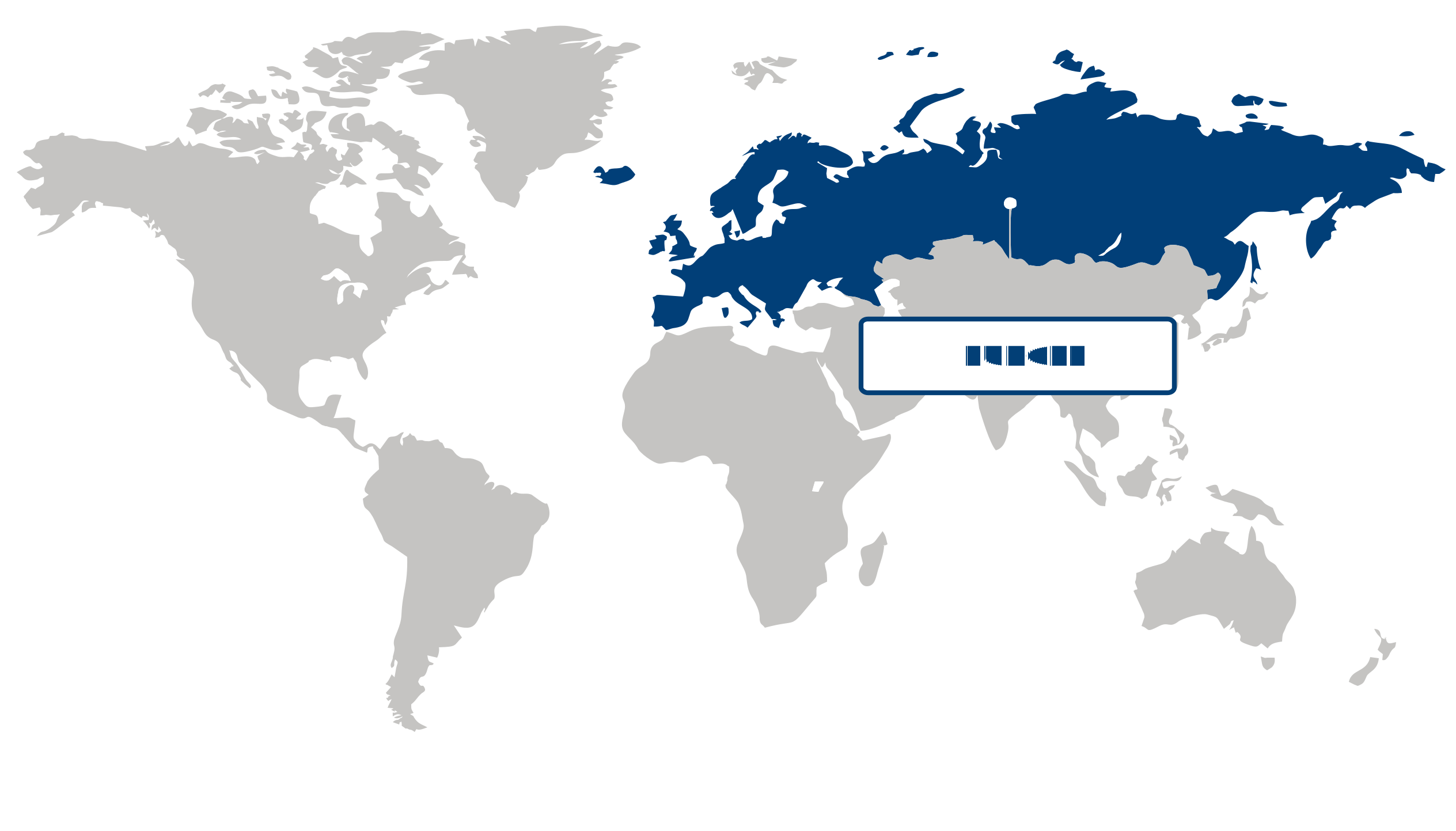
Europe (Largest Region)
Europe held the largest share of the sparkling wine market in 2026, underpinned by its established wine culture, strong consumer familiarity with sparkling wine, and well-developed production and distribution infrastructure. The region benefits from longstanding consumption traditions across both established and premium market segments, while tourism and hospitality activity further support demand. Mature retail channels and the continued presence of sparkling wine within social and celebratory occasions also reinforce Europe's leading position in the market.
Asia Pacific (Fastest-Growing Region)
Asia Pacific is expected to record the fastest growth in the sparkling wine market, driven by changing consumer preferences, rising disposable incomes, and increasing exposure to international beverage products. Urbanization and the expansion of modern retail and hospitality channels are improving consumer access to sparkling wine across the region. Moreover, growing interest in premium beverages and evolving social consumption patterns are creating additional opportunities for market expansion, particularly as consumers increasingly explore products associated with celebratory and lifestyle occasions.
| Parameter | North America | Asia Pacific | Europe | Latin America | MEA |
|---|---|---|---|---|---|
| Innovation Hub i Scale Nascent Developing Advanced | |||||
| Cost-Sensitive Region i Scale Low Medium High | |||||
| Regulatory Environment i Scale Restrictive Neutral Supportive | |||||
| Demand Drivers i Scale Weak Moderate Strong | |||||
| Development Stage i Scale Emerging Developing Developed | |||||
| Adoption Rate i Scale Low Medium High | |||||
| New Entrants/Startups i Scale Low Medium High | |||||
| Macro Indicators i Scale Weak Stable Strong |
Key Country Insights
United States 🇺🇸
Premium Occasion DemandThe U.S. sparkling wine market is shaped by premiumization, seasonal consumption, and expanding interest beyond traditional celebrations. Producers targeting the U.S. emphasize product differentiation, diverse price points, and strong retail and hospitality distribution.
Germany 🇩🇪
Retail Portfolio ExpansionGermany supports a broad sparkling wine portfolio through established retail channels and evolving consumer preferences for both domestic and imported products. Suppliers in Germany focus on quality positioning, packaging innovation, and category diversification.
Japan 🇯🇵
Refined Consumption TrendsJapan values sparkling wine offerings that complement dining occasions and premium gifting culture. Companies serving Japan prioritize consistent product quality, elegant packaging, and carefully curated portfolios that match evolving consumer preferences.
South Korea 🇰🇷
Lifestyle Beverage AdoptionSouth Korea's sparkling wine market benefits from increasing consumption in restaurants, social gatherings, and modern retail formats. Suppliers strengthen their presence in South Korea through premium branding, accessible product ranges, and digital retail engagement.
France 🇫🇷
Heritage-Driven InnovationFrance balances established sparkling wine traditions with product innovation that appeals to changing consumer tastes. Producers in France invest in premium positioning, sustainable production practices, and export-ready product portfolios.
Italy 🇮🇹
Regional Wine DifferentiationItaly emphasizes regional sparkling wine varieties supported by strong domestic consumption and international demand. Producers in Italy focus on preserving product authenticity while expanding premium offerings across retail and hospitality channels.
Segment Leadership and Growth Trends
Sparkling Wine Market Share (%), by Packaging, 2026
Go beyond the chart, access full insights & data tables
Request Free Sample ReportPackaging Segment Analysis: Bottled (Largest Segment) vs Canned (Fastest-Growing Segment)
The bottled segment dominated the sparkling wine market, accounting for 83.1% share in 2026. Bottled packaging remains the preferred format due to its strong association with premium presentation, traditional consumption practices, and suitability for preserving the quality characteristics of sparkling wine. Glass bottles provide effective protection against external factors while supporting brand positioning and consumer appeal during celebrations and special occasions. The established preference for bottled sparkling wine across retail and hospitality channels has reinforced its leading position in the packaging segment.
The canned segment is gaining momentum as consumers increasingly seek convenient, portable, and single-serving beverage formats. Canned packaging offers advantages such as ease of handling, improved portability, and suitability for casual consumption occasions. The growing acceptance of alternative packaging solutions and changing consumer preferences toward convenient beverage options are supporting the expansion of canned sparkling wine offerings.
Type Segment Analysis: White (Largest Segment) vs Rose (Fastest-Growing Segment)
The white segment held the largest share of the sparkling wine market in 2026, accounting for 51.2% share. White sparkling wine benefits from its widespread consumer acceptance, versatile flavor profile, and suitability across various occasions ranging from celebrations to casual gatherings. Its established presence among consumers and compatibility with diverse food pairings have supported consistent demand. The segment continues to maintain a strong position due to its familiarity and broad appeal among sparkling wine consumers.
The rose segment is expected to witness faster growth as consumer interest increases in visually appealing and differentiated sparkling wine varieties. Rose sparkling wines are gaining popularity due to their distinctive appearance, refreshing characteristics, and appeal among consumers seeking new beverage experiences. Rising preference for premium and innovative wine options is encouraging greater adoption of rose varieties.
Distribution Channel Segment Analysis: Supermarkets/Hypermarkets (Largest Segment) vs Online Retail (Fastest-Growing Segment)
The supermarkets/hypermarkets segment accounted for the largest share of the sparkling wine market in 2026, capturing 53.42% share. These retail channels provide consumers with convenient access to a wide range of sparkling wine products through established physical store networks. Product visibility, availability across multiple price categories, and the ability to compare different offerings in-store have contributed to the strong position of supermarkets and hypermarkets. Their role as accessible purchasing destinations continues to support segment growth.
The online retail segment is expanding rapidly due to increasing consumer preference for convenient digital purchasing experiences. Online platforms allow consumers to explore a broader selection of sparkling wines, compare products, and receive doorstep delivery. The growing adoption of e-commerce channels and increasing digital engagement among beverage consumers are supporting the rising importance of online retail within the distribution landscape.
| Segment | Sub-Segment | Largest Segment | Fastest Growing |
|---|---|---|---|
| Packaging | Bottled, Canned | Bottled | Canned |
| Type | Red, White, Rose | White | Rose |
| Distribution Channel | Supermarkets/Hypermarkets, Specialty Stores, Online Retail, Others | Supermarkets/Hypermarkets | Online Retail |
| Product | Champagne, Prosecco, Cava, Others | Prosecco | Cava |
| Price | Luxury, Affordable | Affordable | Luxury |
Competitive Landscape and Market Positioning
Prominent players in the sparkling wine market:
- Moët & Chandon (LVMH) (France)
- Henkell Freixenet (Germany)
- Constellation Brands, Inc. (United States)
- Treasury Wine Estates Ltd. (Australia)
- E. & J. Gallo Winery (United States)
- Pernod Ricard S.A. (France)
- Accolade Wines (Australia)
- Viña Concha y Toro S.A. (Chile)
- Casella Family Brands (Australia)
- Schramsberg Vineyards (United States)
Consumer preferences are broadening the basis of competition in the sparkling wine market, encouraging producers to refine product portfolios around distinctive flavor profiles, premium craftsmanship, and changing consumption occasions rather than relying exclusively on traditional market positioning. Competitive differentiation is increasingly supported by innovations in production techniques, sustainable packaging approaches, and regional authenticity that strengthen brand perception across diverse customer segments. Premium offerings continue to attract attention, yet expanding interest in accessible and contemporary styles is creating space for producers that can balance heritage, innovation, and evolving retail and hospitality distribution strategies.
| Company | Market Share | Company Revenue | Revenue CAGR (%) | Product Portfolio | Geographic Presence | Innovation / R&D Focus | Strategic Developments |
|---|---|---|---|---|---|---|---|
| Moët & Chandon (LVMH) (France) | |||||||
| Henkell Freixenet (Germany) | |||||||
| Constellation Brands Inc. (United States) | |||||||
| Treasury Wine Estates Ltd. (Australia) | |||||||
| E. & J. Gallo Winery (United States) | |||||||
| Pernod Ricard S.A. (France) | |||||||
| Accolade Wines (Australia) | |||||||
| Viña Concha y Toro S.A. (Chile) | |||||||
| Casella Family Brands (Australia) | |||||||
| Schramsberg Vineyards (United States) |
Industry Development/News
| Company Name | Date | Key Development |
|---|---|---|
| Graham Beck | Apr-26 | Graham Beck launched its first traditional-method English sparkling wine, marking a diversification of its production capabilities outside of its traditional South African Cap Classique roots. This initiative signifies a strategic shift in product innovation, allowing the company to compete in the premium English sparkling wine market with a new, distinct product portfolio. |
| Freixenet | Apr-26 | Freixenet launched a premium alcohol-free sparkling wine, Diamond 0.0%, crafted from de-alcoholized Italian grapes. This product development represents a strategic entry into the rapidly growing non-alcoholic category, enabling the brand to capture market share among health-conscious consumers and expand its presence in the premium segment beyond traditional sparkling wine offerings. |
| Henkell Freixenet | Mar-26 | Henkell Freixenet achieved 100% ownership of Freixenet S.A. after acquiring the remaining shares from the founding families. This consolidation of the world’s leading sparkling wine producer serves to unify international operations, streamline long-term strategic decision-making, and accelerate the brand's global expansion through a fully integrated corporate structure. |
| Roco Winery | Mar-26 | Roco Winery, a subsidiary of Herita USA, acquired Domaine Lumineux Vineyards in Oregon’s Dundee Hills. The transaction adds 40 acres of established vineyards to its operations, signaling a targeted geographic expansion of the company’s production footprint within a key high-quality sparkling wine-producing region in the United States. |
| Trinchero Family Wine & Spirits | Dec-25 | Trinchero acquired Mumm Napa from Pernod Ricard, securing ownership of the destination winery and production facilities. This strategic acquisition of a top-tier U.S. sparkling wine brand expands Trinchero's premium portfolio and manufacturing capacity, allowing the company to leverage Mumm Napa’s established distribution network and brand equity in North America. |
| Moët Hennessy | Oct-24 | Moët Hennessy acquired a minority stake in French Bloom, a specialist producer of premium non-alcoholic sparkling wines. This investment reflects a strategic commitment to the emerging alcohol-free segment, providing the company with exposure to new consumption trends while leveraging French Bloom’s specialized positioning in the premium non-alcoholic market. |
| Chapel Down | Jun-24 | Chapel Down initiated a major expansion of its English sparkling wine business, focusing on a material increase in production capacity to meet rising domestic and international demand. The project underscores the company's aggressive growth strategy and its intent to scale manufacturing operations to cement its competitive position as a leading producer in the UK wine sector. |
Customize Your Report
Explore examples of how this report can be tailored to different research needs, including custom segments, additional topics or chapters, and related reports. Click a section of the wheel or its numbered marker to explore the available options.
Sparkling Wine Market — Custom Segments
| Segment | Sub-Segment |
|---|---|
| Production Method | Traditional Method, Tank Method, Transfer Method |
| Consumption Occasion | Celebrations & Events, Social Gatherings, Food Pairing, Casual Consumption |
| Residual Sugar Level | Brut Nature & Extra Brut, Brut, Extra Dry & Dry, Demi-Sec & Sweet |
Sparkling Wine Market — Custom TOC
| Custom Chapter | Custom Details |
|---|---|
| Premiumization & Consumer Trade-Up |
|
| Occasion-Based Consumption Analysis |
|
| Channel Profitability & Route-to-Market |
|
Need a different cut of the data?
Request Custom ResearchWhat is the market valuation of sparkling wine?
How is the sparkling wine industry size expected to evolve during the forecast period?
How are premium consumption trends influencing the sparkling wine market?
Why are hospitality and celebration trends supporting sparkling wine demand?
Why do supermarkets and hypermarkets dominate the sparkling wine market?
Why is canned packaging the fastest-growing segment?
What supports Europe's leadership in the sparkling wine market?
Why is Asia Pacific emerging as the fastest-growing sparkling wine market?
Which companies dominate the sparkling wine landscape?
Our Clients
"The report provided a thorough look at market trends, technological advancements, and the competitive landscape. The depth of insights was really valuable."
ITC Limited
"We would highly recommend Fundamental Business Insights & Consulting to anyone looking for reliable, detailed, and comprehensive market research in the Food industry."
Tyson Foods
"The clarity and presentation of the information were commendable. The report was delivered timely, which made the overall experience smooth and convenient."
Mondelēz International
Our Research Team & Methodology
Every Fundamental Business Insights report is built by a dedicated vertical research team, validated through a structured primary-and-secondary methodology, and reviewed for accuracy before it reaches you.
Research Team Overview
Prepared by the Food & Beverage Research Team
Delivery
Published
Demand
Available
Support
Trust & Compliance
Research Domains
10 coverage areasResearch Intelligence
| Source | Reference |
|---|---|
| Food and Agriculture Organization (FAO) | www.fao.org |
| World Health Organization (WHO) | www.who.int |
| U.S. Food & Drug Administration (FDA) | www.fda.gov |
| European Food Safety Authority (EFSA) | www.efsa.europa.eu |
| U.S. Department of Agriculture (USDA) | www.usda.gov |
| Codex Alimentarius Commission | www.fao.org/fao-who-codexalimentarius |
| International Organization for Standardization (ISO) | www.iso.org |
| AOAC INTERNATIONAL | www.aoac.org |
| Institute of Food Technologists (IFT) | www.ift.org |
| International Dairy Foods Association (IDFA) | www.idfa.org |
| International Sweeteners Association (ISA) | www.sweeteners.org |
| International Probiotics Association (IPA) | internationalprobiotics.org |
| Good Food Institute (GFI) | gfi.org |
| American Feed Industry Association (AFIA) | www.afia.org |
| International Feed Industry Federation (IFIF) | ifif.org |
| Specialty Food Association (SFA) | www.specialtyfood.com |
| Brewers Association | www.brewersassociation.org |
| International Bottled Water Association (IBWA) | bottledwater.org |
| International Alliance for Dietary/Food Supplement Associations (IADSA) | www.iadsa.org |
| OECD Agriculture & Food | www.oecd.org/agriculture |
Research Workflow & Quality Assurance
Data Collection
Verified information gathered through primary and secondary research.
Data Triangulation
Cross-validation using multiple independent data sources.
Forecast Modelling
Market estimates developed using historical trends and analytical models.
Analyst Validation
Findings reviewed by domain experts for accuracy and consistency.
Editorial & Quality Review
Final editorial, quality, and compliance checks before publication.
Final Publication
Released after successful completion of the internal review process.
Report Coverage
📊 Market Assessment
- Market Size & Forecast
- Market Segmentation
- Regional Analysis
- Growth Drivers & Challenges
- Market Dynamics
🏢 Competitive Intelligence
- Competitive Landscape
- Company Profiles
- Competitive Benchmarking
- Mergers & Acquisitions
- Market Share Analysis or Key Company Strategies
🔍 Strategic Analysis
- Value Chain Analysis
- Porter's Five Forces
- PESTLE Analysis
- Pricing Trends
- Supply-Demand Analysis
🚀 Future Outlook
- Technology Landscape
- Regulatory Landscape
- Investment & Funding Landscape
- Emerging Opportunities
- Future Market Outlook
Have a question about this report or need a custom scope?
Request Customization