



Sunflower Seed Market Size & Growth Forecast 2027–2036, By Segments (Application, Product Type), Regional Demand Trends (North America, Asia Pacific, Europe), Key Country Insights (U.S., Japan, South Korea, Germany, France, Italy), and Competitive Landscape
Market Size and Growth Outlook
Sunflower Seed Market size was more than USD 4.27 Billion in 2026 and is set to grow at 9.33% CAGR between 2027 and 2036, exceeding USD 10.42 Billion by 2036. The industry revenue for 2027 is assessed at USD 4.61 Billion.
Base Year Value (2026)
USD 4.27 Billion
CAGR (2027-2036)
9.33%
Forecast Year Value (2036)
USD 10.42 Billion

Historical Data Period
2022-2026

Largest Region
Europe

Forecast Period
2027-2036
Sunflower Seed Market Intelligence Snapshot:
-
Regional Market Dynamics:
- Europe held the largest regional position in 2025, supported by mature consumption, established food processing, and broad use across bakery, snacks, cereals, and processed foods.
- Asia Pacific is the fastest-growing region, driven by changing dietary preferences, packaged food consumption, nutrition awareness, expanding processing capabilities, and modern retail networks.
-
Segment Momentum:
- Snacks led the market with a 37.8% share in 2025, driven by strong consumer demand for nutritious, protein-rich, ready-to-eat products and increasing preference for plant-based, clean-label snack options.
- The oilseed segment is expanding rapidly because rising demand for sunflower oil in food manufacturing and cooking, along with increasing preference for healthy vegetable oils, is driving higher processing and consumption.
-
Market Expansion Drivers:
- Rising preference for plant-based nutrition driving sunflower seed consumption growth
- Expanding snack food applications increasing demand for sunflower-based ingredients
- Growth of functional food formulations incorporating nutrient-rich oilseed ingredients
-
Leading Market Participants:
Leading players in the sunflower seed market include Syngenta AG (Switzerland), Corteva Agriscience (United States), BASF SE (Germany), KWS SAAT SE & Co. KGaA (Germany), Limagrain (France), Nufarm Limited (Australia), Land O’Lakes, Inc. (United States), RAGT Semences (France), Sakata Seed Corporation (Japan)
Global Market Forecast Snapshot:
-
Market Outlook:
- 2026 Market Size: USD 4.27 Billion
- 2027 Estimated Market Size: USD 4.61 Billion
- Projected Market Size: USD 10.42 Billion by 2036
- Growth Forecasts: 9.33% CAGR (2027-2036)
-
Regional and Segment Outlook:
- Leading Regional Market: Europe
- High-Growth Regional Hub: Asia Pacific
- Core Revenue Segment: Snacks (Application) | Non-Oilseed (Product Type)
- Emerging Opportunity Segment: Bakery Products (Application) | Oilseed (Product Type)
Market Growth Drivers and Industry Trends
Rising preference for plant-based nutrition driving sunflower seed consumption growth
The growing adoption of plant-based diets is reshaping consumer food choices and creating sustained demand for nutrient-dense ingredients derived from natural sources. The sunflower seed market growth is driven by increasing consumer preference for protein-rich, plant-based foods that offer essential nutrients, healthy fats, vitamins, and minerals while fitting into vegetarian, vegan, and flexitarian dietary patterns. Food manufacturers are incorporating sunflower seeds into a wide range of products to meet evolving nutritional expectations and diversify ingredient portfolios without relying on animal-derived components. Their versatility across bakery, breakfast cereals, dairy alternatives, and ready-to-eat products also supports broader utilization as consumers seek minimally processed foods with recognizable ingredients and balanced nutritional profiles.
Expanding snack food applications increasing demand for sunflower-based ingredients
The rapid evolution of the snack food industry is encouraging manufacturers to introduce healthier and more functional products featuring nutrient-rich ingredients. Within this trend, the sunflower seed market will propel demand as sunflower-based ingredients are increasingly used in roasted snacks, trail mixes, granola bars, seed blends, and savory formulations that appeal to consumers seeking convenient yet wholesome eating options. Their natural crunch, mild flavor, and nutritional value allow manufacturers to enhance product differentiation while responding to preferences for clean-label snacks with fewer artificial ingredients. Product developers are also utilizing sunflower seeds in innovative snack formats to improve texture and nutritional content without compromising consumer appeal.
Growth of functional food formulations incorporating nutrient-rich oilseed ingredients
Growing interest in foods that provide nutritional benefits beyond basic dietary requirements is encouraging manufacturers to incorporate oilseed ingredients into functional product formulations. As functional food innovation expands, the sunflower seed market will boost demand through the inclusion of sunflower seeds in products designed to deliver healthy fats, dietary fiber, antioxidants, and essential micronutrients. Their compatibility with cereals, nutrition bars, spreads, bakery products, and plant-based formulations enables manufacturers to develop products aligned with health-conscious consumer preferences while maintaining desirable taste and texture characteristics. Ingredient innovation is also supporting customized formulations that address evolving wellness trends across retail and foodservice applications.
| Growth Driver Assessment Framework | |||||
| Growth Driver | Impact On CAGR | Regulatory Influence | Geographic Relevance | Adoption Rate | Impact Timeline |
|---|---|---|---|---|---|
| Rising demand for sunflower oil and snack foods | 2.00% | Short term (≤ 2 yrs) | Asia Pacific, Europe (spillover: North America) | Low | Fast |
| Expansion of plant-based protein markets | 1.50% | Medium term (2–5 yrs) | North America, Europe (spillover: Asia Pacific) | Medium | Moderate |
| Innovations in seed genetics and fortified varieties | 1.00% | Long term (5+ yrs) | Europe, Asia Pacific (spillover: MEA) | Medium | Slow |
Unlock insights tailored to your business with our bespoke market research solutions - Click to get your customized report now!
Regional Demand Dynamics
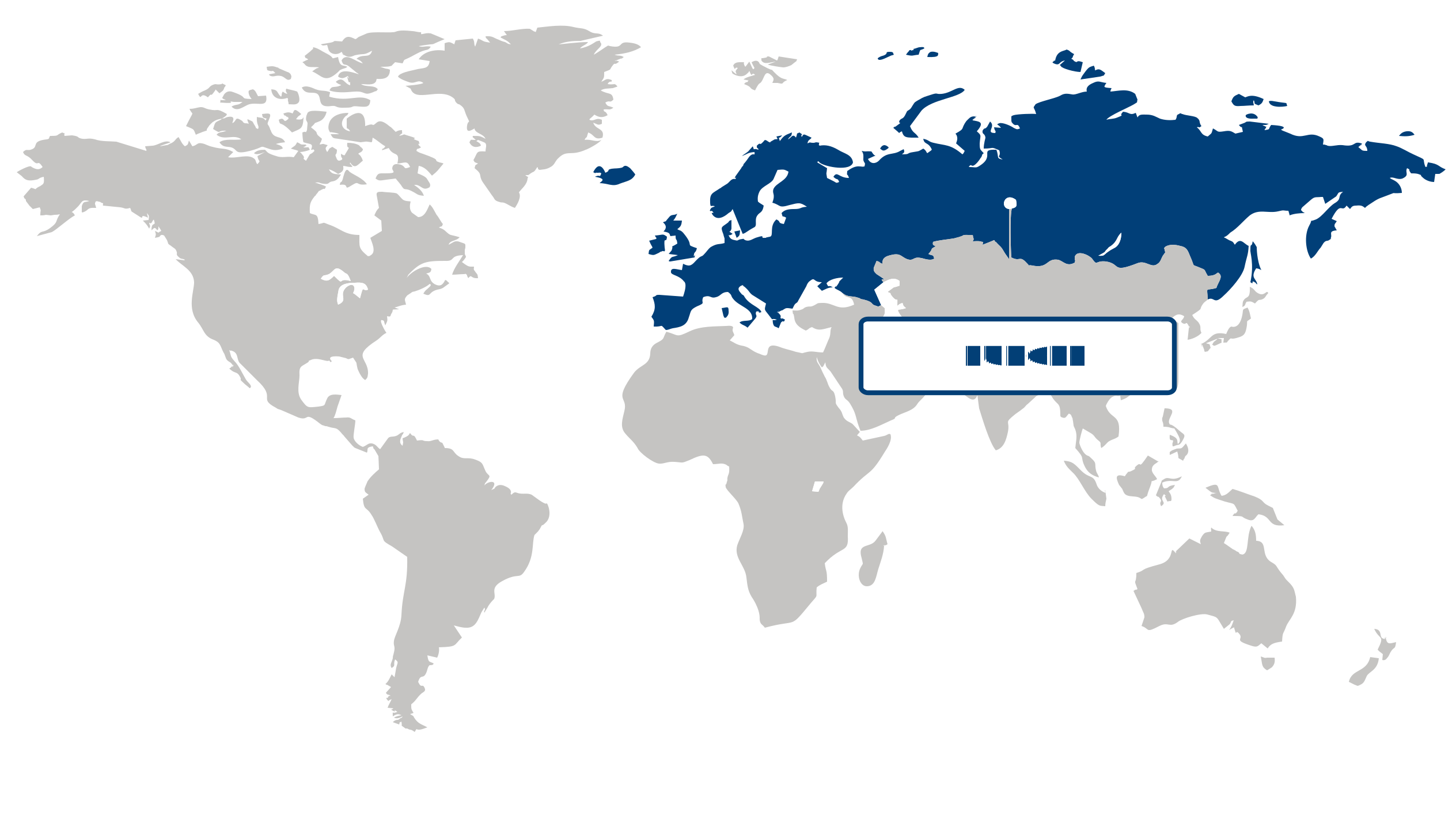
Largest Region
Europe
Largest Market Share in 2026
Europe (Largest Region) vs Asia Pacific (Fastest-Growing Region)
Europe represented the largest regional market for sunflower seeds in 2026, supported by established consumption patterns, a mature food processing industry, and broad utilization of sunflower seeds and their derivatives across food applications. Demand is reinforced by consumer interest in plant-based and nutrient-rich ingredients, while the region's developed agricultural and food distribution infrastructure facilitates consistent availability across retail and industrial channels. Sunflower seeds also benefit from their versatility in bakery products, snacks, cereals, and other processed foods, strengthening their position within the regional food ingredient landscape.
Asia Pacific is projected to experience the fastest growth, supported by changing dietary preferences, expanding packaged food consumption, and increasing use of seeds as nutritious ingredients. Rising consumer awareness of protein- and nutrient-rich foods is encouraging the incorporation of sunflower seeds into snacks, bakery products, cereals, and health-oriented food offerings. At the same time, expanding food processing capabilities and improving modern retail networks are creating additional avenues for market penetration, particularly as urban consumers increasingly seek convenient products with perceived nutritional benefits.
No card data available for this language/report.
Segment Leadership and Growth Trends
Application Segment Analysis: Snacks (Largest Segment) vs Bakery Products (Fastest-Growing Segment)
The snacks segment led the sunflower seed market with a share of 37.8% in 2026, driven by rising consumer preference for nutritious, convenient, and protein-rich snack options. Sunflower seeds are widely consumed as ready-to-eat products due to their appealing taste, versatility, and nutritional profile, making them popular among health-conscious consumers. Increasing demand for plant-based snack alternatives and clean-label food products continues to strengthen the segment's leading position.
Bakery products are anticipated to register the fastest growth as manufacturers increasingly incorporate sunflower seeds into breads, crackers, pastries, and specialty baked goods to enhance texture, flavor, and nutritional value. Consumers' growing interest in functional ingredients and premium bakery offerings is encouraging product innovation across the segment. The expanding market for healthier baked products is expected to sustain strong demand for sunflower seeds in bakery applications.
Product Type Segment Analysis: Non-Oilseed (Largest Segment) vs Oilseed (Fastest-Growing Segment)
Non-oilseed held the largest share in 2026 owing to its extensive consumption as edible sunflower seeds across retail, snack, and food processing applications. The segment benefits from increasing consumer demand for wholesome snack products and ingredients that can be incorporated into cereals, salads, bakery products, and confectionery. Its broad acceptance in both household and commercial food preparation continues to support market leadership.
The oilseed segment is projected to experience the fastest growth, supported by increasing demand for sunflower oil in food manufacturing and cooking applications. The sunflower seed market is benefiting from greater consumer preference for vegetable oils and expanding industrial processing capacity to meet rising consumption requirements. Continued focus on healthy edible oils and diversified agricultural production is expected to drive the rapid expansion of the oilseed segment.
| Report Segmentation | |||
| Segment | Sub-Segment | Largest Segment | Fastest Growing Segment |
|---|---|---|---|
| Product Type | Oilseed, Non-Oilseed | ||
| Application | Snacks, Bakery Products, Confectionery, Others | ||
 Read our Research Approach
Competitive Landscape and Market Positioning
Top players in the sunflower seed market:
- Syngenta AG (Switzerland)
- Corteva Agriscience (United States)
- BASF SE (Germany)
- KWS SAAT SE & Co. KGaA (Germany)
- Limagrain (France)
- Nufarm Limited (Australia)
- Land O’Lakes, Inc. (United States)
- RAGT Semences (France)
- Sakata Seed Corporation (Japan)
Evolving consumer preferences for healthier food ingredients and convenient snack options are prompting suppliers in the sunflower seed market to compete through product quality, processing capabilities, and supply chain consistency. Rather than relying solely on commodity-based pricing, market participants are expanding into value-added offerings with enhanced grading, flavor development, and packaging formats tailored to different consumption channels. Competition is also being influenced by the ability to secure dependable raw material supplies across varying harvest conditions, encouraging closer coordination between growers, processors, and distributors to preserve quality standards and ensure uninterrupted market availability.
Industry Development/News
| Company Name | Date | Key Development |
|---|---|---|
| Louis Dreyfus Company (LDC) | Jun-26 | Louis Dreyfus Company commenced construction of a new oilseeds processing plant in Bahía Blanca, Argentina. The facility features crushing capacity for both sunflower seeds and soybeans, designed to service the food and biofuel markets, thereby strengthening the company's regional processing infrastructure and long-term supply chain capacity. |
| Perfat Technologies | Jun-26 | Perfat Technologies introduced Perfat Soft, a sunflower-oil-based oleogel intended as a functional high-fibre solid fat alternative to butter and palm oil. This innovation facilitates the substitution of conventional fats across diverse food applications, representing a strategic expansion in the commercial utilization of sunflower-derived ingredients within global food formulation and ingredient markets. |
| Barry Callebaut | May-26 | Barry Callebaut launched ChoViva, a cocoa-free chocolate alternative formulated primarily from sunflower seeds. This development addresses long-standing cocoa supply volatility by diversifying the ingredient base. The integration of sunflower-based raw materials into a major manufacturer's portfolio signals a significant shift in commercial application and value-added utility for the ingredient. |
| Cargill | Apr-26 | Cargill announced a €150 million capital investment to modernize its French oilseed processing facility. The initiative aims to increase feed protein production capacity while concurrently reducing natural gas consumption, reflecting a strategic shift toward operational efficiency and improved sustainability metrics within its core oilseed processing operations. |
| Louis Dreyfus Company (LDC) | Sep-25 | Louis Dreyfus Company finalized the acquisition of Bunge Global's grains and oilseeds processing, storage, and trading assets in Hungary and Poland. This transaction significantly expands the company's oilseed processing and merchandising footprint in Central Europe, enhancing its regional supply chain capabilities and competitive positioning within the agricultural commodities market. |
| Aeon | Jun-25 | Retailer Aeon launched a private-label biscuit line in Japan incorporating Planet A Foods’ ChoViva cocoa-free ingredient. This move represents a critical milestone in the commercial adoption of sunflower-based confectionery alternatives, demonstrating the successful scaling of this technology from niche development into mainstream international retail and consumer packaged goods distribution channels. |
| Planet A Foods | Sep-24 | Planet A Foods entered a strategic partnership with Katjes to incorporate its sunflower-seed-based ChoViva chocolate alternative into the brand's vegan Treets Peanuts product line. This commercial collaboration underscores the increasing viability and application of sunflower-derived ingredients in the competitive confectionery segment, moving the technology toward broader market penetration. |
| Corteva Agriscience | Aug-24 | Corteva Agriscience reported a 9% year-over-year increase in organic sales of its Pioneer brand sunflower seeds during the second quarter of 2024. The growth reflects heightened market demand for high-performance agricultural inputs and underscores the company's successful expansion and sustained commercial relevance in the global sunflower seed cultivation sector. |
Why Choose Us
Specialized Expertise: Our team comprises industry experts with a deep understanding of your market segment. We bring specialized knowledge and experience that ensures our research and consulting services are tailored to your unique needs.
Customized Solutions: We understand that every client is different. That's why we offer customized research and consulting solutions designed specifically to address your challenges and capitalize on opportunities within your industry.
Proven Results: With a track record of successful projects and satisfied clients, we have demonstrated our ability to deliver tangible results. Our case studies and testimonials speak to our effectiveness in helping clients achieve their goals.
Cutting-Edge Methodologies: We leverage the latest methodologies and technologies to gather insights and drive informed decision-making. Our innovative approach ensures that you stay ahead of the curve and gain a competitive edge in your market.
Client-Centric Approach: Your satisfaction is our top priority. We prioritize open communication, responsiveness, and transparency to ensure that we not only meet but exceed your expectations at every stage of the engagement.
Continuous Innovation: We are committed to continuous improvement and staying at the forefront of our industry. Through ongoing learning, professional development, and investment in new technologies, we ensure that our services are always evolving to meet your evolving needs.
Value for Money: Our competitive pricing and flexible engagement models ensure that you get maximum value for your investment. We are committed to delivering high-quality results that help you achieve a strong return on your investment.
Select Licence Type

