



Underfloor Heating Actuator Market Size & Growth Forecast 2027–2036, By Segments (Product, Application), Regional Demand Trends (North America, Asia Pacific, Europe), Key Country Insights (U.S., Japan, South Korea, Germany, France, Italy), and Competitive Landscape
Market Size and Growth Outlook
Underfloor Heating Actuator Market size was worth USD 353.17 Million in 2026 and is poised to grow at 7.63% CAGR between 2027 and 2036, attaining USD 736.75 Million by 2036. The industry revenue for 2027 is assessed at USD 376.06 Million.
Base Year Value (2026)
USD 353.17 Million
CAGR (2027-2036)
7.63%
Forecast Year Value (2036)
USD 736.75 Million

Historical Data Period
2022-2026

Largest Region
Europe

Forecast Period
2027-2036
Underfloor Heating Actuator Market Intelligence Snapshot:
-
Regional Market Dynamics:
- Europe led in 2025 through widespread energy-efficient heating adoption, building-efficiency priorities, renovation activity, and demand for intelligent temperature regulation.
- Asia Pacific is expanding rapidly with urbanization, construction activity, smart building adoption, and investment in energy-efficient residential and commercial infrastructure.
-
Segment Momentum:
- Thermal actuators led the market in 2025 because they provide reliable, energy-efficient temperature control with simple installation, low maintenance, quiet operation, and compatibility with modern heating systems.
- The residential segment, which held 63.28% of the market in 2025, is growing the fastest as demand increases for energy-efficient home heating, smart home integration, and sustainable residential construction.
-
Market Expansion Drivers:
- Energy efficiency regulations driving adoption of intelligent underfloor heating control systems
- Extreme climatic conditions increasing residential and commercial demand for efficient heating automation
- Rising residential living standards accelerating smart home heating system integration across households
-
Leading Market Participants:
Major players in the underfloor heating actuator market include Danfoss A/S (Denmark), Siemens AG (Germany), Honeywell International Inc. (United States), Johnson Controls International plc (Ireland), Schneider Electric SE (France), Belimo Holding AG (Switzerland), Emerson Electric Co. (United States), Uponor Corporation (Finland), Oventrop GmbH & Co. KG (Germany), Resideo Technologies, Inc. (United States)
Global Market Forecast Snapshot:
-
Market Outlook:
- 2026 Market Size: USD 353.17 Million
- 2027 Estimated Market Size: USD 376.06 Million
- Projected Market Size: USD 736.75 Million by 2036
- Growth Forecasts: 7.63% CAGR (2027-2036)
-
Regional and Segment Outlook:
- Leading Regional Market: Europe
- High-Growth Regional Hub: Asia Pacific
- Core Revenue Segment: Thermal (Product) | Residential (Application)
- Emerging Opportunity Segment: Thermal (Product) | Residential (Application)
Market Growth Drivers and Industry Trends
Energy efficiency regulations driving adoption of intelligent underfloor heating control systems
Stricter building energy codes and sustainability standards are encouraging the installation of advanced heating technologies that optimize energy consumption without compromising indoor comfort. The underfloor heating actuator market growth is driven by the increasing deployment of intelligent control systems capable of regulating individual heating zones, improving temperature accuracy, and minimizing unnecessary energy use. Property developers, facility managers, and homeowners are adopting automated actuators that integrate with programmable thermostats and building management systems to comply with evolving efficiency requirements. These solutions also support lower operating costs through precise heat distribution, making them an essential component of modern energy-conscious residential and commercial heating infrastructure.
Extreme climatic conditions increasing residential and commercial demand for efficient heating automation
Growing exposure to prolonged cold seasons and unpredictable weather patterns has intensified the need for reliable indoor climate management across residential, commercial, and institutional buildings. As occupants seek greater thermal comfort while controlling energy expenses, extreme climatic conditions will propel the underfloor heating actuator market through wider adoption of automated heating regulation technologies. Actuators enable responsive adjustment of heating output based on room-specific requirements, reducing overheating and improving overall system performance. Their compatibility with both new installations and retrofit projects has further strengthened their appeal in regions where maintaining consistent indoor temperatures is becoming increasingly important for occupants and building operators.
Rising residential living standards accelerating smart home heating system integration across households
Higher household incomes and evolving consumer expectations are encouraging greater investment in connected home technologies that deliver convenience, comfort, and energy optimization. Rising residential living standards are expected to boost the underfloor heating actuator market demand as homeowners increasingly integrate automated heating controls into broader smart home ecosystems. Modern actuators communicate seamlessly with wireless thermostats, mobile applications, and voice-enabled platforms, allowing users to customize heating schedules and monitor energy usage remotely. The preference for personalized living environments has also encouraged the adoption of zoned heating configurations that provide room-by-room temperature management while enhancing overall user experience.
| Growth Driver Assessment Framework | |||||
| Growth Driver | Impact On CAGR | Regulatory Influence | Geographic Relevance | Adoption Rate | Impact Timeline |
|---|---|---|---|---|---|
| Energy efficiency regulations driving adoption of intelligent underfloor heating control systems | 2% | High | Europe, North America | High | Near Term |
| Extreme climatic conditions increasing residential and commercial demand for efficient heating automation | 1.7% | Moderate | Europe, Asia Pacific | High | Near Term |
| Rising residential living standards accelerating smart home heating system integration across households | 1.5% | Low | North America, Europe | Medium | Mid Term |
Unlock insights tailored to your business with our bespoke market research solutions - Click to get your customized report now!
Regional Demand Dynamics
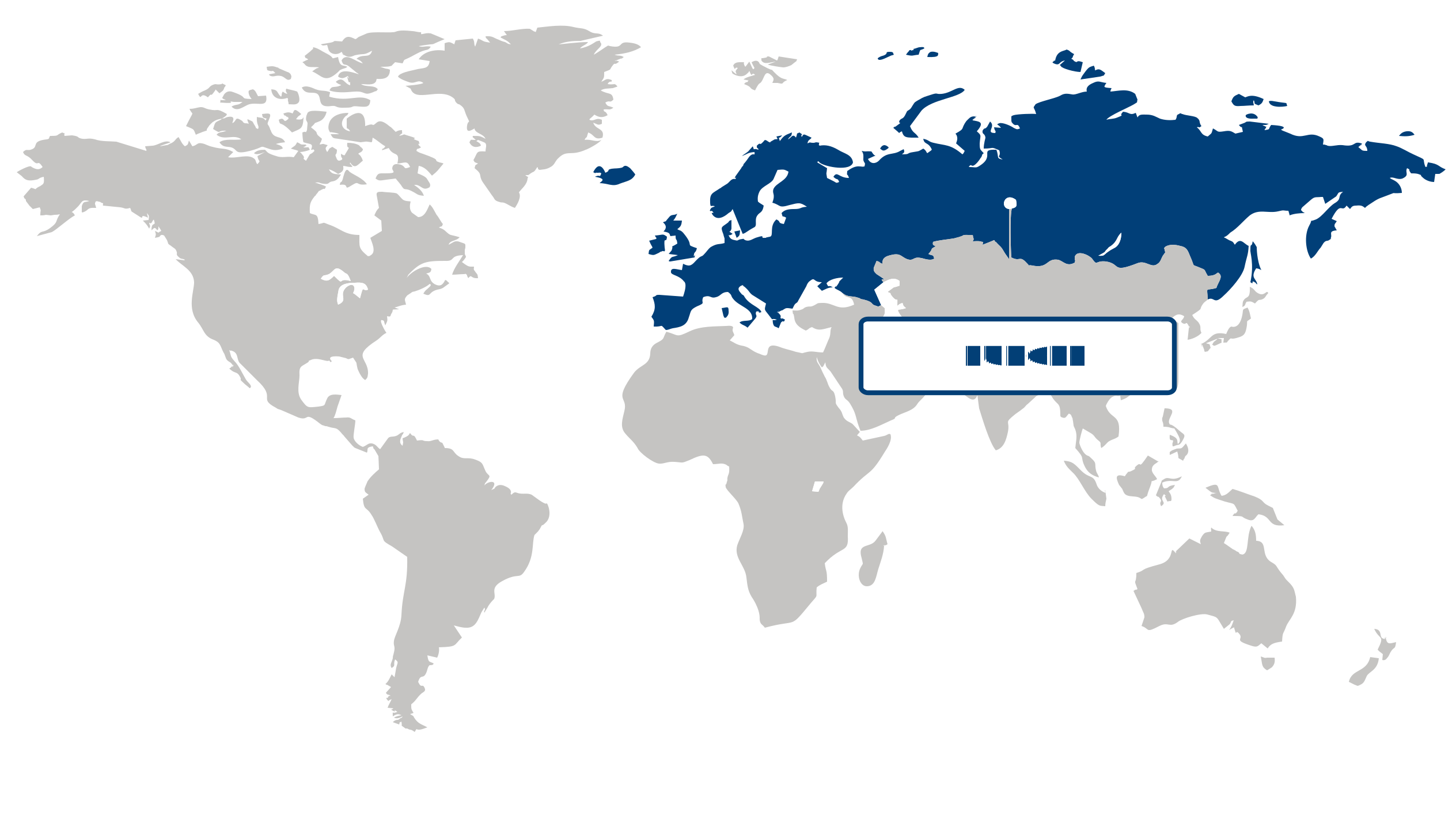
Largest Region
Europe
Largest Market Share in 2026
Europe (Largest Region) vs Asia Pacific (Fastest-Growing Region)
Europe led the underfloor heating actuator market in 2026, supported by widespread adoption of energy-efficient heating systems and strong emphasis on building efficiency. Underfloor heating is increasingly valued for its ability to provide controlled and evenly distributed indoor temperatures while supporting efficient energy use, particularly when integrated with modern heating technologies. Regulatory attention toward building energy performance and decarbonization is encouraging the deployment of advanced heating systems in residential and commercial buildings. Growing renovation activity and demand for intelligent temperature regulation are also supporting the integration of actuators that enable precise control of individual heating zones.
Asia Pacific is experiencing the fastest market expansion, fueled by urbanization, rising construction activity, and increasing awareness of energy-efficient building solutions. New residential and commercial developments are creating opportunities for modern heating technologies, particularly in markets where improving indoor comfort and reducing energy consumption are becoming greater priorities. The adoption of smart building systems is further supporting demand for electronically controlled heating components, while increasing investment in efficient building infrastructure is creating a favorable environment for underfloor heating actuator deployment.
No card data available for this language/report.
Segment Leadership and Growth Trends
Product Segment Analysis: Thermal (Largest & Fastest-Growing Segment)
The thermal segment dominated the underfloor heating actuator market in 2026 while also emerging as the fastest-growing product category. Thermal actuators are widely preferred because they provide reliable and energy-efficient control of underfloor heating systems while maintaining simple installation and low maintenance requirements. Their quiet operation, compatibility with modern heating controls, and ability to regulate room temperatures accurately make them suitable for a broad range of residential and commercial installations. Increasing adoption of energy-efficient building technologies and smart heating systems continues to reinforce the segment's leading market position.
Application Segment Analysis: Residential (Largest & Fastest-Growing Segment)
The underfloor heating actuator market was led by the residential segment, which accounted for a 63.28% share in 2026 while also registering as the fastest-growing application. Rising demand for comfortable, energy-efficient home heating solutions is encouraging homeowners and residential developers to adopt underfloor heating systems equipped with advanced actuators for precise temperature control. Growing residential construction, renovation activities, and the increasing integration of smart home technologies are further supporting demand. In addition, stricter building energy efficiency standards and consumer preference for sustainable heating solutions continue to accelerate the adoption of residential underfloor heating actuator systems.
| Report Segmentation | |||
| Segment | Sub-Segment | Largest Segment | Fastest Growing Segment |
|---|---|---|---|
| Product | Thermal, Motoric | Thermal | Thermal |
| Application | Residential, Commercial, Industrial | Residential | Residential |
 Read our Research Approach
Competitive Landscape and Market Positioning
Leading companies in the underfloor heating actuator market:
- Danfoss A/S (Denmark)
- Siemens AG (Germany)
- Honeywell International, Inc. (United States)
- Johnson Controls International plc (Ireland)
- Schneider Electric SE (France)
- Belimo Holding AG (Switzerland)
- Emerson Electric Co. (United States)
- Uponor Corporation (Finland)
- Oventrop GmbH & Co. KG (Germany)
- Resideo Technologies, Inc. (United States)
Product differentiation is steadily moving beyond basic actuation performance toward seamless integration with intelligent building management and connected climate control systems. Manufacturers are refining actuator responsiveness, energy efficiency, and installation simplicity to address growing demand for adaptable heating solutions in both residential and commercial environments. As installers and building operators seek greater compatibility across a wide range of control platforms, suppliers capable of delivering interoperable, reliable, and low-maintenance solutions are gaining an advantage, encouraging continuous innovation in electronic controls and system integration.
Industry Development/News
| Company Name | Date | Key Development |
|---|---|---|
| Schneider Electric South Africa | Apr-25 | Schneider Electric South Africa introduced the EasyLogic and SpaceLogic product line, encompassing specialized actuators and ball valves designed to optimize HVAC system performance. This rollout focuses on reducing operational costs, enhancing energy efficiency, and demonstrating corporate commitment to sustainable energy management practices within regional infrastructure. |
| Danfoss | Dec-24 | Danfoss invested USD 5.7 million to scale up Make-in-India manufacturing capabilities for heat-exchanger components, HVAC compressors, and motorized and thermal actuators. This strategic initiative aims to reduce import dependency for the Indian market, increase local production from 50% to between 80% and 90% by 2025, and broaden distribution networks across more than 80 cities to fulfill regional demand. |
Why Choose Us
Specialized Expertise: Our team comprises industry experts with a deep understanding of your market segment. We bring specialized knowledge and experience that ensures our research and consulting services are tailored to your unique needs.
Customized Solutions: We understand that every client is different. That's why we offer customized research and consulting solutions designed specifically to address your challenges and capitalize on opportunities within your industry.
Proven Results: With a track record of successful projects and satisfied clients, we have demonstrated our ability to deliver tangible results. Our case studies and testimonials speak to our effectiveness in helping clients achieve their goals.
Cutting-Edge Methodologies: We leverage the latest methodologies and technologies to gather insights and drive informed decision-making. Our innovative approach ensures that you stay ahead of the curve and gain a competitive edge in your market.
Client-Centric Approach: Your satisfaction is our top priority. We prioritize open communication, responsiveness, and transparency to ensure that we not only meet but exceed your expectations at every stage of the engagement.
Continuous Innovation: We are committed to continuous improvement and staying at the forefront of our industry. Through ongoing learning, professional development, and investment in new technologies, we ensure that our services are always evolving to meet your evolving needs.
Value for Money: Our competitive pricing and flexible engagement models ensure that you get maximum value for your investment. We are committed to delivering high-quality results that help you achieve a strong return on your investment.
Select Licence Type

