Vaginal Slings Market Size & Growth Forecast 2027–2036, By Segments (Type, Product, Incontinence Type, End-use), Regional Demand Trends (North America, Asia Pacific, Europe), Key Country Insights (U.S., Japan, South Korea, Germany, France, Italy), and Competitive Landscape
Jump to content
Market Size and Growth Outlook
Vaginal Slings Market size was over USD 2.06 Billion in 2026 and is likely to grow at 8.69% CAGR between 2027 and 2036, exceeding USD 4.74 Billion by 2036. The industry revenue for 2027 is assessed at USD 2.21 Billion.
Get more details on this report
Request Free Sample ReportVaginal Slings Market Intelligence Snapshot
Regional Market Dynamics
- Europe led in 2026 through well-developed healthcare systems, established urogynecology services, specialized surgical care, aging populations, and increasing attention to stress urinary incontinence treatment.
- Asia Pacific is the fastest-growing region, supported by expanding healthcare infrastructure, greater gynecological care access, hospital modernization, rising awareness, and increasing focus on women's health.
Segment Momentum
- Transobturator slings held a 43.57% market share in 2026 because they provide reliable urethral support, reduce tissue disruption, and are widely adopted due to their established use and consistent clinical outcomes.
- Mini slings are expanding quickly as demand increases for less invasive procedures that shorten operative time and improve patient recovery, supported by advancements in sling design and surgical techniques.
Market Expansion Drivers
- Rising urinary incontinence prevalence driving surgical sling procedure demand
- Growing pelvic floor disorder awareness increasing early treatment adoption rates
- Advancements in minimally invasive gynecological surgery improving procedural outcomes
Leading Market Participants
- Prominent players in the vaginal slings market include Boston Scientific Corporation (United States), Johnson & Johnson (United States), Coloplast A/S (Denmark), B. Braun Melsungen AG (Germany), Medtronic plc (Ireland), Teleflex Incorporated (United States), Caldera Medical (United States), Promedon S.A. (Argentina), CooperSurgical Inc. (United States), Neomedic International S.L. (Spain)
Global Market Forecast Snapshot
Market Outlook
- 2026 Market Size: USD 2.06 Billion
- 2027 Estimated Market Size: USD 2.21 Billion
- Projected Market Size: USD 4.74 Billion by 2036
- Growth Forecast: 8.69% CAGR (2027-2036)
Regional and Segment Outlook
- Leading Regional Market: Europe
- High-Growth Regional Hub: Asia Pacific
- Core Revenue Segment: Midurethral Slings (Type) | Transobturator Slings (Product) | Stress Incontinence (Incontinence Type) | Hospitals (End-use)
- Emerging Opportunity Segment: Midurethral Slings (Type) | Mini Slings (Product) | Mixed Incontinence (Incontinence Type) | Ambulatory Surgical Centers (End-use)
Market Growth Drivers and Industry Trends
Rising urinary incontinence prevalence driving surgical sling procedure demand
The growing incidence of urinary incontinence among women is creating sustained demand for effective surgical interventions, which will drive the vaginal slings market growth across healthcare systems. Factors such as aging, childbirth-related pelvic floor damage, obesity, and other underlying medical conditions contribute to a rising number of patients seeking long-term treatment options when conservative therapies provide limited relief. Vaginal sling procedures are increasingly preferred because they offer durable symptom control and improved quality of life by restoring bladder support. Healthcare providers are also placing greater emphasis on individualized treatment strategies that match patient-specific clinical conditions and functional outcomes.
Growing pelvic floor disorder awareness increasing early treatment adoption rates
Increasing public education initiatives and greater awareness of pelvic floor disorders are encouraging more women to seek timely medical evaluation, enabling the vaginal slings market to expand through earlier diagnosis and intervention. Improved understanding of symptoms associated with stress urinary incontinence and pelvic floor dysfunction has reduced hesitation in discussing these conditions with healthcare professionals. Gynecologists and urologists are also promoting comprehensive assessments that identify suitable candidates for surgical management before symptoms significantly affect daily activities. This shift toward proactive care contributes to greater acceptance of clinically established treatment options and strengthens procedural demand across specialized healthcare facilities.
Advancements in minimally invasive gynecological surgery improving procedural outcomes
Continuous improvements in minimally invasive surgical techniques are enhancing the safety and effectiveness of pelvic floor procedures, which will propel the vaginal slings market growth. Modern surgical approaches emphasize smaller incisions, improved precision, reduced tissue trauma, and faster postoperative recovery, making sling implantation a more attractive option for both patients and clinicians. Advances in surgical instrumentation and procedural planning also support consistent placement of sling systems while minimizing complications and shortening hospital stays. These developments encourage broader adoption of minimally invasive gynecological procedures across hospitals and ambulatory surgical centers.
| Growth Driver | Impact on CAGR | Regulatory Influence | Geographic Relevance | Adoption Rate | Impact Timeline |
|---|---|---|---|---|---|
| Rising urinary incontinence prevalence driving surgical sling procedure demand | 2.1% | High | North America, Europe | High | Near Term |
| Growing pelvic floor disorder awareness increasing early treatment adoption rates | 1.8% | Moderate | Europe, Asia Pacific | Medium | Near Term |
| Advancements in minimally invasive gynecological surgery improving procedural outcomes | 1.6% | High | North America, Europe | High | Mid Term |
Unlock insights tailored to your business with our bespoke market research solutions.
Click to get your customized report now.
Regional Demand Dynamics
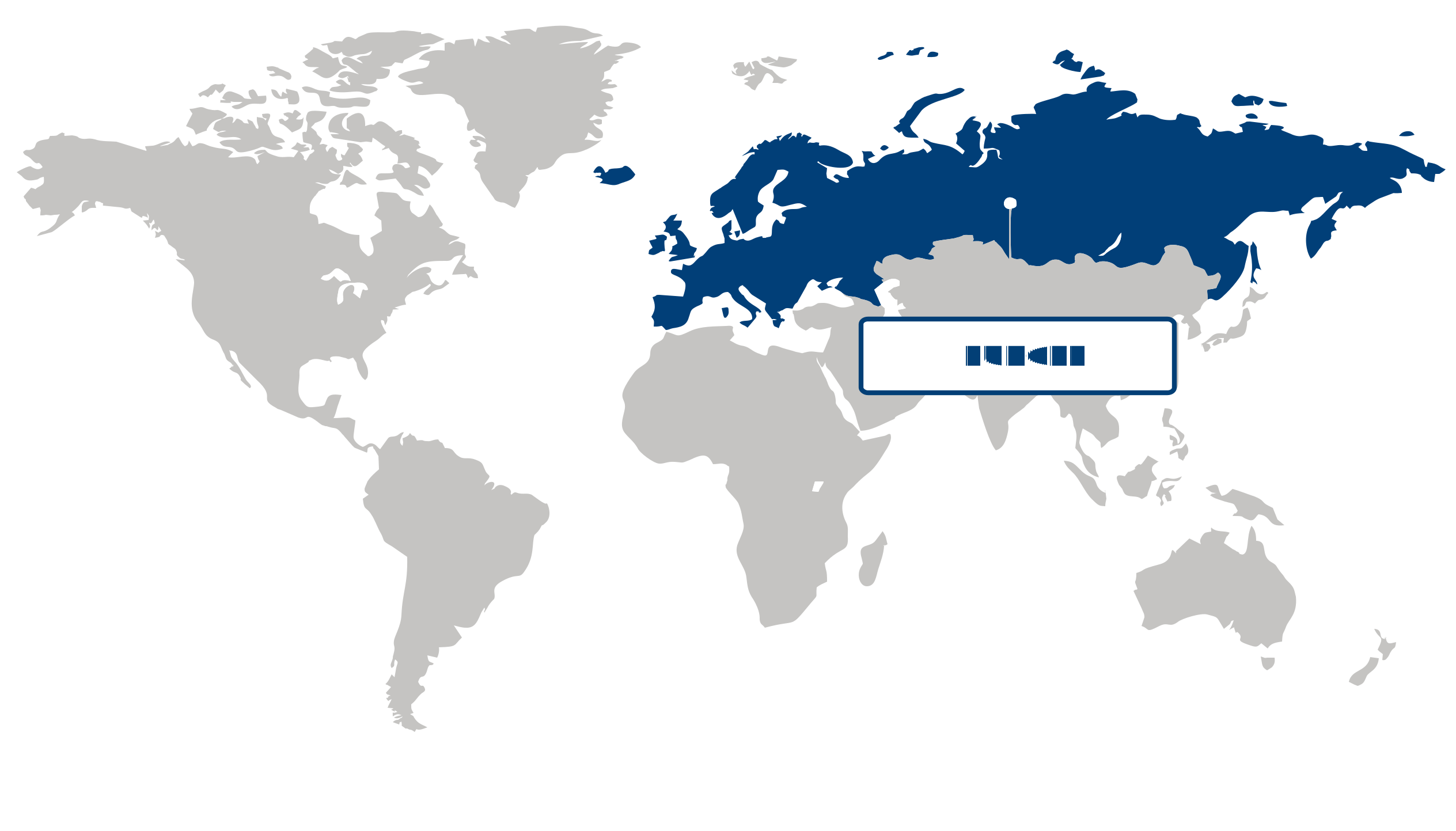
Europe (Largest Region)
Europe held the largest share of the vaginal slings market in 2026, supported by well-developed healthcare systems, established urogynecology services, and growing attention to the management of stress urinary incontinence. The availability of specialized surgical care and increasing awareness of treatment options contribute to sustained demand for surgical interventions. An aging population and the growing need for effective management of pelvic floor disorders further support the regional market. Continued improvements in minimally invasive surgical techniques and healthcare infrastructure also encourage the use of advanced solutions for patients requiring procedural treatment.
Asia Pacific (Fastest-Growing Region)
Asia Pacific is projected to experience the fastest growth, supported by expanding healthcare infrastructure, improving access to specialized gynecological care, and increasing awareness of urinary incontinence treatment. Greater healthcare expenditure and the modernization of hospitals are enabling wider availability of surgical procedures for pelvic floor disorders. Growing patient awareness is also encouraging individuals to seek professional treatment rather than relying on conservative management alone. In addition, the region’s aging population and increasing focus on women’s health are creating favorable conditions for broader adoption of surgical solutions.
| Parameter | North America | Asia Pacific | Europe | Latin America | MEA |
|---|---|---|---|---|---|
| Innovation HubiScaleNascentDeveloping Advanced | |||||
| Cost-Sensitive RegioniScaleLowMedium High | |||||
| Regulatory EnvironmentiScaleRestrictiveNeutral Supportive | |||||
| Demand DriversiScaleWeakModerate Strong | |||||
| Development StageiScaleEmergingDeveloping Developed | |||||
| Adoption RateiScaleLowMedium High | |||||
| New Entrants / StartupsiScaleSparseModerate Dense | |||||
| Macro IndicatorsiScaleWeakStable Strong |
Key Country Insights
United States 🇺🇸
Advanced Pelvic CareThe U.S. vaginal slings market benefits from broad adoption of minimally invasive treatment options for stress urinary incontinence. Healthcare providers in the U.S. continue evaluating advanced sling materials and procedural techniques while maintaining focus on patient outcomes and safety.
Germany 🇩🇪
Clinical Procedure RefinementGermany emphasizes evidence-based adoption of vaginal sling procedures supported by experienced specialists and established clinical protocols. Medical providers in Germany continue incorporating improved implant technologies that enhance procedural consistency and patient care.
Japan 🇯🇵
Minimally Invasive TreatmentJapan prioritizes minimally invasive approaches for pelvic floor disorders, supporting steady use of vaginal sling procedures in appropriate patients. Hospitals in Japan focus on procedural precision and long-term clinical performance when selecting treatment solutions.
South Korea 🇰🇷
Specialized Women's HealthSouth Korea continues expanding specialized women's health services that include surgical management of stress urinary incontinence. Healthcare providers in South Korea increasingly adopt refined sling technologies while emphasizing patient recovery and procedural efficiency.
France 🇫🇷
Patient-Centered UrogynecologyFrance supports vaginal sling adoption through comprehensive urogynecology services focused on improving quality of life for patients. Clinical practices in France carefully evaluate device performance and treatment suitability within established healthcare pathways.
Italy 🇮🇹
Surgical Care OptimizationItaly integrates vaginal sling procedures into specialized pelvic health services where minimally invasive treatment remains an important clinical option. Hospitals in Italy continue selecting devices that support reliable surgical outcomes and consistent patient management.
Vaginal Slings Market Share (%), by Type, 2026
Go beyond the chart, access full insights & data tables
Request Free Sample ReportType Segment Analysis: Midurethral Slings (Largest & Fastest-Growing Segment)
The vaginal slings market was led by the midurethral slings segment, which accounted for the largest market share of 70.27% in 2026 while also emerging as the fastest-growing segment. Midurethral slings are widely recognized as a standard surgical approach for treating stress urinary incontinence because they provide effective symptom relief through minimally invasive procedures and support favorable long-term clinical outcomes. Their broad acceptance among healthcare professionals, shorter recovery periods, and continued advancements in surgical techniques have strengthened the segment's dominant position.
Product Segment Analysis: Transobturator Slings (Largest Segment) vs Mini Slings (Fastest-Growing Segment)
Transobturator slings held the largest market share of 43.57% in 2026, reflecting their widespread use in surgical management of stress urinary incontinence. These slings are commonly selected because they provide reliable urethral support while reducing tissue disruption and supporting consistent clinical outcomes. Their established procedural familiarity among surgeons and extensive use across healthcare facilities continue to sustain the segment's leadership.
The vaginal slings market is witnessing the fastest growth in the mini slings segment as demand increases for less invasive treatment options that reduce operative time and enhance patient recovery. Ongoing improvements in sling design and surgical techniques, together with greater emphasis on patient comfort and procedural efficiency, are contributing to the expanding adoption of mini slings.
Incontinence Type Segment Analysis: Stress Incontinence (Largest Segment) vs Mixed Incontinence (Fastest-Growing Segment)
Stress incontinence accounted for the largest market share of 43.67% in 2026, driven by its high prevalence and the widespread use of sling procedures as an effective treatment option. Increasing diagnosis rates, greater awareness of available surgical interventions, and favorable treatment outcomes have contributed to sustained demand for vaginal sling procedures in patients with stress urinary incontinence.
The vaginal slings market is experiencing the fastest growth in the mixed incontinence segment as healthcare providers increasingly adopt comprehensive treatment strategies for patients exhibiting both stress and urgency-related symptoms. Advances in patient evaluation, improved surgical techniques, and a growing focus on individualized treatment approaches are supporting the expansion of this segment.
| Segment | Sub-Segment | Largest Segment | Fastest Growing |
|---|---|---|---|
| Type | Midurethral Slings, Traditional Slings | Midurethral Slings | Midurethral Slings |
| Product | Transobturator Slings, Tension-free Vaginal Tape Slings, Mini Slings | Transobturator Slings | Mini Slings |
| Incontinence Type | Stress Incontinence, Urge Incontinence, Mixed Incontinence | Stress Incontinence | Mixed Incontinence |
| End-use | Hospitals, Clinics, Ambulatory Surgical Centers | Hospitals | Ambulatory Surgical Centers |
Competitive Landscape and Market Positioning
Key companies in the vaginal slings market:
- Boston Scientific Corporation (United States)
- Johnson & Johnson (United States)
- Coloplast A/S (Denmark)
- B. Braun Melsungen AG (Germany)
- Medtronic plc (Ireland)
- Teleflex Incorporated (United States)
- Caldera Medical (United States)
- Promedon S.A. (Argentina)
- CooperSurgical, Inc. (United States)
- Neomedic International S.L. (Spain)
The vaginal slings market is evolving around clinical differentiation, procedural confidence, and the ability of manufacturers to address changing expectations in pelvic health treatment. Competitive positioning is increasingly influenced by advancements in material design, implantation techniques, and product configurations aimed at improving physician preference and patient outcomes. As regulatory scrutiny and long-term safety considerations shape purchasing decisions, suppliers are focusing on evidence-backed innovation and physician education rather than competing solely through product availability. The market is also witnessing a gradual shift toward solutions that balance procedural effectiveness with reduced complication concerns, creating opportunities for companies that can demonstrate consistent clinical value.
| Company | Market Share | Company Revenue | Revenue CAGR (%) | Product Portfolio | Geographic Presence | Innovation / R&D Focus | Strategic Developments |
|---|---|---|---|---|---|---|---|
| Boston Scientific Corporation (United States) | |||||||
| Johnson & Johnson (United States) | |||||||
| Coloplast A/S (Denmark) | |||||||
| B. Braun Melsungen AG (Germany) | |||||||
| Medtronic plc (Ireland) | |||||||
| Teleflex Incorporated (United States) | |||||||
| Caldera Medical (United States) | |||||||
| Promedon S.A. (Argentina) | |||||||
| CooperSurgical Inc. (United States) | |||||||
| Neomedic International S.L. (Spain) |
Industry Development / News
| Company Name | Date | Key Development |
|---|---|---|
| Boston Scientific | Jan-25 | Boston Scientific completed a USD 3.7 billion acquisition of Axonics, Inc., expanding its urology portfolio with sacral neuromodulation technologies for treating overactive bladder and incontinence conditions. The transaction integrates FDA-approved systems that have treated approximately 100,000 patients globally, enabling the company to leverage its commercial infrastructure for international market expansion. |
| ConTIPI Medical | Sep-24 | ConTIPI Medical entered into a strategic partnership with EVERSANA to facilitate the United States commercial rollout of ProVate, a disposable vaginal ring pessary for non-surgical pelvic organ prolapse management. Backed by FDA 510(k) clearance and CE Mark approval, the collaboration aims to commercialize this self-administered treatment option for patients seeking non-invasive alternatives. |
Customize Your Report
Explore examples of how this report can be tailored to different research needs, including custom segments, additional topics or chapters, and related reports. Click a section of the wheel or its numbered marker to explore the available options.
Vaginal Slings Market — Custom Segments
| Segment | Sub-Segment |
|---|---|
| Sling Material | Polypropylene, Polyester, Polyvinylidene Fluoride, Other Synthetic Materials |
| Reimbursement Status | Fully Reimbursed, Partially Reimbursed, Self-Pay/Non-Reimbursed |
| Procurement Model | Hospital Direct Procurement, Group Purchasing Organization Procurement, Distributor-Mediated Procurement |
Vaginal Slings Market — Custom TOC
| Custom Chapter | Chapter Details |
|---|---|
| Patient Selection & Treatment Pathways |
|
| Mesh Safety & Clinical Preference Landscape |
|
| Urogynecology Provider Adoption |
|
Need a different cut of the data?
Request Custom ResearchFrequently Asked Questions
How much revenue does the vaginal slings market generate?
How much is the vaginal slings industry expected to grow by 2036?
Why is demand for vaginal sling procedures increasing across healthcare systems?
How are minimally invasive surgical advances supporting the vaginal slings market?
Why do transobturator slings lead the vaginal slings market?
Why are mini slings the fastest-growing product segment?
What supports Europe's leadership in the vaginal slings market?
How is Asia Pacific accelerating growth in the vaginal slings market?
What are the prominent companies operating in the vaginal slings landscape?
Our Clients
"The team took the time to understand our specific business needs and delivered a report that was well aligned with our objectives. Their expertise and understanding of the industry were clearly reflected in the quality and relevance of the insights provided."
Siemens Healthcare
"Our experience in acquiring the research report has been excellent. The depth of analysis, and actionable insights provided have been extremely valuable in supporting our ongoing R&D efforts."
GC Biopharma
"The report offered a comprehensive view of the market trends. The in-depth segmentation and analysis of emerging opportunities gave us a better understanding of the market."
Medtronic
Our Research Team & Methodology
Every Fundamental Business Insights report is built by a dedicated vertical research team, validated through a structured primary-and-secondary methodology, and reviewed for accuracy before it reaches you.
Delivery
Published
Available
Support
- Market Size & Forecast
- Market Segmentation
- Regional Analysis
- Growth Drivers & Challenges
- Market Dynamics
- Competitive Landscape
- Company Profiles
- Competitive Benchmarking
- Mergers & Acquisitions
- Market Share Analysis or Key Company Strategies
- Value Chain Analysis
- Porter's Five Forces
- PESTLE Analysis
- Pricing Trends
- Supply-Demand Analysis
- Technology Landscape
- Regulatory Landscape
- Investment & Funding Landscape
- Emerging Opportunities
- Future Market Outlook