Volumetric Construction Market Size & Growth Forecast 2027–2036, By Segments (Product, End-use), Regional Demand Trends (North America, Asia Pacific, Europe), Key Country Insights (U.S., Japan, South Korea, Germany, France, Italy), and Competitive Landscape
Jump to Content
Market Size and Growth Outlook
Volumetric Construction Market size was around USD 38.22 billion in 2026 and is slated to grow at a 8.69% CAGR from 2027 to 2036, exceeding USD 87.94 billion by 2036. The industry revenue for 2027 is assessed at USD 41.04 billion.
Get more details on this report
Request Free Sample ReportVolumetric Construction Market Intelligence Snapshot
Regional Market Dynamics
- Europe held a 48.46% share in 2026, supported by established off-site construction practices, advanced building technologies, and demand for faster project delivery, improved quality, and reduced construction waste.
- Asia Pacific is expected to grow fastest as urbanization, housing demand, and infrastructure investment increase adoption of modular building solutions that improve construction efficiency and address skilled labor shortages.
Segment Momentum
- Permanent volumetric construction held a 61.25% market share in 2026, supported by demand for durable residential, healthcare, educational, and commercial buildings. Off-site manufacturing improves production consistency and can shorten project timelines.
- Relocatable volumetric construction is expected to grow fastest as organizations seek flexible, reusable buildings for temporary accommodation, workforce housing, healthcare, and education, enabling faster deployment and adaptation to changing space requirements.
Market Expansion Drivers
- Adoption of volumetric construction methods in commercial and residential projects.
- Technological innovations in modular and pre-fabricated construction.
- Expansion of urban development and construction infrastructure globally.
Leading Market Participants
- Leading players in the volumetric construction market include Sekisui House (Japan), Daiwa House (Japan), Skanska (Sweden), Bouygues (France), Larsen & Toubro (India), ATCO (Canada), Red Sea International (Saudi Arabia), CIMC Modular Building (China), Laing O’Rourke (UK), Katerra (US).
Global Market Forecast Snapshot
Market Outlook
- 2026 Market Size: USD 38.22 billion
- 2027 Estimated Market Size: USD 41.04 billion
- Projected Market Size: USD 87.94 billion by 2036
- Growth Forecast: 8.69% CAGR (2027-2036)
Regional and Segment Outlook
- Leading Regional Market: Europe
- High-Growth Regional Hub: Asia Pacific
- Core Revenue Segment: Product (Permanent) | End-use (Residential)
- Emerging Opportunity Segment: Product (Relocatable) | End-use (Residential)
Market Growth Drivers and Industry Trends
Adoption of volumetric construction methods in commercial and residential projects
The increasing adoption of volumetric construction methods in residential and commercial projects is driven by the need for faster, more efficient, and standardized building processes. Volumetric construction allows building components or complete modules to be manufactured in controlled environments before being transported and assembled at the project site, helping reduce construction delays and improve consistency. Growing demand for housing, commercial facilities, and rapidly deployable structures is encouraging developers to consider modular approaches as an alternative to conventional on-site construction methods.
Technological innovations in modular and pre-fabricated construction
Technological advancements in modular and prefabricated construction are improving the design flexibility, quality, and efficiency of volumetric building systems. The integration of digital design tools, automated manufacturing processes, advanced materials, and precision engineering is enabling manufacturers to produce increasingly complex modules while maintaining standardized production processes. These innovations are also improving coordination between design, manufacturing, transportation, and installation activities, supporting wider acceptance of volumetric construction across diverse building applications.
Expansion of urban development and construction infrastructure globally
Rapid urban development and the expansion of construction infrastructure are creating favorable conditions for volumetric construction as cities seek efficient solutions to accommodate growing demand for residential and commercial space. Urban projects often face constraints related to labor availability, construction timelines, site accessibility, and limited space, increasing interest in off-site manufacturing and modular assembly. In addition, investments in infrastructure, housing development, and urban regeneration are encouraging the use of construction methods that can support faster project delivery and efficient utilization of resources.
| Growth Driver | Impact on CAGR | Regulatory Influence | Geographic Relevance | Adoption Rate | Impact Timeline |
|---|---|---|---|---|---|
| Adoption of volumetric construction methods in commercial and residential projects | 3% | Short term (≤ 2 yrs) | North America; Europe | Medium | Fast |
| Technological innovations in modular and pre-fabricated construction | 3% | Medium term (2–5 yrs) | Asia Pacific; North America | Medium | Moderate |
| Expansion of urban development and construction infrastructure globally | 2.5% | Long term (5+ yrs) | Asia Pacific; Europe; Spillover: North America | Low | Slow |
Explore Growth Opportunities
Request Free Sample ReportRegional Demand Dynamics
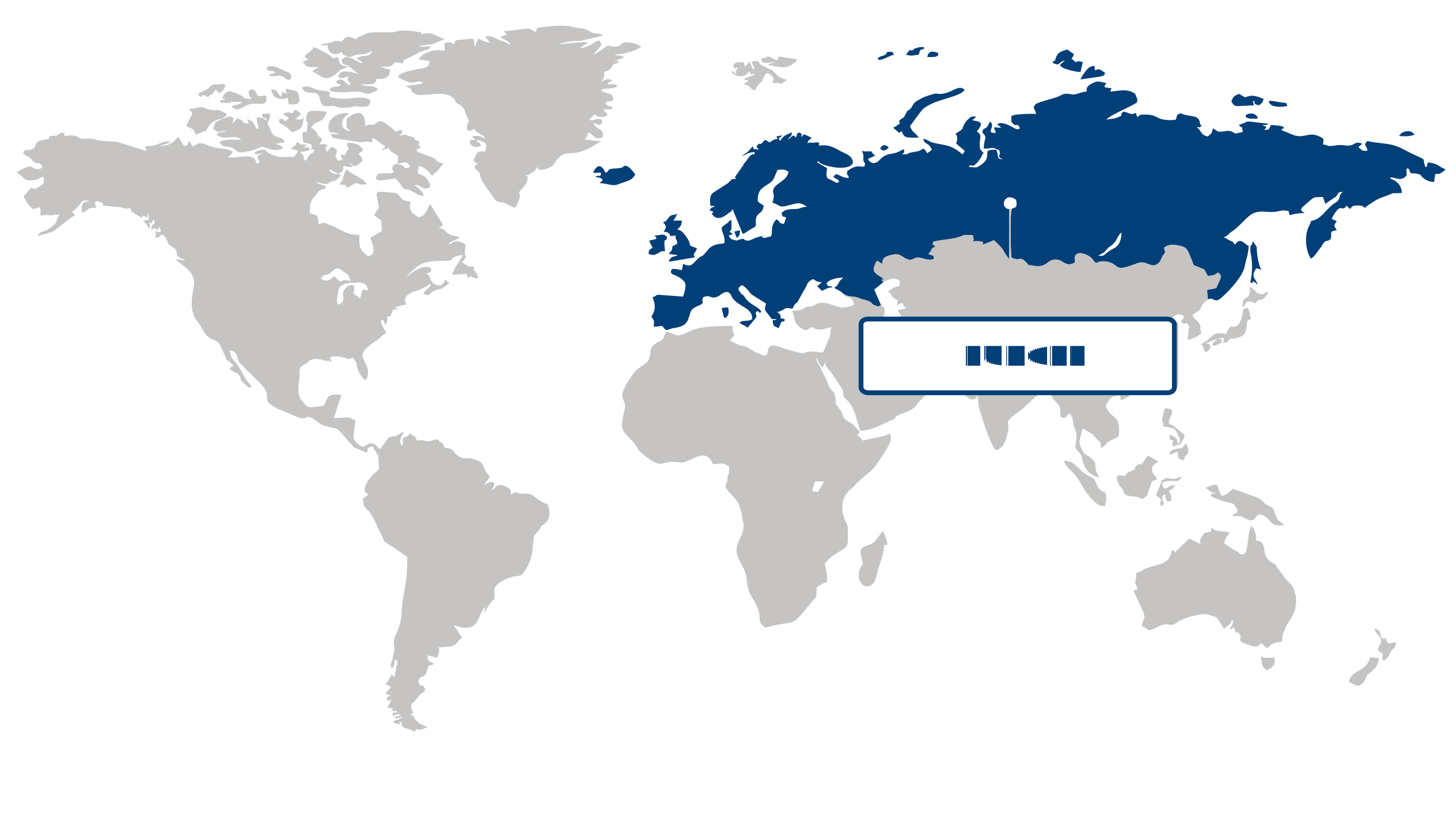
Europe (Largest Region)
Europe accounted for a 48.46% share in 2026 and held the largest position in the volumetric construction market, supported by strong adoption of off-site construction methods, advanced building technologies, and increasing emphasis on efficient project delivery. The region has a well-established construction industry that is increasingly adopting prefabricated and modular approaches to address labor constraints, improve construction quality, and reduce project timelines. Growing demand for sustainable building practices is also encouraging the use of volumetric construction, as controlled manufacturing environments can improve material utilization and reduce construction waste. In addition, increasing urban development and demand for residential, commercial, healthcare, and educational facilities are creating opportunities for modular building solutions. Supportive construction policies and technological advancements in manufacturing and building design are further strengthening regional market adoption.
Asia Pacific (Fastest-Growing Region)
Asia Pacific is expected to witness the fastest growth in the volumetric construction market, propelled by rapid urbanization, expanding infrastructure development, and increasing demand for affordable and efficient construction solutions. Growing populations and the expansion of urban centers are creating substantial requirements for residential and commercial buildings, encouraging the adoption of faster construction methods. Volumetric construction can help address skilled labor shortages while improving project efficiency and consistency, making it increasingly attractive across developing construction markets. In addition, rising investments in housing, healthcare, education, and infrastructure are creating new opportunities for modular building applications. Increasing awareness of sustainable construction and growing adoption of advanced manufacturing technologies are further supporting the expansion of volumetric construction across the region.
| Parameter | North America | Asia Pacific | Europe | Latin America | MEA |
|---|---|---|---|---|---|
| Innovation HubiScaleNascentDeveloping Advanced | |||||
| Cost-Sensitive RegioniScaleLowMedium High | |||||
| Regulatory EnvironmentiScaleRestrictiveNeutral Supportive | |||||
| Demand DriversiScaleWeakModerate Strong | |||||
| Development StageiScaleEmergingDeveloping Developed | |||||
| Adoption RateiScaleLowMedium High | |||||
| New Entrants / StartupsiScaleSparseModerate Dense | |||||
| Macro IndicatorsiScaleWeakStable Strong |
Key Country Insights
United States 🇺🇸
Offsite Construction ScalingThe U.S. volumetric construction market prioritizes scalable offsite production for housing, hospitality, healthcare, and other repeatable building formats. Commercial focus is on reducing onsite labor requirements, shortening project schedules, improving quality consistency, and developing factory-based workflows that can accommodate standardized modules while meeting varied local building-code requirements.
Germany 🇩🇪
Precision Modular BuildingGermany’s volumetric construction market emphasizes factory-controlled production, engineering precision, and energy-efficient building delivery. Companies are prioritizing modular systems that integrate building services and high-performance components before installation, particularly where standardized production can improve construction quality, reduce onsite complexity, and support demanding sustainability and regulatory requirements.
Japan 🇯🇵
High-Precision Modular DeliveryJapan’s volumetric construction market is strongly oriented toward precision manufacturing and repeatable modular building systems. Market priorities include factory automation, quality control, rapid onsite assembly, and efficient use of space, with modular approaches particularly relevant to housing and other applications where predictable production and installation processes provide operational advantages.
South Korea 🇰🇷
Factory-Based Building SystemsSouth Korea’s volumetric construction market is centered on industrialized building production and standardized modular systems. Commercial priorities include improving factory productivity, integrating digital design and building services, and reducing onsite construction time, particularly for housing and projects where constrained sites make conventional construction processes more difficult to manage.
France 🇫🇷
Sustainable Modular DevelopmentFrance’s volumetric construction market emphasizes modular approaches that can improve construction efficiency while supporting environmental objectives. Priorities include reducing onsite waste and labor intensity, incorporating low-impact materials and energy-efficient components, and adapting factory-built modules to residential, educational, healthcare, and other repeatable building applications.
Italy 🇮🇹
Flexible Modular ApplicationsItaly’s volumetric construction market is developing around modular solutions that combine standardized production with architectural flexibility. Commercial priorities include controlling project costs and schedules, adapting modules to varied building uses, and improving onsite efficiency, particularly for housing, hospitality, and renovation-related projects where repeatable components can simplify delivery.
Volumetric Construction Market Share (%), by Product, 2026
Go beyond the chart, access full insights & data tables
Request Free Sample ReportProduct Segment Analysis: Permanent (Largest Segment) vs Relocatable (Fastest-Growing Segment)
The permanent product segment accounted for a 61.25% market share in 2026, supported by the widespread use of volumetric construction for buildings intended to remain at a fixed location for long-term occupancy. Permanent volumetric structures offer the benefits of off-site manufacturing while providing durable building solutions for applications such as housing, healthcare, education, and commercial facilities. Factory-controlled production can improve consistency, reduce material waste, and allow multiple construction activities to be performed simultaneously, helping shorten project timelines compared with conventional site-based approaches. Growing demand for efficient construction methods and the need to address labor, material, and scheduling constraints are encouraging greater adoption of permanent volumetric solutions. In addition, increasing emphasis on sustainable construction and improved resource utilization is strengthening interest in modular building approaches that can deliver repeatable quality while reducing disruption at construction sites.
The relocatable product segment is expected to grow at the fastest rate during the forecast period, driven by the increasing need for flexible structures that can be deployed, moved, and reconfigured according to changing requirements. Relocatable volumetric construction is particularly useful for temporary accommodation, workforce housing, educational facilities, healthcare units, and projects where space requirements may change over time. Its ability to provide functional buildings without committing to permanent site development offers organizations greater flexibility in responding to short-term or evolving demand. Faster deployment and reduced site disruption can also make relocatable solutions attractive where conventional construction schedules are difficult to accommodate. As businesses and public-sector organizations increasingly seek adaptable infrastructure, the demand for movable and reusable volumetric structures is expected to strengthen.
End-use Segment Analysis: Residential (Largest & Fastest-Growing Segment)
The residential end-use segment accounted for a 55.62% market share in 2026 and is also expected to grow at the fastest rate during the forecast period, driven by persistent demand for housing and the need for construction methods that can deliver homes efficiently. Volumetric construction can support residential development through standardized off-site manufacturing, controlled production environments, and faster on-site assembly, helping address construction capacity and labor constraints. The approach is particularly relevant where housing shortages, urban population growth, and pressure to accelerate new home delivery are creating demand for alternative construction methods. Modular residential buildings can also provide flexibility in design and configuration while maintaining consistent manufacturing standards. Increasing attention to construction efficiency, affordability, sustainability, and reduced project disruption is encouraging developers and housing providers to consider volumetric approaches as part of broader strategies for expanding residential capacity.
| Segment | Sub-Segment | Largest Segment | Fastest Growing |
|---|---|---|---|
| Product | Relocatable, Permanent | Permanent | Relocatable |
| End-use | Residential, Commercial, Student Housing, Others | Residential | Residential |
Unlock insights tailored to your business with our bespoke market research solutions.
Click to get your customized report now.
Competitive Landscape and Market Positioning
Analyst Perspective:
The volumetric construction sector derives its value from transferring traditional building tasks into controlled off-site manufacturing environments. Operating efficiency centers on modular prefabrication throughput, precise dimensional engineering, and material selection—such as structural steel for taller profiles or timber framing for lighter, renewable designs. However, off-site speed gains can be quickly eroded without rigorous transportation planning and site placement execution, especially in dense urban settings constrained by road and lifting limits. To bridge factory production with site delivery, vendors heavily leverage Building Information Modeling (BIM). Deep digital integration minimizes costly manufacturing rework by aligning architectural, structural, and assembly workflows well before modular installation begins.
Top players in the volumetric construction market:
- Sekisui House (Japan)
- Daiwa House (Japan)
- Skanska (Sweden)
- Bouygues (France)
- Larsen & Toubro (India)
- ATCO (Canada)
- Red Sea International (Saudi Arabia)
- CIMC Modular Building (China)
- Laing O’Rourke (UK)
- Katerra (US)
| Company | Market Share | Company Revenue | Revenue CAGR (%) | Product Portfolio | Geographic Presence | Innovation / R&D Focus | Strategic Developments |
|---|---|---|---|---|---|---|---|
| Sekisui House (Japan) | |||||||
| Daiwa House (Japan) | |||||||
| Skanska (Sweden) | |||||||
| Bouygues (France) | |||||||
| Larsen & Toubro (India) | |||||||
| ATCO (Canada) | |||||||
| Red Sea International (Saudi Arabia) | |||||||
| CIMC Modular Building (China) | |||||||
| Laing O’Rourke (UK) | |||||||
| Katerra (US) |
Industry Development/News
| Company Name | Date | Key Development |
|---|---|---|
| Stack Modular | January 2026 | Stack Modular outlined its staged entry into the Australian market, establishing Queensland as its initial entry point. The company detailed plans for local factory operations, delivery timelines, target building typologies, and the adaptation of its steel volumetric construction system. |
| SkyWorld Development Berhad | August 2025 | SkyWorld Development acquired four adjoining land parcels in Penang for RM82.7 million to support planned prefabricated manufacturing operations. The investment provides dedicated infrastructure for manufacturing modular construction components, advancing the company's move into prefabrication. |
| SkyWorld Development Berhad | January 2025 | SkyWorld Development signed a shareholders agreement with Singapore-based Teambuild Holding to enter the prefabricated manufacturing sector. This strategic move marked the company's diversification into prefabricated construction systems to support its development pipeline, including affordable housing activities. |
Customize Your Report
Explore examples of how this report can be tailored to different research needs, including custom segments, additional topics or chapters, and related reports. Click a section of the wheel or its numbered marker to explore the available options.
Volumetric Construction Market — Custom Segments
| Segment | Sub-Segment |
|---|---|
| Assembly Location | Factory-Assembled, Site-Assembled, Hybrid Assembly |
| Project Scale | Small-Scale Projects, Mid-Scale Projects, Large-Scale Projects |
| Project Delivery Model | Design-Build, Turnkey/EPC, Modular Supply, Contractor-Led Delivery |
Volumetric Construction Market — Custom TOC
| Custom Chapter | Chapter Details |
|---|---|
| Project Pipeline & Adoption Outlook |
|
| Procurement & Contracting Models |
|
| Project Financing & Investment Landscape |
|
Need a different cut of the data?
Request Custom ResearchFrequently Asked Questions
What is the overall size of the volumetric construction market?
What is the expected industry size of volumetric construction by 2036?
How is the shift toward off-site construction accelerating volumetric construction adoption?
How are digital and manufacturing technologies improving the competitiveness of volumetric construction?
Why do permanent volumetric buildings dominate the market?
How are relocatable volumetric structures creating new opportunities for construction providers?
Why does Europe lead the volumetric construction market?
What is driving rapid growth in Asia Pacific's volumetric construction market?
Which organizations are considered leaders in the volumetric construction landscape?
Our Clients
"Your insights on workforce structures were spot-on. The analysis on mid-to-senior level roles validated some of our hiring decisions and highlighted gaps."
Ateliers De France
"The report gave us insights on competitors in the market. It helped our team refine our bidding strategy for upcoming contracts."
Clark Construction
"The reports provided a deep dive into market trends, and competitive landscape. The strategic insights and recommendations have been very helpful."
Rudolph and Sletten
Our Research Team & Methodology
Every Fundamental Business Insights report is built by a dedicated vertical research team, validated through a structured primary-and-secondary methodology, and reviewed for accuracy before it reaches you.
This report was prepared by the Construction & Manufacturing Research Team at Fundamental Business Insights, a dedicated research group specializing in global construction, building materials, manufacturing processes, and industrial infrastructure markets. The team closely tracks construction activity, infrastructure investments, manufacturing technologies, raw material trends, equipment adoption, labor and productivity developments, sustainability initiatives, regulatory standards, and supply chain dynamics to provide timely and reliable market intelligence. The research is developed using a structured methodology that combines primary discussions with manufacturers, construction companies, equipment suppliers, distributors, contractors, and industry experts, along with company annual reports, government infrastructure statistics, regulatory publications, industry associations, engineering standards, technical publications, and other authoritative secondary sources. Market estimates are validated through multiple research techniques, including top-down and bottom-up analysis, before undergoing an internal quality review to ensure accuracy, consistency, and methodological integrity prior to publication.
Delivery
Published
Available
Support
- Market Size & Forecast
- Market Segmentation
- Regional Analysis
- Growth Drivers & Challenges
- Market Dynamics
- Competitive Landscape
- Company Profiles
- Competitive Benchmarking
- Mergers & Acquisitions
- Market Share Analysis or Key Company Strategies
- Value Chain Analysis
- Porter's Five Forces
- PESTLE Analysis
- Pricing Trends
- Supply-Demand Analysis
- Technology Landscape
- Regulatory Landscape
- Investment & Funding Landscape
- Emerging Opportunities
- Future Market Outlook