



Waste To Energy Market Size & Growth Forecast 2027–2036, By Segments (Technology), Regional Demand Trends (North America, Asia Pacific, Europe), Key Country Insights (U.S., Japan, South Korea, Germany, France, Italy), and Competitive Landscape
Market Size and Growth Outlook
Waste To Energy Market size was worth USD 43.1 billion in 2026 and is expected to grow at a 3.42% CAGR between 2027 and 2036, crossing USD 60.33 billion by 2036. The industry revenue for 2027 is assessed at USD 44.34 billion.
Base Year Value (2026)
USD 43.1 billion
CAGR (2027-2036)
3.42%
Forecast Year Value (2036)
USD 60.33 billion

Historical Data Period
2022-2026

Largest Region
Europe

Forecast Period
2027-2036
Waste To Energy Market Intelligence Snapshot:
-
Regional Market Dynamics:
- Europe accounted for 44.31% of the market in 2026, supported by established waste management systems, extensive energy recovery infrastructure, and regulations promoting landfill diversion.
- Asia Pacific is projected to expand at a 9.38% CAGR as rising waste volumes, urbanization, and demand for integrated waste processing and power generation accelerate investment in new facilities.
-
Segment Momentum:
- Thermal technology held a 77.62% share in 2026 because it efficiently processes large volumes of mixed waste while providing consistent energy generation and reliable large-scale plant performance.
- Biological technology is growing the fastest as demand increases for efficient treatment of biodegradable waste, supporting better organic waste management and evolving source segregation practices.
-
Market Expansion Drivers:
- Rising municipal solid waste volumes increasing demand for sustainable waste conversion infrastructure.
- Government renewable energy incentives accelerating deployment of waste-to-energy and bio-CNG facilities.
- Growing industrial adoption of refuse-derived fuel pellets supporting alternative energy generation.
-
Leading Market Participants:
Top companies in the waste to energy market include Veolia Environnement S.A. (France), SUEZ S.A. (France), China Everbright Environment Group Limited (China), Babcock & Wilcox Enterprises, Inc. (United States), Wheelabrator Technologies Inc. (United States), Reworld Waste (United States), Kanadevia Corporation (Japan), Abu Dhabi National Energy Company PJSC (United Arab Emirates), Xcel Energy Inc. (United States), Ramboll Group A/S (Denmark).
Global Market Forecast Snapshot:
-
Market Outlook:
- 2026 Market Size: USD 43.1 billion
- 2027 Estimated Market Size: USD 44.34 billion.
- Projected Market Size: USD 60.33 billion by 2036
- Growth Forecasts: 3.42% CAGR (2027-2036)
-
Regional and Segment Outlook:
- Leading Regional Market: Europe
- High-Growth Regional Hub: Asia Pacific
- Core Revenue Segment: Thermal (Technology)
- Emerging Opportunity Segment: Biological (Technology)
Market Growth Drivers and Industry Trends
Rising municipal solid waste volumes increasing demand for sustainable waste conversion infrastructure
Increasing generation of municipal solid waste is placing greater pressure on collection, treatment, and disposal systems, creating a need for infrastructure capable of converting waste into useful energy resources. This trend will drive waste to energy market growth as municipalities and waste-management stakeholders seek alternatives to landfill-dependent disposal while improving resource utilization. Waste-to-energy facilities can process suitable waste streams through thermal or biological conversion pathways, producing electricity, heat, biogas, or other energy products while helping manage growing volumes of urban waste and reducing the land requirements associated with conventional disposal.
Government renewable energy incentives accelerating deployment of waste-to-energy and bio-CNG facilities
Policy support for renewable energy and cleaner waste-management practices is improving the investment environment for waste conversion projects, strengthening waste to energy market development through incentives that encourage infrastructure deployment. Government programs can improve project economics by supporting renewable energy generation, organic waste processing, emissions reduction, and alternative fuel production. Such measures are particularly relevant to waste-to-energy and bio-CNG facilities, where public-sector support can help municipalities and private operators address the capital and infrastructure requirements associated with establishing waste processing, gas upgrading, energy recovery, and distribution systems.
Growing industrial adoption of refuse-derived fuel pellets supporting alternative energy generation
Industries seeking alternatives to conventional fossil-based fuels are increasingly evaluating refuse-derived fuel pellets as an energy source, creating additional demand within the waste to energy market. These pellets are produced from selected combustible waste materials and can provide an alternative fuel option for industrial thermal applications where appropriate handling and combustion infrastructure is available. Greater emphasis on resource recovery and waste diversion is encouraging industrial users to incorporate processed waste-derived fuels into energy strategies, while the ability to convert discarded materials into a usable fuel stream strengthens the connection between waste management and industrial energy consumption.
| Growth Driver Assessment Framework | |||||
| Growth Driver | Impact On CAGR | Regulatory Influence | Geographic Relevance | Adoption Rate | Impact Timeline |
|---|---|---|---|---|---|
| Rising municipal solid waste volumes increasing demand for sustainable waste conversion infrastructure | 2.00% | High | Asia Pacific, Europe | High | Near Term |
| Government renewable energy incentives accelerating deployment of waste-to-energy and bio-CNG facilities | 1.80% | High | Europe, Asia Pacific | High | Mid Term |
| Growing industrial adoption of refuse-derived fuel pellets supporting alternative energy generation | 1.40% | Moderate | Asia Pacific, Latin America | Emerging | Long Term |
Unlock insights tailored to your business with our bespoke market research solutions - Click to get your customized report now!
Regional Demand Dynamics
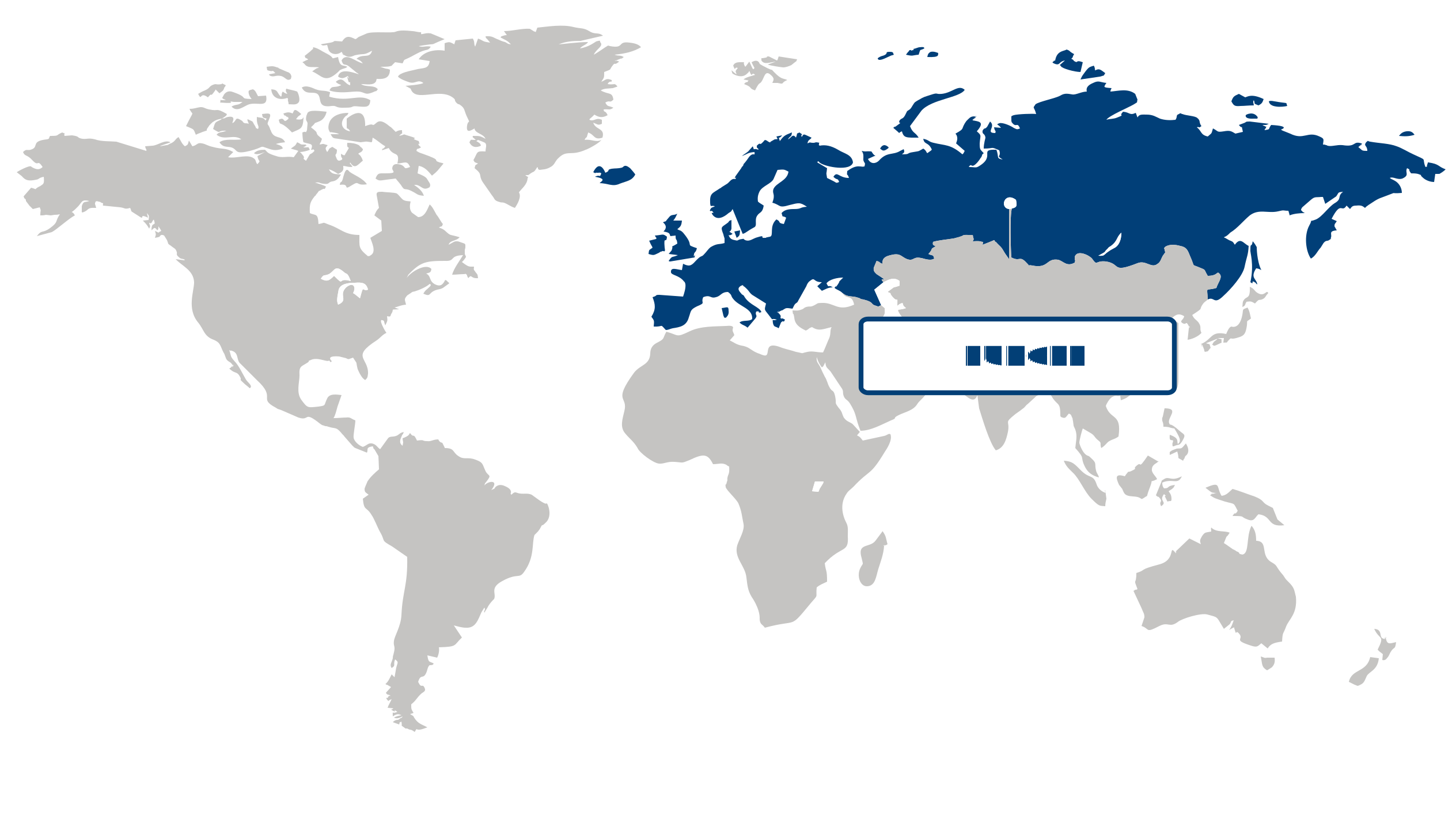
Largest Region
Europe
44.31% Market Share in 2026
Europe (Largest Region) vs Asia Pacific (Fastest-Growing Region)
Europe accounted for the largest share of the waste to energy market at 44.31% in 2026, reflecting its strong focus on waste management efficiency, resource recovery, and environmental sustainability. Established waste treatment infrastructure and supportive policies for reducing landfill dependence have encouraged the development of waste conversion facilities and integrated waste management systems. The region's emphasis on circular economy principles is also strengthening demand for technologies that can recover energy from municipal and other waste streams while reducing environmental impacts. Continued investment in modern waste processing infrastructure, alongside efforts to improve energy security and resource efficiency, supports Europe's leading position in the market.
Asia Pacific is anticipated to be the fastest-growing region in the waste to energy market, supported by rapid urbanization, increasing waste generation, and the need to expand sustainable waste management infrastructure. Growing cities are placing greater pressure on conventional disposal systems, encouraging governments and infrastructure developers to consider technologies that can simultaneously address waste treatment and energy requirements. Expanding electricity demand and efforts to diversify energy sources further enhance the relevance of waste to energy solutions. Rising environmental awareness, infrastructure modernization, and increasing public and private investment in advanced waste processing facilities are expected to accelerate adoption throughout the region.
Key Country Insights
The U.S. waste to energy market focuses on converting municipal and industrial waste into reliable energy while supporting landfill diversion efforts. Investment priorities include facility modernization, emissions control technologies, and improved integration with regional waste management systems.
Japan emphasizes high-efficiency waste to energy facilities capable of operating within densely populated urban environments. Japanese investment continues supporting advanced combustion technologies, energy recovery optimization, and reliable waste processing infrastructure with strong environmental performance.
South Korea continues strengthening waste to energy infrastructure to manage urban waste streams while supporting domestic energy production. Project development increasingly focuses on operational efficiency, emissions reduction technologies, and improved integration with municipal waste collection systems.
Germany advances waste to energy projects as part of broader circular resource management strategies. The country continues emphasizing efficient thermal treatment, strict environmental compliance, and energy recovery systems that complement recycling and sustainable waste handling practices.
France promotes waste to energy facilities that complement municipal waste management and district energy systems. French operators continue improving plant efficiency while integrating stricter environmental standards and resource recovery practices into long-term infrastructure planning.
Italy continues expanding waste to energy capacity to improve regional waste treatment efficiency and reduce landfill dependence. Italian stakeholders prioritize modern processing facilities, energy recovery improvements, and stronger coordination between municipal waste collection and energy generation operations.
Segment Leadership and Growth Trends
Technology Segment Analysis: Thermal (Largest Segment) vs Biological (Fastest-Growing Segment)
Thermal technology held the largest share of the waste to energy market, accounting for 77.62% in 2026. Its leading position is supported by its ability to process large volumes of municipal and industrial waste while simultaneously reducing landfill dependence and generating usable energy. Thermal conversion technologies are particularly well suited to regions facing rising waste generation and limited disposal capacity, as they provide a relatively established approach to waste treatment. Continued investment in waste management infrastructure, along with the growing focus on energy recovery and efficient resource utilization, further supports the prominence of the thermal segment.
The biological technology segment is expected to be the fastest-growing segment, driven by increasing interest in converting organic waste into renewable energy through processes such as anaerobic digestion. Growing efforts to improve the management of food waste, agricultural residues, and other biodegradable materials are strengthening demand for biological conversion systems. The segment also benefits from the expanding emphasis on circular economy practices, renewable energy generation, and decentralized waste treatment solutions, which are encouraging broader adoption across municipalities and industrial facilities.
| Report Segmentation | |||
| Segment | Sub-Segment | Largest Segment | Fastest Growing Segment |
|---|---|---|---|
| Technology | Biological, Thermal, Incineration, Pyrolysis, Gasification | Thermal | Biological |
 Read our Research Approach
Competitive Landscape and Market Positioning
Leading companies in the waste to energy market:
1. Veolia Environnement S.A. (France)
2. SUEZ S.A. (France)
3. China Everbright Environment Group Limited (China)
4. Babcock & Wilcox Enterprises Inc. (United States)
5. Wheelabrator Technologies Inc. (United States)
6. Reworld Waste (United States)
7. Kanadevia Corporation (Japan)
8. Abu Dhabi National Energy Company PJSC (United Arab Emirates)
9. Xcel Energy Inc. (United States)
10. Ramboll Group A/S (Denmark)
The waste to energy market is advancing through increased investment in efficient waste conversion technologies and integrated renewable energy solutions aimed at supporting circular economy goals. Strategic collaborations focused on resource recovery and emissions reduction are improving operational capabilities across the sector. Growing regulatory support for sustainable waste management practices is also encouraging technological innovation and infrastructure expansion.
Industry Development/News
| Company Name | Date | Key Development |
|---|---|---|
| Kanadevia Inova | Mar-26 | Kanadevia Inova acquired the Dublin Waste-to-Energy facility at Poolbeg Peninsula. This acquisition strengthens the company's competitive position within the energy-from-waste sector and ensures the continued production of low-carbon power derived from municipal waste streams, aligning with broader regional sustainability and waste management targets. |
| Cemex Ventures | Feb-26 | Cemex Ventures increased its investment in Waste to Energy Advanced Solutions, a firm specializing in converting non-recyclable solid waste and biomass into clean energy. This strategic capital injection reinforces Cemex's commitment to advancing circular economy practices and scaling waste valorization technologies to enhance resource recovery. |
| SUEZ | Apr-26 | SUEZ launched Digelis FoodWaste, an advanced biowaste pre-treatment technology designed for anaerobic digestion. This technological development is intended to improve energy efficiency and resource recovery rates, supporting the company's operational growth strategy within the waste-to-energy market by providing enhanced processing capabilities for organic waste streams. |
| Palm Beach County | Oct-25 | Palm Beach County approved a US$1.5 billion capital expenditure plan to construct a second waste-to-energy incinerator. This major infrastructure investment is designed to replace aging processing assets, significantly strengthening the region's long-term waste treatment capacity and supporting modern environmental compliance standards. |
| Reworld | Sep-25 | Reworld achieved a significant construction milestone for the expansion of the Pasco County Thermomechanical Treatment Facility in Florida. The project is engineered to increase annual waste processing capacity by approximately 160,000 tons, directly enhancing regional operational throughput and strengthening the facility’s role in local waste management infrastructure. |
| FCC Environmental | Jul-25 | FCC Environmental completed the acquisition of the South Broward Waste-to-Energy Facility from WIN Waste Innovations. This transaction represents the company’s inaugural U.S. waste-to-energy facility acquisition, marking a strategic expansion of its operational footprint and competitive presence in the North American energy-from-waste market. |
| Microsoft | Jul-25 | Microsoft entered into a carbon removal offtake agreement with Gaia for a carbon capture and storage retrofit at an energy-from-waste facility. By securing 2.95 million carbon removal credits, the partnership supports the commercial viability of decarbonization technologies in waste-to-energy operations, linking digital-led sustainability targets with physical infrastructure. |
| Veolia | Mar-25 | Veolia was selected to manage Metro Vancouver’s waste-to-energy facility. This operational contract strengthens the company's role in the regional waste value chain, focusing on the conversion of municipal waste into electricity and thermal energy for local communities, thereby reinforcing its utility-scale waste management capabilities. |
| Kanadevia Inova | Nov-24 | Kanadevia Inova was selected by Viridor to provide technology and construct a new waste-to-energy plant in the Tilbury Docks area of London. This project expands the company's European project portfolio and demonstrates its role as a key technology provider for large-scale energy-from-waste infrastructure development. |
| Acciona Energia | Mar-24 | Acciona Energia acquired a 38-megawatt waste-to-energy project currently under construction in Kwinana, Western Australia. This acquisition serves to diversify the company's renewable energy portfolio, marking a strategic investment in energy-from-waste infrastructure as a scalable component of its broader power generation and sustainable energy operations. |
Why Choose Us
Specialized Expertise: Our team comprises industry experts with a deep understanding of your market segment. We bring specialized knowledge and experience that ensures our research and consulting services are tailored to your unique needs.
Customized Solutions: We understand that every client is different. That's why we offer customized research and consulting solutions designed specifically to address your challenges and capitalize on opportunities within your industry.
Proven Results: With a track record of successful projects and satisfied clients, we have demonstrated our ability to deliver tangible results. Our case studies and testimonials speak to our effectiveness in helping clients achieve their goals.
Cutting-Edge Methodologies: We leverage the latest methodologies and technologies to gather insights and drive informed decision-making. Our innovative approach ensures that you stay ahead of the curve and gain a competitive edge in your market.
Client-Centric Approach: Your satisfaction is our top priority. We prioritize open communication, responsiveness, and transparency to ensure that we not only meet but exceed your expectations at every stage of the engagement.
Continuous Innovation: We are committed to continuous improvement and staying at the forefront of our industry. Through ongoing learning, professional development, and investment in new technologies, we ensure that our services are always evolving to meet your evolving needs.
Value for Money: Our competitive pricing and flexible engagement models ensure that you get maximum value for your investment. We are committed to delivering high-quality results that help you achieve a strong return on your investment.
Select Licence Type

