Wine Cork Market Size & Growth Forecast 2027–2036, By Segments (Type, Distribution Channel), Regional Demand Trends (North America, Asia Pacific, Europe), Key Country Insights (U.S., Japan, South Korea, Germany, France, Italy), and Competitive Landscape
Market Size and Growth Outlook
Wine Cork Market size was valued at USD 6.76 billion in 2026 and is anticipated to grow at a 4.37% CAGR from 2027 to 2036, exceeding USD 10.37 billion by 2036. The industry revenue for 2027 is estimated at USD 7.01 billion.
Get more details on this report
Request Free Sample ReportWine Cork Market Intelligence Snapshot
Regional Market Dynamics
- Europe accounted for 84.55% of the market in 2026, driven by its established wine production industry, mature bottling practices, integrated supply chain, and consistent procurement from wineries.
- Asia Pacific is projected to grow at a 5.36% CAGR as rising wine consumption, expanding bottling activities, and broader retail distribution increase demand for wine closure materials.
Segment Momentum
- Natural cork accounted for 87.88% of the market in 2026 due to its long-standing use in premium and still wines, strong consumer acceptance, and compatibility with traditional bottling and aging practices.
- Online distribution is the fastest-growing channel as buyers increasingly value easier supplier comparison, faster ordering, and streamlined repeat procurement through digital platforms.
Market Expansion Drivers
- Growing global wine consumption and premiumization trends driving natural cork demand.
- Increasing shift toward recyclable and sustainable cork materials supporting eco-friendly packaging adoption.
- Expansion of wine tourism and hospitality sector boosting cork utilization in premium beverages.
Leading Market Participants
- Leading players in the wine cork market include Corticeira Amorim, S.G.P.S., S.A. (Portugal), J. C. Ribeiro, S.A. (Portugal), Jelinek Cork Group (Canada), M.A. Silva USA LLC (United States), WidgetCo, Inc. (United States), We Cork Inc. (United States), Vinventions LLC (United States).
Global Market Forecast Snapshot
Market Outlook
- 2026 Market Size: USD 6.76 billion
- 2027 Estimated Market Size: USD 7.01 billion.
- Projected Market Size: USD 10.37 billion by 2036
- Growth Forecast: 4.37% CAGR (2027-2036)
Regional and Segment Outlook
- Leading Regional Market: Europe
- High-Growth Regional Hub: Asia Pacific
- Core Revenue Segment: Natural (Type) | Offline (Distribution Channel)
- Emerging Opportunity Segment: Synthetic (Type) | Online (Distribution Channel)
Market Growth Drivers and Industry Trends
Growing global wine consumption and premiumization trends driving natural cork demand
Rising wine consumption and the continued premiumization of wine products will drive the wine cork market growth as producers increasingly emphasize packaging that supports product quality and premium positioning. Natural cork remains closely associated with traditional wine presentation and is valued for its role in sealing bottles while allowing controlled oxygen exchange that can be important for certain wines during maturation. The expansion of premium and specialty wine offerings is encouraging producers to pay greater attention to closure selection, particularly where packaging contributes to the overall consumer perception of authenticity and quality. As consumers show stronger interest in differentiated wine experiences and higher-value products, wineries can increasingly incorporate natural cork closures into bottles positioned within premium segments.
Increasing shift toward recyclable and sustainable cork materials supporting eco-friendly packaging adoption
Growing emphasis on sustainable packaging will support the wine cork market as wineries and consumers increasingly consider the environmental characteristics of bottle closures. Cork is derived from renewable cork oak resources, and its natural composition provides an alternative to closures that rely more heavily on synthetic materials. The increasing focus on recyclability, responsible sourcing, and reduced environmental impact is encouraging beverage producers to examine packaging choices beyond functional performance alone. Cork closures can align with sustainability-oriented packaging strategies while retaining the traditional appearance associated with wine bottles, enabling producers to address environmental considerations without significantly changing the established visual identity of premium wine packaging.
Expansion of wine tourism and hospitality sector boosting cork utilization in premium beverages
Expansion of wine tourism and the hospitality industry will boost the wine cork market as wineries, restaurants, hotels, and specialized tasting venues increasingly contribute to consumer exposure to premium wine products. Wine tourism creates opportunities for producers to emphasize the complete presentation of their beverages, including bottle design and closure selection, while hospitality establishments often prioritize products that offer distinctive quality and presentation. Natural cork closures can complement this positioning by reinforcing the traditional character of wine and providing a recognizable tactile and visual experience when bottles are opened. Growing visitor engagement with vineyards, tasting experiences, and curated wine offerings can therefore support greater utilization of cork closures across premium beverage applications.
| Growth Driver | Impact on CAGR | Regulatory Influence | Geographic Relevance | Adoption Rate | Impact Timeline |
|---|---|---|---|---|---|
| Growing global wine consumption and premiumization trends driving natural cork demand | 1.60% | Low | Europe, North America | High | Near Term |
| Increasing shift toward recyclable and sustainable cork materials supporting eco-friendly packaging adoption | 1.40% | Moderate | Europe, Asia Pacific | High | Mid Term |
| Expansion of wine tourism and hospitality sector boosting cork utilization in premium beverages | 1.30% | Low | Europe, North America | Medium | Near Term |
Explore Growth Opportunities
Request Free Sample ReportRegional Demand Dynamics
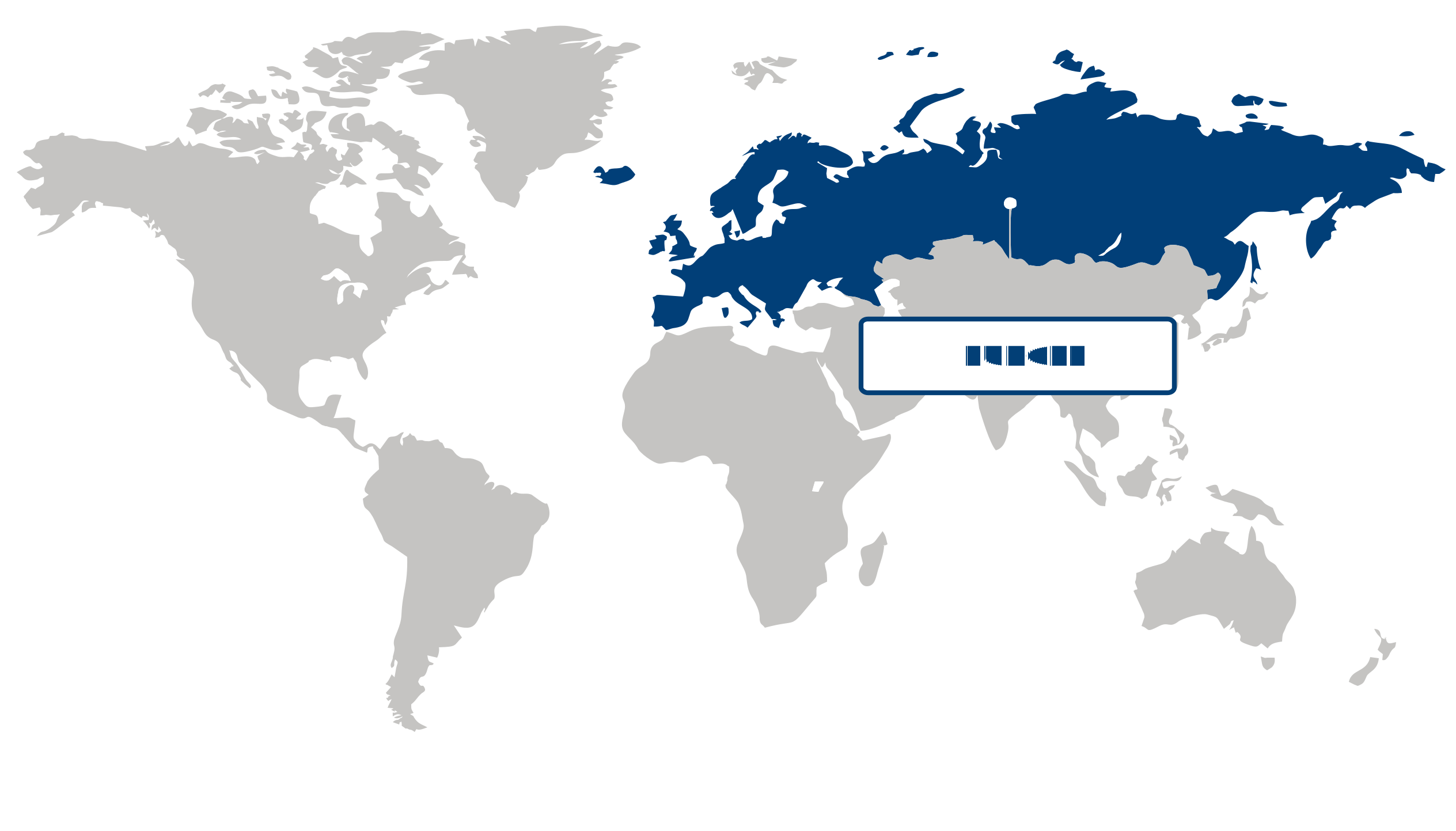
Europe (Largest Region)
Europe held the dominant position in the wine cork market in 2026, accounting for an 84.55% share. The region's leadership is deeply connected to its established wine-producing industry, long-standing cork manufacturing expertise, and strong consumer preference for traditional wine packaging. Cork closures remain closely associated with product quality, preservation, and the heritage of European winemaking, supporting their continued use across a broad range of wine products. The region's mature vineyard and wine-processing infrastructure also provides a stable foundation for cork demand, while sustainability considerations favor natural cork as a renewable packaging material. Strong connections between wine producers, packaging suppliers, and established distribution networks further reinforce Europe's market position.
Asia Pacific (Fastest-Growing Region)
Asia Pacific is the fastest-growing regional market, benefiting from rising wine consumption, expanding premium beverage segments, and gradual development of domestic wine production and distribution infrastructure. Growing urbanization and changing consumer preferences are increasing interest in wine as part of evolving food and beverage lifestyles, creating additional opportunities for quality-oriented packaging solutions. As consumers become more attentive to product presentation and packaging sustainability, cork closures are gaining relevance beyond traditional wine markets. Expanding hospitality, retail, and e-commerce channels are also improving access to imported and locally produced wines, supporting broader adoption of cork-based closures across the region.
| Parameter | North America | Asia Pacific | Europe | Latin America | MEA |
|---|---|---|---|---|---|
| Innovation Hub i Scale Nascent Developing Advanced | |||||
| Cost-Sensitive Region i Scale Low Medium High | |||||
| Regulatory Environment i Scale Restrictive Neutral Supportive | |||||
| Demand Drivers i Scale Weak Moderate Strong | |||||
| Development Stage i Scale Emerging Developing Developed | |||||
| Adoption Rate i Scale Low Medium High | |||||
| New Entrants / Startups i Scale Sparse Moderate Dense | |||||
| Macro Indicators i Scale Weak Stable Strong |
Key Country Insights
Germany 🇩🇪
Sustainable Packaging FocusGermany integrates wine cork procurement with broader sustainable packaging objectives and recycling initiatives. German wine producers increasingly value certified natural cork and technical innovations that improve oxygen management while supporting environmental commitments.
France 🇫🇷
Heritage Winemaking SupplyFrance maintains strong demand for natural cork aligned with traditional winemaking practices and premium appellations. French wineries continue adopting improved cork processing technologies that enhance product consistency while preserving authentic wine presentation.
Italy 🇮🇹
Craft Wine IntegrationItaly emphasizes wine cork solutions that complement diverse regional wine production and premium exports. Italian producers increasingly combine traditional cork preferences with quality assurance measures that strengthen product reliability across domestic and international markets.
Japan 🇯🇵
Quality Preservation PriorityJapan prioritizes wine cork solutions that preserve product quality throughout extended distribution and storage. Japanese importers and wineries seek reliable closures with uniform performance to maintain premium consumer experiences across diverse wine categories.
South Korea 🇰🇷
Premium Import SupportSouth Korea's wine cork market reflects growing demand for premium imported wines requiring dependable closure performance. South Korean distributors favor cork suppliers capable of delivering consistent quality and supporting premium packaging differentiation.
United States 🇺🇸
Premium Closure DemandThe U.S. wine cork market emphasizes consistent closure quality for premium wines while balancing sustainability expectations. U.S. wineries continue evaluating natural cork alongside technical alternatives to enhance product performance and brand positioning across domestic and imported wine portfolios.
Segment Leadership and Growth Trends
Wine Cork Market Share (%), by Type, 2026
Go beyond the chart, access full insights & data tables
Request Free Sample ReportType Segment Analysis: Natural (Largest Segment) vs Synthetic (Fastest-Growing Segment)
Natural corks dominated the wine cork market with an 87.88% share in 2026. Their established position is strongly associated with their long-standing use in wine bottling, favorable sealing characteristics, and consumer recognition as a traditional closure format. Natural cork also contributes to the established presentation and perceived quality of wine products, while its compatibility with premium and traditional bottling practices continues to reinforce demand among producers and consumers who value conventional wine packaging.
Synthetic corks are projected to grow at the fastest pace as winemakers increasingly consider closure solutions that provide consistency, convenience, and predictable sealing performance. Synthetic alternatives can reduce variability associated with natural materials while offering manufacturers greater flexibility in closure design and production. Continued development of synthetic materials and growing interest in reliable, cost-effective closure options are encouraging broader adoption across wine products seeking alternatives to traditional cork.
Distribution Channel Segment Analysis: Offline (Largest Segment) vs Online (Fastest-Growing Segment)
Offline distribution accounted for the largest share of the wine cork market, representing 67.9% in 2026. Physical distribution remains important because wine corks are closely tied to established wine production and packaging supply chains, where manufacturers and producers often rely on specialized suppliers and direct procurement relationships. Established distribution networks also provide buyers with access to technical guidance and product evaluation, supporting continued reliance on conventional offline purchasing channels.
Online distribution is expected to record the fastest growth as digital procurement increasingly expands access to wine packaging components. Online channels can simplify product discovery, supplier comparison, and purchasing for smaller wineries, specialty producers, and other buyers seeking flexible sourcing options. Greater availability of detailed product specifications and digital supplier platforms is making online procurement more practical, while the broader digitization of business-to-business purchasing is encouraging greater adoption of e-commerce-based sourcing.
| Segment | Sub-Segment | Largest Segment | Fastest Growing |
|---|---|---|---|
| Type | Natural, Synthetic | Natural | Synthetic |
| Distribution Channel | Offline, Online | Offline | Online |
Unlock insights tailored to your business with our bespoke market research solutions.
Click to get your customized report now.
Competitive Landscape and Market Positioning
Key companies in the wine cork market:
1. Corticeira Amorim S.G.P.S. S.A. (Portugal)
2. J. C. Ribeiro S.A. (Portugal)
3. Jelinek Cork Group (Canada)
4. M.A. Silva USA LLC (United States)
5. WidgetCo Inc. (United States)
6. We Cork Inc. (United States)
7. Vinventions LLC (United States)
Sustainability preferences are influencing material innovation and sourcing approaches in the wine cork market. Natural and engineered closure options are being refined to balance preservation quality and environmental impact. The wine cork market is gradually evolving in response to changing packaging expectations.
| Company | Market Share | Company Revenue | Revenue CAGR (%) | Product Portfolio | Geographic Presence | Innovation / R&D Focus | Strategic Developments |
|---|---|---|---|---|---|---|---|
| Corticeira Amorim S.G.P.S. S.A. (Portugal) | |||||||
| J. C. Ribeiro S.A. (Portugal) | |||||||
| Jelinek Cork Group (Canada) | |||||||
| M.A. Silva USA LLC (United States) | |||||||
| WidgetCo Inc. (United States) | |||||||
| We Cork Inc. (United States) | |||||||
| Vinventions LLC (United States). |
Industry Development/News
| Company Name | Date | Key Development |
|---|---|---|
| Diam Bouchage | May-26 | Diam Bouchage introduced two specialized closure technologies, LiOX VT and Moove, designed to optimize oxygen transfer and aging characteristics for bottled wine. These innovations represent a strategic commitment to R&D in performance-based closure solutions, directly addressing evolving technical requirements for wine preservation and strengthening the company's competitive positioning within the global high-end cork and closure segment. |
| Waterloo Container | Aug-22 | Waterloo Container renewed its strategic distribution agreement with Amcor Flexibles Capsules, securing continued access to the STELVIN® brand wine closure portfolio. This partnership facilitates the expansion of Waterloo Container’s specialized packaging capabilities and strengthens its position as a key regional supplier, enhancing its ability to provide comprehensive closure solutions to wine producers. |
| M. A. Silva USA | Feb-21 | M. A. Silva USA collaborated with its Portuguese parent entity to launch NEOTECH®, a micro-agglomerate cork technology designed to eliminate detectable TCA levels. This product innovation replaces the legacy Pearl® product line, representing a material advancement in closure quality and technical performance aimed at enhancing product reliability and reducing spoilage risk within the wine industry. |
Customize Your Report
Explore examples of how this report can be tailored to different research needs, including custom segments, additional topics or chapters, and related reports. Click a section of the wheel or its numbered marker to explore the available options.
Wine Cork Market — Custom Segments
| Segment | Sub-Segment |
|---|---|
| Winery Size | Small Wineries, Medium Wineries, Large Wineries |
| Wine Category | Still Wine, Sparkling Wine, Fortified Wine, Dessert Wine |
| Price Tier | Economy, Mid-range, Premium, Luxury |
Wine Cork Market — Custom TOC
| Custom Chapter | Chapter Details |
|---|---|
| Sustainable Closure Material Transition Analysis |
|
| Winery Procurement Behavior Study |
|
| Cork Supply Chain Resilience Analysis |
|
Need a different cut of the data?
Request Custom ResearchHow much is the wine cork market worth?
What is the expected industry size of wine cork by 2036?
How are sustainability priorities influencing sourcing decisions in the wine cork market?
Why is premiumization supporting continued demand for natural cork in the wine cork market?
Why does natural cork dominate the wine cork market?
Which distribution channel is growing the fastest in the wine cork market?
What makes Europe the largest regional market for wine corks?
Why is the wine cork market growing quickly in Asia Pacific?
What are the key competitors in the wine cork landscape?
Our Clients
"The report provided us with a clear direction, and the level of detail was beyond what we expected. I would definitely recommend their services to others."
Haier Appliances
"The collaboration with Fundamental Business Insights has added significant value to our decision-making process, and we look forward to continuing this partnership for our future market research requirements."
Luxottica Group S.p.A.
"The team at FBI delivered an exceptional research report. The insights on industry innovations were particularly impressive and added a lot of value to the overall report."
Nike
Our Research Team & Methodology
Every Fundamental Business Insights report is built by a dedicated vertical research team, validated through a structured primary-and-secondary methodology, and reviewed for accuracy before it reaches you.
Research Team Overview
Prepared by the Consumer Goods & Services Research Team
Delivery
Published
Demand
Available
Support
Trust & Compliance
Research Intelligence
Research Workflow & Quality Assurance
Data Collection
Verified information gathered through primary and secondary research.
Data Triangulation
Cross-validation using multiple independent data sources.
Forecast Modelling
Market estimates developed using historical trends and analytical models.
Analyst Validation
Findings reviewed by domain experts for accuracy and consistency.
Editorial & Quality Review
Final editorial, quality, and compliance checks before publication.
Final Publication
Released after successful completion of the internal review process.
Report Coverage
📊 Market Assessment
- Market Size & Forecast
- Market Segmentation
- Regional Analysis
- Growth Drivers & Challenges
- Market Dynamics
🏢 Competitive Intelligence
- Competitive Landscape
- Company Profiles
- Competitive Benchmarking
- Mergers & Acquisitions
- Market Share Analysis or Key Company Strategies
🔍 Strategic Analysis
- Value Chain Analysis
- Porter's Five Forces
- PESTLE Analysis
- Pricing Trends
- Supply-Demand Analysis
🚀 Future Outlook
- Technology Landscape
- Regulatory Landscape
- Investment & Funding Landscape
- Emerging Opportunities
- Future Market Outlook
Have a question about this report or need a custom scope?
Request Customization