



Decaffeinated Coffee Market Size & Growth Forecast 2027–2036, By Segments (Product, Distribution Channel, Bean Species), Regional Demand Trends (North America, Asia Pacific, Europe), Key Country Insights (U.S., Japan, South Korea, Germany, France, Italy), and Competitive Landscape
Market Size and Growth Outlook
Decaffeinated Coffee Market size was estimated at USD 3.3 billion in 2026 and is projected to grow at a 6.37% CAGR from 2027 to 2036, exceeding USD 6.12 billion by 2036. The industry revenue for 2027 is assessed at USD 3.48 billion.
Base Year Value (2026)
USD 3.3 billion
CAGR (2027-2036)
6.37%
Forecast Year Value (2036)
USD 6.12 billion

Historical Data Period
2022-2026

Largest Region
Europe

Forecast Period
2027-2036
Decaffeinated Coffee Market Intelligence Snapshot:
-
Regional Market Dynamics:
- Europe held a 39.96% market share in 2026, supported by a mature coffee culture, broad retail availability, and steady demand for reduced-caffeine products across home and foodservice channels.
- Asia Pacific is forecast to grow at a 6.1% CAGR as changing beverage preferences, expanding urban coffee consumption, and improving retail and café availability encourage wider adoption of decaffeinated coffee.
-
Segment Momentum:
- Raw accounted for 60.43% of the market in 2026 because it offers flexibility for roasting, grinding, and brewing, making it suitable for both household consumers and commercial users.
- Online is the fastest-growing channel because it provides home delivery, broader product availability, and easier access to specialty decaffeinated coffee options, supporting repeat purchases and product discovery.
-
Market Expansion Drivers:
- Rising health awareness increasing demand for low-caffeine beverage alternatives among consumers.
- Expanding specialty coffee culture accelerating premium decaffeinated coffee product innovation.
- Growing availability of organic and ethically sourced decaf variants supporting consumer adoption.
-
Leading Market Participants:
Leading players in the decaffeinated coffee market include JDE Peet's (Netherlands), Starbucks Coffee Company (United States), Nestlé S.A. (Switzerland), The J.M. Smucker Company (United States), Swiss Water Decaffeinated Coffee Inc. (Canada), Tata Consumer Products Ltd (India), Lifeboost Coffee LLC (United States), Kicking Horse Coffee Co. Ltd. (Canada), Fresh Roasted Coffee LLC (United States), Don Pablo Coffee (United States).
Global Market Forecast Snapshot:
-
Market Outlook:
- 2026 Market Size: USD 3.3 billion
- 2027 Estimated Market Size: USD 3.48 billion.
- Projected Market Size: USD 6.12 billion by 2036
- Growth Forecasts: 6.37% CAGR (2027-2036)
-
Regional and Segment Outlook:
- Leading Regional Market: Europe
- High-Growth Regional Hub: Asia Pacific
- Core Revenue Segment: Raw (Product) | Offline (Distribution Channel) | Arabica (Bean Species)
- Emerging Opportunity Segment: Raw (Product) | Online (Distribution Channel) | Robusta (Bean Species)
Market Growth Drivers and Industry Trends
Rising health awareness increasing demand for low-caffeine beverage alternatives among consumers
Increasing health awareness is encouraging consumers to moderate caffeine intake while retaining their preference for coffee, which will drive the decaffeinated coffee market growth. Consumers who are sensitive to caffeine or seeking to manage their daily stimulant consumption can choose decaffeinated products without eliminating coffee from their routines. Growing attention to sleep quality, balanced consumption habits, and ingredient awareness is also encouraging greater consideration of lower-caffeine beverage alternatives. Improvements in decaffeination processes and product quality are helping preserve desirable coffee characteristics, making decaffeinated options more attractive to consumers who want familiar flavor profiles with reduced caffeine content.
Expanding specialty coffee culture accelerating premium decaffeinated coffee product innovation
The expansion of specialty coffee culture is creating greater consumer interest in quality, origin, flavor, and preparation methods, providing new opportunities for the decaffeinated coffee market. Specialty-focused consumers increasingly expect decaffeinated products to deliver a more sophisticated sensory experience rather than being viewed solely as an alternative for caffeine-sensitive drinkers. This is encouraging producers to focus on bean selection, roasting approaches, processing methods, and flavor preservation when developing premium decaffeinated offerings. As coffee consumers become more knowledgeable about product characteristics, premium positioning and differentiated flavor experiences are supporting broader experimentation with decaffeinated varieties.
Growing availability of organic and ethically sourced decaf variants supporting consumer adoption
Greater availability of organic and ethically sourced products is broadening consumer choice and strengthening adoption across the decaffeinated coffee market. Consumers increasingly consider factors beyond taste and caffeine content, including production practices, sourcing transparency, environmental considerations, and alignment with personal purchasing values. Offering decaffeinated coffee through organic and responsibly sourced product lines allows producers to address these preferences while serving consumers seeking reduced-caffeine beverages. Expanded availability across retail and specialty channels also makes it easier for consumers to find decaf products that align with their expectations regarding product quality and sourcing practices.
| Growth Driver Assessment Framework | |||||
| Growth Driver | Impact On CAGR | Regulatory Influence | Geographic Relevance | Adoption Rate | Impact Timeline |
|---|---|---|---|---|---|
| Rising health awareness increasing demand for low-caffeine beverage alternatives among consumers | 2.00% | Moderate | Europe, North America | High | Near Term |
| Expanding specialty coffee culture accelerating premium decaffeinated coffee product innovation | 1.80% | Low | North America, Europe, Asia Pacific | High | Mid Term |
| Growing availability of organic and ethically sourced decaf variants supporting consumer adoption | 1.50% | Moderate | Europe, Asia Pacific | Medium | Mid Term |
Unlock insights tailored to your business with our bespoke market research solutions - Click to get your customized report now!
Regional Demand Dynamics
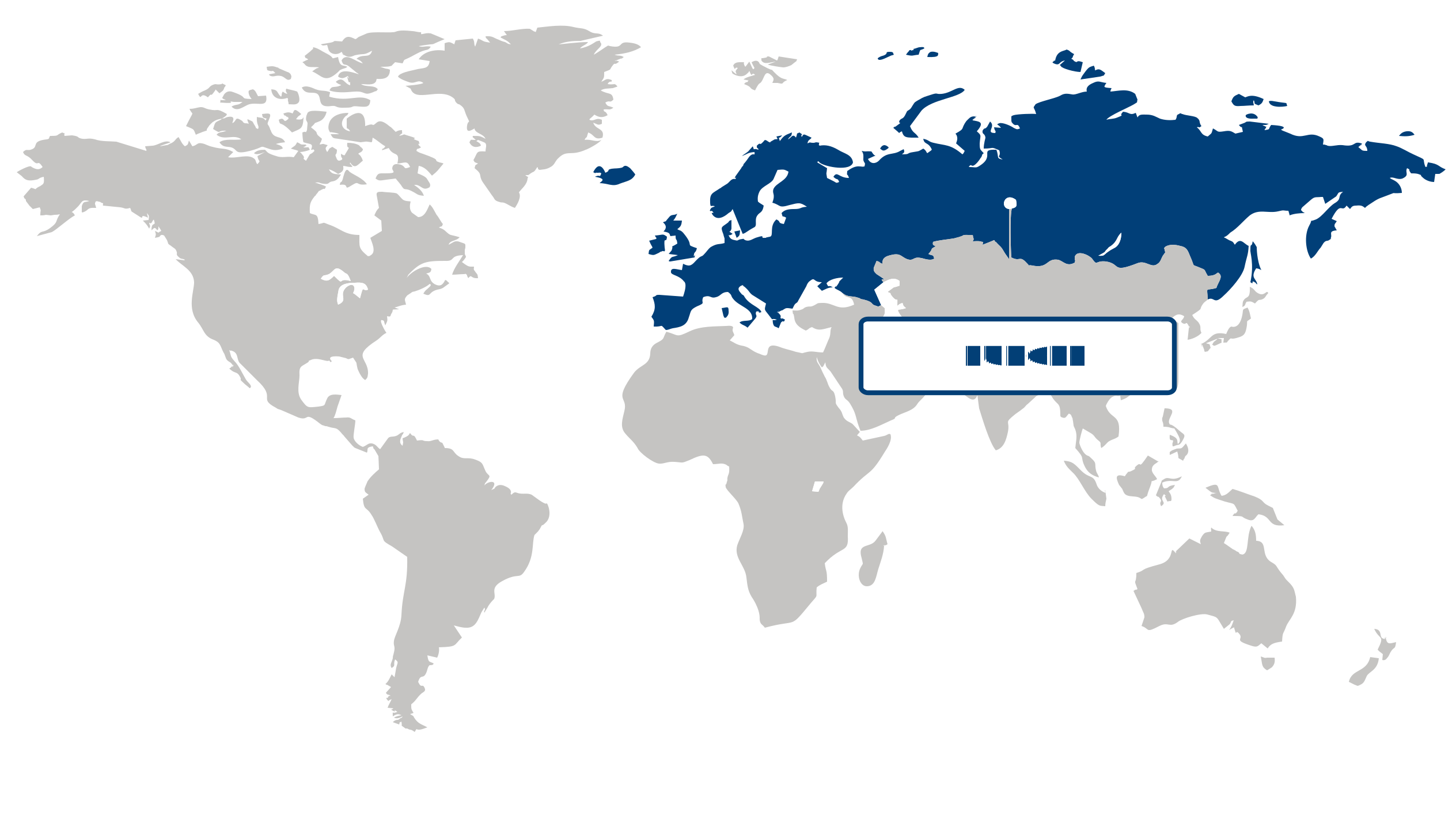
Largest Region
Europe
39.96% Market Share in 2026
Europe (Largest Region) vs Asia Pacific (Fastest-Growing Region)
Europe dominated the decaffeinated coffee market with a 39.96% share in 2026, supported by established coffee consumption traditions and strong consumer demand for products that accommodate lifestyle, wellness, and dietary preferences. Decaffeinated coffee benefits from the region's mature specialty and packaged coffee sectors, while growing attention to reduced caffeine consumption is encouraging consumers to seek alternatives without abandoning established coffee habits. Broad retail availability and a diverse range of preparation formats also support sustained demand. Asia Pacific is the fastest-growing region as coffee consumption continues to expand beyond traditional tea-oriented preferences, particularly in urban markets. Rising disposable incomes, evolving café culture, growing interest in premium coffee, and greater consumer awareness of decaffeinated options are helping broaden the category's appeal.
Key Country Insights
The U.S. decaffeinated coffee market benefits from consumers seeking healthier beverage options without compromising flavor quality. Roasters continue expanding premium decaffeinated offerings through specialty blends, sustainable sourcing, and improved caffeine removal processes.
Japan incorporates decaffeinated coffee into its premium café culture and growing demand for functional beverage choices. Japanese consumers value balanced taste, consistent quality, and convenient formats including ready-to-drink and single-serve products.
South Korea is broadening decaffeinated coffee availability as specialty cafés and retail brands diversify beverage selections. Consumers increasingly seek premium decaffeinated products that deliver full flavor while aligning with health-conscious consumption habits.
Germany emphasizes high-quality decaffeinated coffee supported by established roasting expertise and consistent consumer demand. Coffee producers increasingly invest in flavor preservation and premium product positioning across retail and foodservice channels.
France is integrating decaffeinated coffee into traditional café consumption as consumer interest in balanced lifestyles increases. Roasters and cafés emphasize high-quality beans and refined processing methods to maintain authentic coffee flavor and aroma.
Italy is expanding premium decaffeinated espresso offerings while preserving the flavor expectations associated with its coffee culture. Italian producers focus on advanced decaffeination methods that retain aroma and support both retail and hospitality demand.
Segment Leadership and Growth Trends
Product Segment Analysis: Raw (Largest & Fastest-Growing Segment)
The raw segment led the decaffeinated coffee market in 2026, accounting for a 60.43% share and also representing the fastest-growing product category. Its strong position is supported by continued demand for decaffeinated coffee inputs that preserve the core characteristics of coffee while offering reduced caffeine content. Raw decaffeinated coffee provides flexibility for downstream processing, allowing producers to develop different roast profiles, blends, and finished products according to consumer preferences. Growing interest in lower-caffeine beverages, coupled with demand for premium coffee experiences, is supporting the segment's sustained adoption across the value chain.
Distribution Channel Segment Analysis: Offline (Largest Segment) vs Online (Fastest-Growing Segment)
The offline segment held the largest share of the distribution channel landscape in the decaffeinated coffee market in 2026. Physical retail channels remain important because consumers can directly evaluate product varieties, packaging, roast characteristics, and brand positioning before purchase. Supermarkets, specialty stores, grocery outlets, and other established retail formats also provide broad product visibility and convenient access, supporting regular purchasing behavior. The established presence of offline distribution continues to make it a key route for reaching consumers seeking decaffeinated coffee as part of their routine beverage consumption.
Online distribution is emerging as the fastest-growing channel as digital purchasing expands consumer access to a broader selection of decaffeinated coffee products. E-commerce platforms enable shoppers to compare product attributes, explore specialized offerings, and purchase products without geographic limitations. This channel is particularly suited to niche and premium decaffeinated coffee products, where online discovery and convenient home delivery can influence purchasing decisions. Increasing consumer familiarity with digital grocery and beverage shopping is therefore strengthening the role of online channels in market expansion.
| Report Segmentation | |||
| Segment | Sub-Segment | Largest Segment | Fastest Growing Segment |
|---|---|---|---|
| Product | Roasted, Raw | Raw | Raw |
| Distribution Channel | Online, Offline | Offline | Online |
| Bean Species | Arabica, Robusta, Others | Arabica | Robusta |
 Read our Research Approach
Competitive Landscape and Market Positioning
Key companies in the decaffeinated coffee market:
1. JDE Peet's (Netherlands)
2. Starbucks Coffee Company (United States)
3. Nestlé S.A. (Switzerland)
4. The J.M. Smucker Company (United States)
5. Swiss Water Decaffeinated Coffee Inc. (Canada)
6. Tata Consumer Products Ltd (India)
7. Lifeboost Coffee LLC (United States)
8. Kicking Horse Coffee Co. Ltd. (Canada)
9. Fresh Roasted Coffee LLC (United States)
10. Don Pablo Coffee (United States)
The decaffeinated coffee market is evolving as consumers increasingly seek healthier beverage alternatives without compromising flavor and aroma. Producers are introducing premium blends, organic options, and improved decaffeination techniques that preserve taste quality and product authenticity. Growing demand for specialty coffee products and wellness-focused consumption habits is also driving innovation within the market.
Industry Development/News
| Company Name | Date | Key Development |
|---|---|---|
| Coffein Compagnie | May-26 | Coffein Compagnie doubled the production capacity of its Hanseatic Water Process decaffeinated coffee operations. This strategic expansion significantly increases the company's throughput to address rising global demand for decaffeinated coffee, strengthening its supply chain position as a major processor for the industry. |
| Explorer Cold Brew, Inc. | Jan-26 | Explorer Cold Brew, Inc. acquired specialty coffee brand Savorista to expand its caffeine-conscious product offerings. This acquisition integrates Savorista’s established decaf and half-caffeinated portfolio into Explorer’s national distribution network, aiming to accelerate the commercial scale and market penetration of these specialty coffee blends. |
| Arctic Coffee | May-26 | Arctic Coffee entered the UK chilled ready-to-drink (RTD) market with a new decaffeinated iced coffee product. By introducing this specialty offering into the convenience retail channel, the company is directly targeting underserved consumer demand for caffeine-free, shelf-stable, or chilled coffee alternatives. |
| Holistic Roasters | May-26 | Holistic Roasters partnered with Swiss Water Decaffeinated Coffee to release a certified biodynamic decaffeinated coffee. This collaboration leverages the specialized Swiss Water processing technology to introduce a premium, sustainability-focused product, expanding the availability of high-quality, specialty-grade decaffeinated options for environmentally conscious consumer segments. |
| Frequent Coffee | Jan-26 | Frequent Coffee expanded its specialty lineup by introducing decaffeinated offerings produced through advanced processing methods such as carbonic maceration, yeast inoculation, and thermal shock. This initiative focuses on enhancing the origin-driven flavor complexity of decaf products, effectively repositioning decaffeinated coffee as a high-end, artisanal category. |
Why Choose Us
Specialized Expertise: Our team comprises industry experts with a deep understanding of your market segment. We bring specialized knowledge and experience that ensures our research and consulting services are tailored to your unique needs.
Customized Solutions: We understand that every client is different. That's why we offer customized research and consulting solutions designed specifically to address your challenges and capitalize on opportunities within your industry.
Proven Results: With a track record of successful projects and satisfied clients, we have demonstrated our ability to deliver tangible results. Our case studies and testimonials speak to our effectiveness in helping clients achieve their goals.
Cutting-Edge Methodologies: We leverage the latest methodologies and technologies to gather insights and drive informed decision-making. Our innovative approach ensures that you stay ahead of the curve and gain a competitive edge in your market.
Client-Centric Approach: Your satisfaction is our top priority. We prioritize open communication, responsiveness, and transparency to ensure that we not only meet but exceed your expectations at every stage of the engagement.
Continuous Innovation: We are committed to continuous improvement and staying at the forefront of our industry. Through ongoing learning, professional development, and investment in new technologies, we ensure that our services are always evolving to meet your evolving needs.
Value for Money: Our competitive pricing and flexible engagement models ensure that you get maximum value for your investment. We are committed to delivering high-quality results that help you achieve a strong return on your investment.
Select Licence Type

