Women's Shirts & Blouses Market Size & Growth Forecast 2027–2036, By Segments (Distribution Channel, Fiber), Regional Demand Trends (North America, Asia Pacific, Europe), Key Country Insights (U.S., Japan, South Korea, Germany, France, Italy), and Competitive Landscape
Market Size and Growth Outlook
Women's Shirts & Blouses Market size stood at USD 135.84 billion in 2026 and is predicted to grow at a 4.85% CAGR from 2027 to 2036, attaining USD 218.13 billion by 2036. The industry revenue for 2027 is assessed at USD 141.38 billion.
Get more details on this report
Request Free Sample ReportWomen's Shirts & Blouses Market Intelligence Snapshot
Regional Market Dynamics
- Europe held a 34.98% share in 2026, supported by its mature fashion retail network, broad brand presence, frequent product refresh cycles, and consistent consumer demand across price segments.
- Asia Pacific is forecast to grow at a 5.88% CAGR due to rising urban consumption, expanding organized retail, stronger digital shopping adoption, and broader access to affordable fashion choices.
Segment Momentum
- Offline channels held a 76.8% share in 2026 because shoppers prefer to evaluate fit, fabric, comfort, and style in person before making apparel purchase decisions.
- Cellulosic is the fastest-growing fiber segment as consumers increasingly prefer softer, more breathable fabrics that provide greater comfort and improved drape across casual and semi-formal styles.
Market Expansion Drivers
- Fast fashion trends and frequent style cycles driving rapid apparel turnover demand.
- Rising workforce participation and income levels increasing women's apparel consumption.
- Sustainable textile adoption and eco-fashion trends reshaping apparel production strategies.
Leading Market Participants
- Major players in the women's shirts & blouses market include Christian Dior SE (France), Chanel Limited (United Kingdom), Gucci S.p.A. (Italy), Prada S.p.A. (Italy), Giorgio Armani S.p.A. (Italy), Burberry Group plc (United Kingdom), Dolce & Gabbana S.r.l. (Italy), Gianni Versace S.r.l. (Italy), Louis Vuitton Malletier SAS (France), Hugo Boss AG (Germany).
Global Market Forecast Snapshot
Market Outlook
- 2026 Market Size: USD 135.84 billion
- 2027 Estimated Market Size: USD 141.38 billion.
- Projected Market Size: USD 218.13 billion by 2036
- Growth Forecast: 4.85% CAGR (2027-2036)
Regional and Segment Outlook
- Leading Regional Market: Europe
- High-Growth Regional Hub: Asia Pacific
- Core Revenue Segment: Offline (Distribution Channel) | Polyester (Fiber)
- Emerging Opportunity Segment: Online (Distribution Channel) | Cellulosic (Fiber)
Market Growth Drivers and Industry Trends
Fast fashion trends and frequent style cycles driving rapid apparel turnover demand
Shorter fashion cycles and rapidly changing style preferences are encouraging consumers to refresh their wardrobes more frequently. The women's shirts & blouses market will see increased demand as retailers and consumers respond to new designs, seasonal influences, and evolving fashion trends. Frequent product introductions also encourage greater assortment across styles, fits, colors, and patterns, supporting faster movement of apparel products through retail channels.
Rising workforce participation and income levels increasing women's apparel consumption
Higher workforce participation combined with improving income levels is expanding women's ability to spend on apparel for professional and everyday use. Rising purchasing capacity will strengthen the women's shirts & blouses market as consumers seek clothing suited to workplace requirements, social occasions, and regular wear. Broader participation in professional environments also supports demand for varied apparel choices that balance functionality, appearance, and changing personal style preferences.
Sustainable textile adoption and eco-fashion trends reshaping apparel production strategies
Growing interest in sustainable textiles and eco-fashion is influencing how apparel products are designed, sourced, and manufactured. Within the women's shirts & blouses market, this shift is encouraging producers to consider materials and production approaches that align more closely with sustainability-oriented consumer preferences. Retailers and manufacturers are consequently expanding attention to environmentally conscious product attributes while adapting apparel offerings to consumers who increasingly evaluate clothing choices through sustainability considerations.
| Growth Driver | Impact on CAGR | Regulatory Influence | Geographic Relevance | Adoption Rate | Impact Timeline |
|---|---|---|---|---|---|
| Fast fashion trends and frequent style cycles driving rapid apparel turnover demand | 1.80% | Low | Asia Pacific, Europe | High | Near Term |
| Rising workforce participation and income levels increasing women's apparel consumption | 1.50% | Low | Asia Pacific, North America | High | Near Term |
| Sustainable textile adoption and eco-fashion trends reshaping apparel production strategies | 1.20% | Moderate | Europe, North America | Medium | Mid Term |
Explore Growth Opportunities
Request Free Sample ReportRegional Demand Dynamics
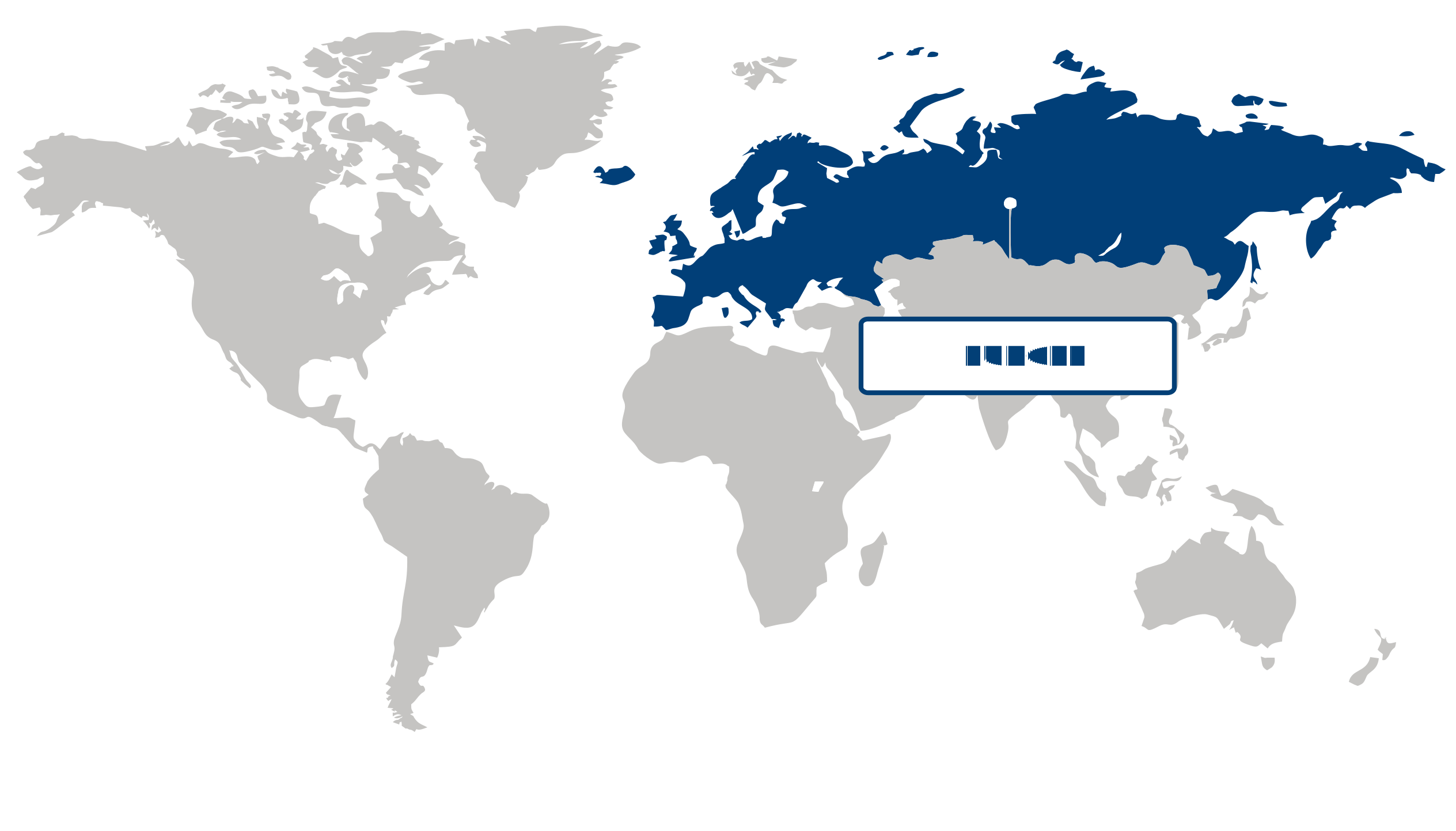
Europe (Largest Region)
Europe held the largest share of the women's shirts & blouses market, accounting for 34.98% in 2026, supported by established fashion markets, strong consumer interest in apparel quality, and diverse preferences for both formal and casual clothing. The region's mature retail environment provides consumers with extensive access to contemporary, premium, sustainable, and everyday apparel options. Growing interest in responsible fashion is influencing purchasing decisions, with consumers increasingly considering material sourcing, product durability, production practices, and versatility. Demand is also supported by evolving workplace and lifestyle patterns that favor clothing capable of transitioning between professional and casual settings. Established fashion infrastructure, strong design capabilities, and widespread omnichannel retail are helping maintain Europe's leading position in the market.
Asia Pacific (Fastest-Growing Region)
Asia Pacific is the fastest-growing regional market, driven by rising disposable incomes, expanding urban populations, and increasing participation in modern retail and fashion consumption. Growing middle-class spending is encouraging consumers to broaden their wardrobes and seek greater variety in styles, fabrics, and price points. E-commerce is playing an important role by improving access to domestic and international apparel collections, while social media and digital fashion content are influencing consumer preferences and accelerating awareness of emerging trends. The expansion of organized retail and growing demand for workwear, casualwear, and occasion-specific clothing are creating additional opportunities for shirts and blouses. Increasing fashion consciousness and changing lifestyle patterns are expected to continue supporting market expansion across the region.
| Parameter | North America | Asia Pacific | Europe | Latin America | MEA |
|---|---|---|---|---|---|
| Innovation Hub i Scale Nascent Developing Advanced | |||||
| Cost-Sensitive Region i Scale Low Medium High | |||||
| Regulatory Environment i Scale Restrictive Neutral Supportive | |||||
| Demand Drivers i Scale Weak Moderate Strong | |||||
| Development Stage i Scale Emerging Developing Developed | |||||
| Adoption Rate i Scale Low Medium High | |||||
| New Entrants / Startups i Scale Sparse Moderate Dense | |||||
| Macro Indicators i Scale Weak Stable Strong |
Key Country Insights
Germany 🇩🇪
Functional Apparel PreferenceIn Germany, demand centers on durable materials, refined tailoring, and timeless styling suitable for professional and casual settings. Consumers increasingly value garment quality and sustainability certifications, encouraging brands to expand responsibly sourced product collections.
France 🇫🇷
Premium Design AppealIn France, women's shirts and blouses reflect strong demand for sophisticated styling and premium craftsmanship. Consumers prioritize elegant cuts and high-quality materials, encouraging brands to differentiate through design heritage and refined seasonal collections.
Italy 🇮🇹
Tailored Fashion HeritageIn Italy, the market benefits from strong tailoring traditions and premium textile expertise. Manufacturers emphasize distinctive design, fabric quality, and craftsmanship, supplying both domestic consumers and international fashion brands with premium apparel collections.
Japan 🇯🇵
Refined Everyday StylingIn Japan, women's shirts and blouses emphasize clean silhouettes, premium fabrics, and meticulous craftsmanship. Consumers seek versatile apparel suitable for office and daily wear, encouraging brands to balance understated aesthetics with practical comfort.
South Korea 🇰🇷
Trend-Responsive CollectionsIn South Korea, fashion retailers rapidly introduce new blouse and shirt collections reflecting evolving consumer tastes and digital fashion trends. Brands focus on contemporary designs, influencer-driven merchandising, and agile supply chains to maintain product relevance.
United States 🇺🇸
Versatile Fashion DemandIn the U.S., women's shirts and blouses are increasingly designed to accommodate hybrid work, casual wear, and seasonal fashion trends. Brands prioritize versatile styling, sustainable fabrics, and omnichannel retail strategies to address changing consumer purchasing preferences.
Segment Leadership and Growth Trends
Women's Shirts & Blouses Market Share (%), by Distribution Channel, 2026
Go beyond the chart, access full insights & data tables
Request Free Sample ReportDistribution Channel Segment Analysis: Offline (Largest Segment) vs Online (Fastest-Growing Segment)
The offline segment dominated the women's shirts & blouses market with a 76.8% share in 2026, supported by consumers' preference for physically assessing apparel before purchase. Physical stores allow shoppers to evaluate fabric texture, garment fit, stitching quality, color, and overall appearance, which are important considerations when selecting shirts and blouses. In-store trials and immediate product availability further enhance the shopping experience, while established retail networks provide broad access to different styles and price points. These factors continue to sustain the strong position of offline distribution.
Online is the fastest-growing distribution channel as digital shopping provides greater convenience and access to a broader assortment of women's apparel. Consumers can browse multiple styles, compare prices, review product details, and place orders without visiting physical stores. Improvements in product visualization, sizing information, delivery services, and return policies are also helping address traditional concerns associated with purchasing clothing online. The increasing integration of digital commerce into everyday shopping habits is therefore supporting continued expansion of online sales.
Fiber Segment Analysis: Polyester (Largest Segment) vs Cellulosic (Fastest-Growing Segment)
Polyester accounted for the largest share of the women's shirts & blouses market at 51.94% in 2026, reflecting its broad suitability for everyday and fashion-oriented apparel. Polyester offers characteristics such as durability, wrinkle resistance, shape retention, and ease of care, making it attractive for garments that require frequent use and maintenance. Its versatility also allows manufacturers to produce shirts and blouses across a wide range of textures, finishes, and designs. The combination of functional performance and cost-effective apparel production continues to support polyester's extensive use.
The cellulosic fiber segment is expanding more rapidly as consumers and apparel manufacturers place greater emphasis on natural-feeling, comfortable, and more environmentally conscious textile options. Cellulosic fibers can provide desirable characteristics such as softness, breathability, and moisture management, making them suitable for shirts and blouses intended for everyday wear. Growing interest in sustainable fashion and alternative fiber choices is encouraging broader adoption, while improvements in textile processing and fabric quality are strengthening the segment's relevance.
| Segment | Sub-Segment | Largest Segment | Fastest Growing |
|---|---|---|---|
| Distribution Channel | Offline, Online | Offline | Online |
| Fiber | Cotton, Polyester, Cellulosic, Others | Polyester | Cellulosic |
Unlock insights tailored to your business with our bespoke market research solutions.
Click to get your customized report now.
Competitive Landscape and Market Positioning
Prominent players in the women's shirts & blouses market:
1. Christian Dior SE (France)
2. Chanel Limited (United Kingdom)
3. Gucci S.p.A. (Italy)
4. Prada S.p.A. (Italy)
5. Giorgio Armani S.p.A. (Italy)
6. Burberry Group plc (United Kingdom)
7. Dolce & Gabbana S.r.l. (Italy)
8. Gianni Versace S.r.l. (Italy)
9. Louis Vuitton Malletier SAS (France)
10. Hugo Boss AG (Germany)
In the women’s shirts & blouses market, evolving fashion preferences are driving frequent design refresh cycles. Fabric innovation and sustainable material usage are becoming key focus areas for product development. The women’s shirts & blouses market is also seeing stronger emphasis on style personalization and seasonal trend responsiveness. Brands are increasingly differentiating through design versatility and comfort-oriented apparel.
| Company | Market Share | Company Revenue | Revenue CAGR (%) | Product Portfolio | Geographic Presence | Innovation / R&D Focus | Strategic Developments |
|---|---|---|---|---|---|---|---|
| Christian Dior SE (France) | |||||||
| Chanel Limited (United Kingdom) | |||||||
| Gucci S.p.A. (Italy) | |||||||
| Prada S.p.A. (Italy) | |||||||
| Giorgio Armani S.p.A. (Italy) | |||||||
| Burberry Group plc (United Kingdom) | |||||||
| Dolce & Gabbana S.r.l. (Italy) | |||||||
| Gianni Versace S.r.l. (Italy) | |||||||
| Louis Vuitton Malletier SAS (France) | |||||||
| Hugo Boss AG (Germany). |
Customize Your Report
Explore examples of how this report can be tailored to different research needs, including custom segments, additional topics or chapters, and related reports. Click a section of the wheel or its numbered marker to explore the available options.
Women's Shirts & Blouses Market — Custom Segments
| Segment | Sub-Segment |
|---|---|
| Product Type | Shirts, Blouses, Tunics, Crop Tops |
| Price Tier | Mass Market, Mid-Range, Premium, Luxury |
| Occasion | Casual Wear, Formal & Workwear, Party & Evening Wear, Traditional & Occasion Wear |
Women's Shirts & Blouses Market — Custom TOC
| Custom Chapter | Chapter Details |
|---|---|
| Fashion Trend Evolution & Demand Outlook |
|
| Consumer Purchase Decision & Brand Switching Analysis |
|
| White Space Identification for Product Line Expansion |
|
Need a different cut of the data?
Request Custom ResearchWhat is the market size of women's shirts & blouses?
What is the anticipated CAGR of the women's shirts & blouses industry?
How are fast fashion cycles influencing purchase behavior in the women's shirts & blouses market?
Why is rising workforce participation driving demand in the women's shirts & blouses market?
Why does offline retail remain the largest distribution channel in the women's shirts & blouses market?
Which fiber segment is growing fastest in the women's shirts & blouses market?
What factors make Europe the largest women's shirts & blouses market?
Why is Asia Pacific the fastest-growing region in the women's shirts & blouses market?
Which organizations are considered leaders in the women's shirts & blouses landscape?
Our Clients
"The report provided us with a clear direction, and the level of detail was beyond what we expected. I would definitely recommend their services to others."
Haier Appliances
"The collaboration with Fundamental Business Insights has added significant value to our decision-making process, and we look forward to continuing this partnership for our future market research requirements."
Luxottica Group S.p.A.
"The team at FBI delivered an exceptional research report. The insights on industry innovations were particularly impressive and added a lot of value to the overall report."
Nike
Our Research Team & Methodology
Every Fundamental Business Insights report is built by a dedicated vertical research team, validated through a structured primary-and-secondary methodology, and reviewed for accuracy before it reaches you.
Research Team Overview
Prepared by the Consumer Goods & Services Research Team
Delivery
Published
Demand
Available
Support
Trust & Compliance
Research Intelligence
| Source | Reference |
|---|---|
| International Organization for Standardization (ISO) | www.iso.org |
| ASTM International | www.astm.org |
| U.S. Consumer Product Safety Commission (CPSC) | www.cpsc.gov |
| European Commission – Consumer Safety | ec.europa.eu/safety-gate |
| Consumer Technology Association (CTA) | www.cta.tech |
| National Retail Federation (NRF) | nrf.com |
| World Retail Congress | www.worldretailcongress.com |
| World Travel & Tourism Council (WTTC) | wttc.org |
| UN Tourism | www.unwto.org |
| Personal Care Products Council (PCPC) | www.personalcarecouncil.org |
| Cosmetics Europe | cosmeticseurope.eu |
| International Housewares Association (IHA) | www.housewares.org |
| American Apparel & Footwear Association (AAFA) | www.aafaglobal.org |
| World Federation of the Sporting Goods Industry (WFSGI) | wfsgi.org |
| Juvenile Products Manufacturers Association (JPMA) | www.jpma.org |
| Pet Industry Joint Advisory Council (PIJAC) | pijac.org |
| International Council of Toy Industries (ICTI) | www.toy-icti.org |
| International Association of Amusement Parks and Attractions (IAAPA) | iaapa.org |
| Organisation for Economic Co-operation and Development (OECD) | www.oecd.org |
| World Bank Data | data.worldbank.org |
Research Workflow & Quality Assurance
Data Collection
Verified information gathered through primary and secondary research.
Data Triangulation
Cross-validation using multiple independent data sources.
Forecast Modelling
Market estimates developed using historical trends and analytical models.
Analyst Validation
Findings reviewed by domain experts for accuracy and consistency.
Editorial & Quality Review
Final editorial, quality, and compliance checks before publication.
Final Publication
Released after successful completion of the internal review process.
Report Coverage
📊 Market Assessment
- Market Size & Forecast
- Market Segmentation
- Regional Analysis
- Growth Drivers & Challenges
- Market Dynamics
🏢 Competitive Intelligence
- Competitive Landscape
- Company Profiles
- Competitive Benchmarking
- Mergers & Acquisitions
- Market Share Analysis or Key Company Strategies
🔍 Strategic Analysis
- Value Chain Analysis
- Porter's Five Forces
- PESTLE Analysis
- Pricing Trends
- Supply-Demand Analysis
🚀 Future Outlook
- Technology Landscape
- Regulatory Landscape
- Investment & Funding Landscape
- Emerging Opportunities
- Future Market Outlook
Have a question about this report or need a custom scope?
Request Customization